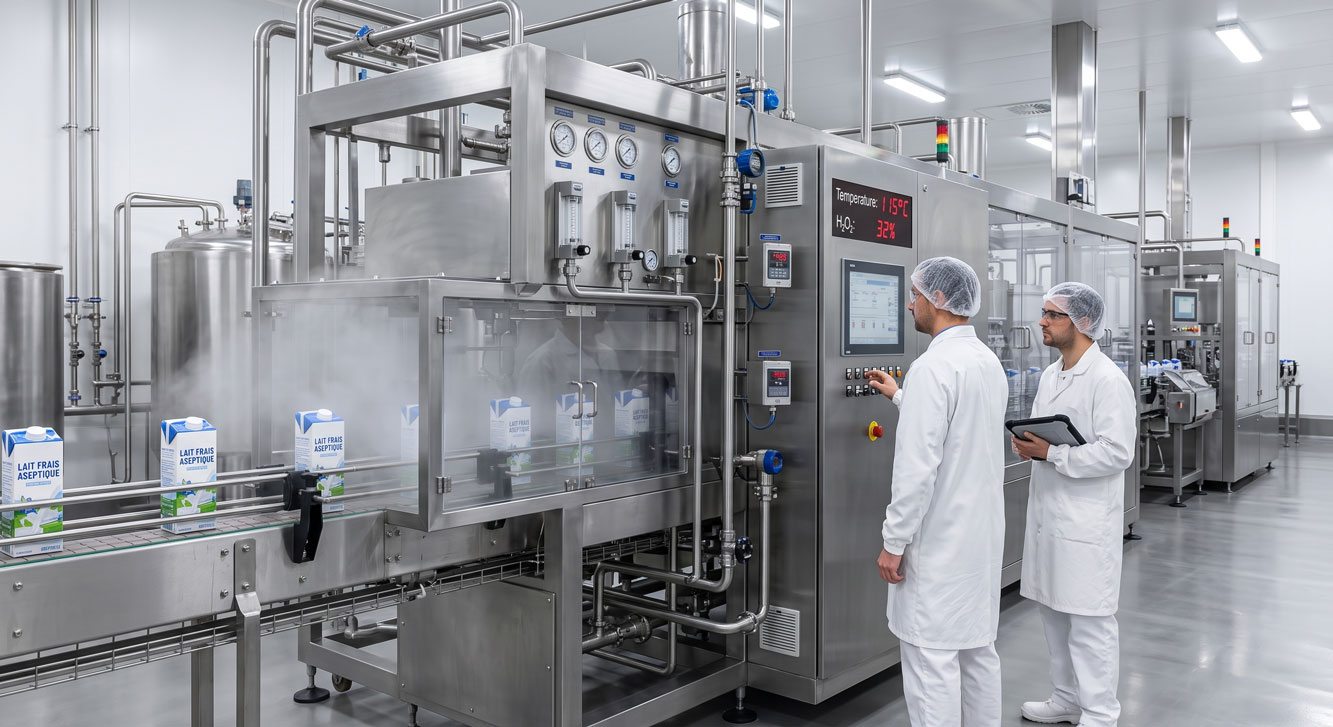

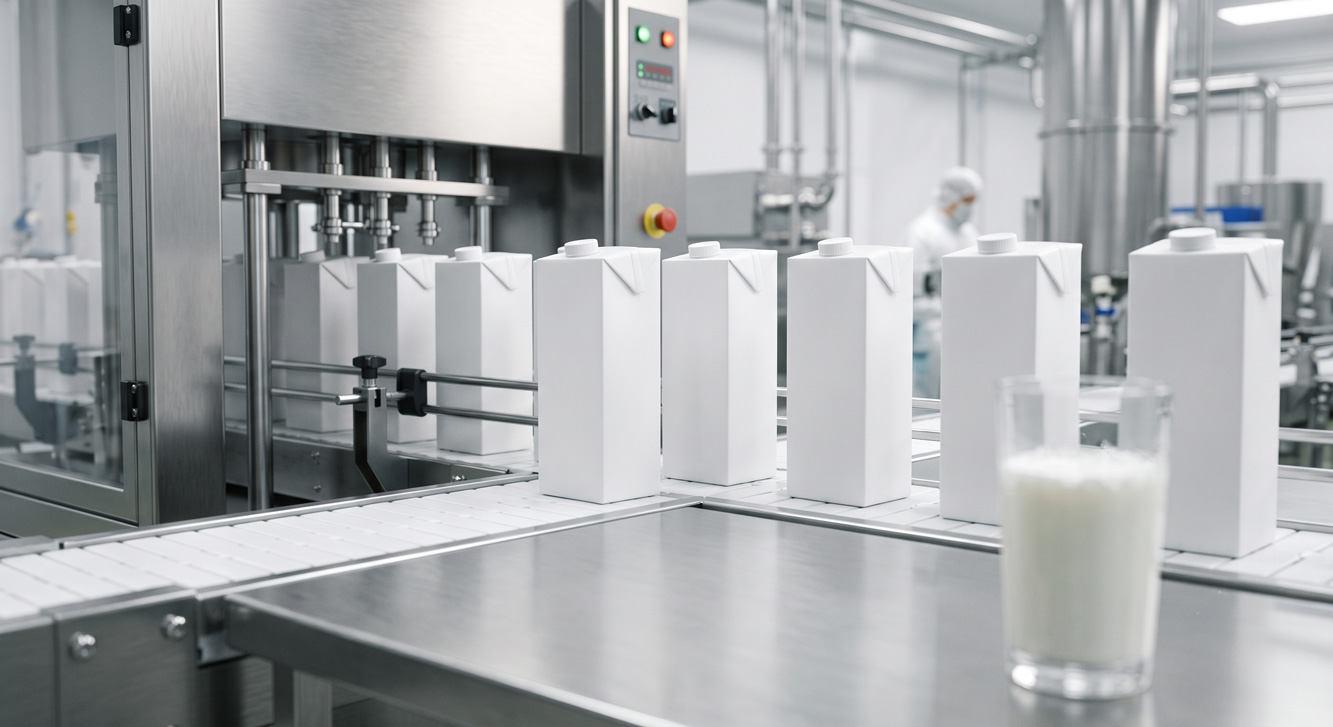
In the liquid packaging industry, the aseptic filling machine is the critical intersection where food science meets high-precision mechanical engineering. It is the exact point where a commercially sterile product (like UHT milk or juice) is enclosed within a sterilized packaging material inside a hyper-sterile environment.
A single calibration error in this zone can compromise an entire production batch. For plant engineers and procurement specialists, understanding the architecture of Form-Fill-Seal (FFS) technology is essential for maximizing line efficiency, minimizing waste, and guaranteeing a safe, shelf-stable product for up to 12 months without refrigeration.
Core Architecture of the Aseptic Zone
Unlike traditional hot-fill or post-packaging retort methods, aseptic filling relies on cold packaging. The machine must maintain absolute sterility across three independent vectors simultaneously: the liquid product, the packaging substrate, and the internal atmospheric chamber.
The standard roll-fed aseptic machine operates on a continuous vertical or horizontal mechanism:
- Unwinding and Splicing: The large roll of packaging material is unwound under controlled tension.
- Sterilization Bath: The flat material passes through a liquid sterilant (typically a heated hydrogen peroxide solution).
- Tube Formation: The flat web is folded into a continuous vertical cylinder, and a longitudinal seal is applied.
- Filling: The sterile liquid is pumped continuously into the open tube.
- Transverse Sealing and Cutting: Induction jaws clamp below the liquid level to create individual, air-free packages, cutting them into their final geometric shape.
The Sterilization Protocol: Achieving Commercial Sterility
The most critical operation within the machine is the sterilization of the packaging web before it reaches the filling nozzle. If the barrier material is not flawlessly sterile, the entire system fails.
Most high-speed operations utilize a chemical and thermal combination. The packaging web is submerged in a hydrogen peroxide solution (typically maintained at a 35 percent concentration). To activate the sterilant and remove any chemical residue, the material then passes through a squeegee system and a hot air drying chamber heated between 70 and 80 degrees Celsius. This guarantees that zero chemical residue interacts with the final beverage, while achieving total destruction of bacterial spores.
Performance Metrics: Evaluating Line Efficiency
When assessing aseptic filling equipment for a facility upgrade, operational footprint and throughput are the primary KPIs. Below is an engineering benchmark comparing the two dominant machine architectures:
| Machine Architecture | Throughput Capacity (Packs per Hour) | Packaging Format | Changeover Flexibility | Footprint / Space Requirement |
| Continuous Roll-Fed (FFS) | 7,000 to 24,000 | Custom laminates from a single roll | Low (Requires roll change and splicing) | High (Requires vertical clearance) |
| Blank-Fed (Pre-cut sleeves) | 4,000 to 12,000 | Pre-folded, flattened sleeves | High (Rapid size adjustments) | Moderate (Compact horizontal layout) |
Seamless Integration with Barrier Packaging
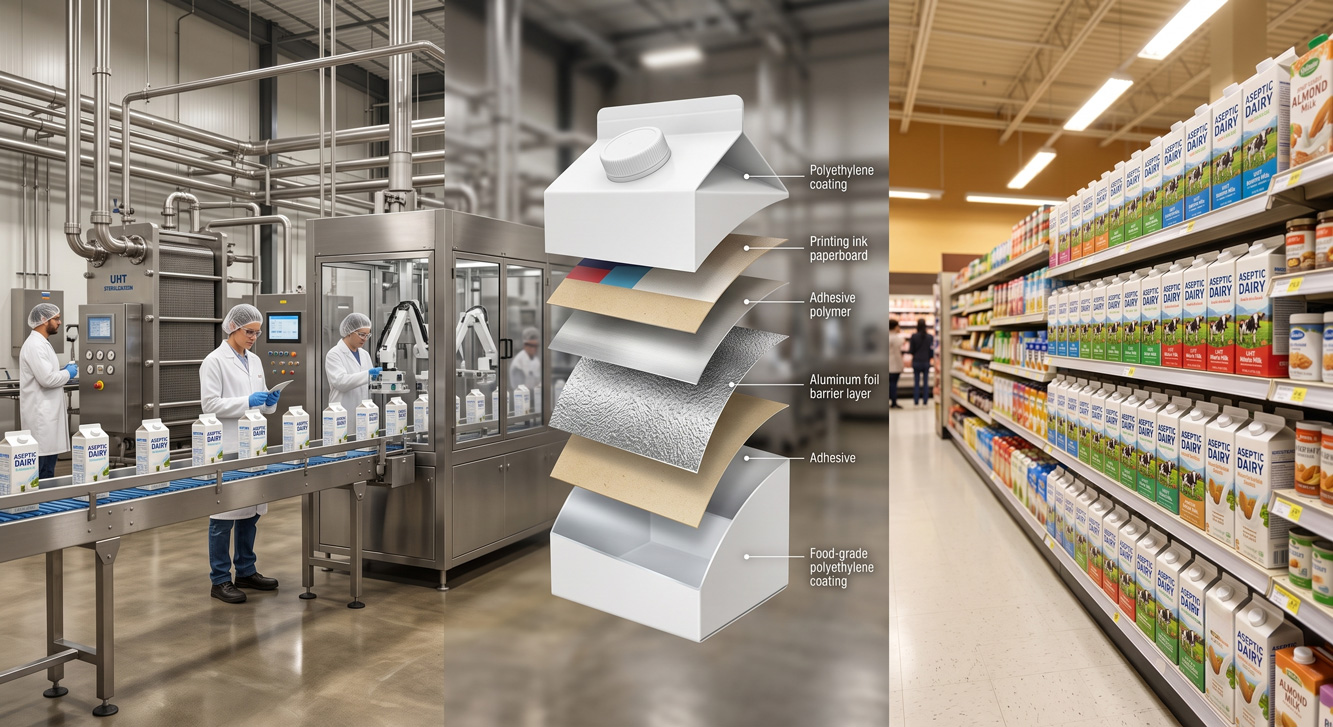
Even the most advanced filling machine cannot compensate for poor-quality packaging material. The induction sealing jaws on an aseptic machine rely on a precise frequency to melt the internal polymer layer of the packaging without burning the paperboard or fracturing the aluminum foil.
If the material tension is too high, it can cause micro-fractures in the foil layer as the machine folds the box into its final brick shape. Understanding the causes of pin-hole defects in foil lamination is vital for engineers setting up the folding and sealing parameters on the machine. A perfect harmony between machine calibration and material thickness ensures a leak-proof bottom and top seal.
Frequently Asked Questions (FAQ) on Aseptic Filling
Q: Why do aseptic filling machines seal the carton below the liquid level?
A: Sealing below the liquid level ensures that zero ambient air is trapped inside the package. Oxygen is the primary enemy of shelf-stable liquids, so removing the headspace entirely prevents oxidation and extends the product’s shelf-life.
Q: Can one aseptic machine handle different product viscosities?
A: Yes, modern machines are equipped with servo-driven dosing pumps that can be adjusted. However, moving from a low-viscosity liquid (like clear apple juice) to a high-viscosity product (like tomato paste) often requires swapping out the filling nozzles and adjusting the flow rate parameters.
Q: What is the most common cause of machine downtime?
A: Aside from scheduled CIP (Clean-In-Place) routines, the most frequent cause of unplanned downtime is longitudinal seal failure, often caused by variations in the packaging material’s thickness or improper jaw temperature settings.
Securing Your Production with ASQ Packing
An aseptic filling machine is a multi-million dollar investment that relies entirely on the quality of the laminate fed into it. At ASQ Packing, our materials are engineered to run seamlessly on the world’s fastest and most demanding filling lines, offering a perfect balance of stiffness for structural integrity and flexibility for flawless folding.
Before sourcing materials for your next production run, review the top 10 questions to ask your packaging supplier to ensure your technical specifications align with your machine’s exact requirements.