
Executive Summary – Vitamin C (L‑ascorbic acid) is the most labile nutrient in fruit juices, with degradation rates strongly influenced by oxygen exposure, light, temperature, and packaging barrier performance. In the presence of oxygen, ascorbic acid is rapidly oxidized to dehydroascorbic acid—which retains biological activity—and subsequently to 2,3‑diketogulonic acid, which has no vitamin activity. Research demonstrates that in standard polyethylene/paperboard cartons, vitamin C losses can reach significant levels over storage, while advanced barrier structures provide superior retention. Studies comparing packaging materials show that glass provides the best preservation of ascorbic acid, while in plastic packaging, vitamin C loss is directly correlated with oxygen permeability. For juice brands committed to delivering the nutritional benefits consumers expect, the packaging solution must provide three essential protections: an effective oxygen barrier, complete light protection, and minimal headspace oxygen—all while maintaining the sustainability and convenience that modern consumers demand.
The Science of Vitamin C Degradation
Why Vitamin C Is So Vulnerable
Vitamin C (L‑ascorbic acid) is a water‑soluble, heat‑labile vitamin that is particularly susceptible to both chemical and enzymatic oxidation. Its instability stems from its chemical structure: an enediol group conjugated with a carbonyl group in a lactone ring. This structure makes ascorbic acid an excellent antioxidant—which is precisely why it is so valuable nutritionally—but also means it readily reacts with oxygen, light, heat, and metal ions.
The degradation pathway follows a predictable sequence:
- Ascorbic acid (AA) → oxidized to dehydroascorbic acid (DHA) – DHA retains full vitamin C biological activity
- Dehydroascorbic acid → hydrolyzed to 2,3‑diketogulonic acid (DKG) – DKG has no vitamin activity
- 2,3‑diketogulonic acid → further degradation products (including browning compounds)
The biological activity of vitamin C is lost only when DHA is further degraded. However, DHA has five times lower antioxidant activity than ascorbic acid, meaning that even before complete loss, the nutritional quality is compromised. Vitamin C can account for 65–100% of the total antioxidant activity in citrus beverages, making its preservation critical for both nutrition and consumer perception.
Factors Affecting Vitamin C Stability
| Factor | Impact on Vitamin C | Mechanism |
|---|---|---|
| Oxygen | Primary degradation driver | Direct oxidation of ascorbic acid; rate is first‑order with respect to oxygen concentration |
| Light | Accelerates photo‑oxidation | Especially UV and fluorescent light; can trigger oxidation even in sealed packages |
| Temperature | Increases reaction rates | Higher temperatures accelerate both enzymatic and non‑enzymatic degradation |
| Dissolved Oxygen | Critical factor in juice itself | Initial dissolved oxygen in the juice can cause rapid losses immediately after packaging |
| Headspace Oxygen | Determines early‑stage losses | Linear relationship between initial headspace O₂ and AA degradation rate |
| Metal Ions | Catalyze oxidation | Trace metals (especially copper and iron) accelerate degradation |
| pH | Affects stability | Ascorbic acid is most stable at low pH (acidic conditions) |
| Enzymes | Catalyze oxidation | Ascorbic acid oxidase and other enzymes can accelerate degradation |
Understanding these factors is essential for designing effective packaging solutions that protect vitamin C throughout the product’s shelf life.
Oxygen: The Primary Threat
The Oxygen‑Vitamin C Connection
Oxygen is the single most important factor in vitamin C degradation. When oxygen is available, ascorbic acid is readily oxidized via a reversible reaction to dehydroascorbic acid. The rate of dehydroascorbic acid formation is approximately first order with respect to the concentrations of ascorbic acid, oxygen, and metal catalysts.
Research has demonstrated a direct linear relationship between first‑order AA degradation constants and initial headspace oxygen concentrations. This means that by knowing the residual headspace oxygen concentration after packaging, the oxygen permeability of the packaging material, and the initial AA and DHA concentrations, manufacturers can predict vitamin C content at different stages during storage.
The oxygen barrier performance of the packaging material is therefore the single most important factor in determining vitamin C retention.
The Role of Dissolved Oxygen
Dissolved oxygen in the juice itself is a critical factor that is often overlooked. Even before the package is sealed, the juice contains dissolved oxygen that can drive oxidation. Studies have shown that the level of dissolved oxygen present in the sample after packaging significantly affects the L‑ascorbic acid content, with the effect being directly related to temperature.
Research on chilled orange juice stored in gable top cartons revealed that dissolved oxygen does not equalize uniformly in the juice—there is a higher concentration at the top and less at the bottom, creating a gradient. This gradient has implications for quality control and sampling protocols.
Headspace Oxygen: The Initial Challenge
The oxygen present in the headspace of a sealed package is a critical determinant of early‑stage vitamin C loss. A linear relationship has been found between first‑order AA degradation constants and initial headspace oxygen concentrations. This means that by knowing the residual headspace oxygen concentration after packaging, the oxygen permeability of the packaging material, and the initial AA and DHA concentrations, manufacturers can predict vitamin C content at different stages during storage.
Anaerobic Degradation: A Secondary Pathway
Interestingly, ascorbic acid can also degrade in the absence of oxygen, although at a significantly slower rate. Both aerobic and anaerobic degradation of L‑ascorbic acid occur in the same system, but the aerobic process predominates and the anaerobic process takes place when the level of dissolved oxygen has reached equilibrium.
Light: The Catalyst
While oxygen is the primary driver of vitamin C degradation, light acts as a powerful catalyst. Light exposure—particularly fluorescent and UV light—accelerates oxidation reactions by providing the energy needed to break chemical bonds.
The Light Effect
Studies have shown that:
- Loss of vitamin C by oxidation and photo‑degradation occurs during processing and storage, with reactions accelerated by heat and light exposure during distribution and storage
- UV light exposure is a primary driver of degradation
- Increasing the mobile phase temperature results in better separation of isomers, suggesting temperature sensitivity in analytical methods
- The packages themselves may not fully protect vitamin C from UV radiation
Light Protection Is Essential
For packages with low oxygen‑barrier properties used in chilled distribution, light protection should be considered a priority. Even when oxygen barrier properties are good, light can trigger degradation of remaining vitamin C. This is why aluminum barrier cartons, which provide complete opacity, offer superior protection compared to transparent or translucent packaging.
The choice of sterilization method can also affect the barrier properties of the laminate and its ability to protect against light and oxygen ingress.
Temperature: The Accelerator
Temperature is a critical factor that affects the rate of vitamin C degradation, primarily by activating diffusion and reaction rates.
Temperature Sensitivity
- AA degrades as a function of time with behaviour that can be described by first‑order kinetics at all temperatures studied
- Activation energies can be calculated using the Arrhenius law
- Increases in temperature increase the rate of AA degradation
- The effect of temperature far outweighs the effect of total soluble solids on ascorbic acid degradation
- The lowest rate constants are obtained in juice samples stored at 5°C, followed by 10°C and 15°C
Practical Implications
For juice manufacturers, maintaining a consistent cold chain from production through distribution to retail is essential for maximizing vitamin C retention. Any temperature abuse—even brief exposure to higher temperatures—can accelerate degradation and shorten shelf life. Even at low temperatures, significant loss of vitamin C can occur over time.
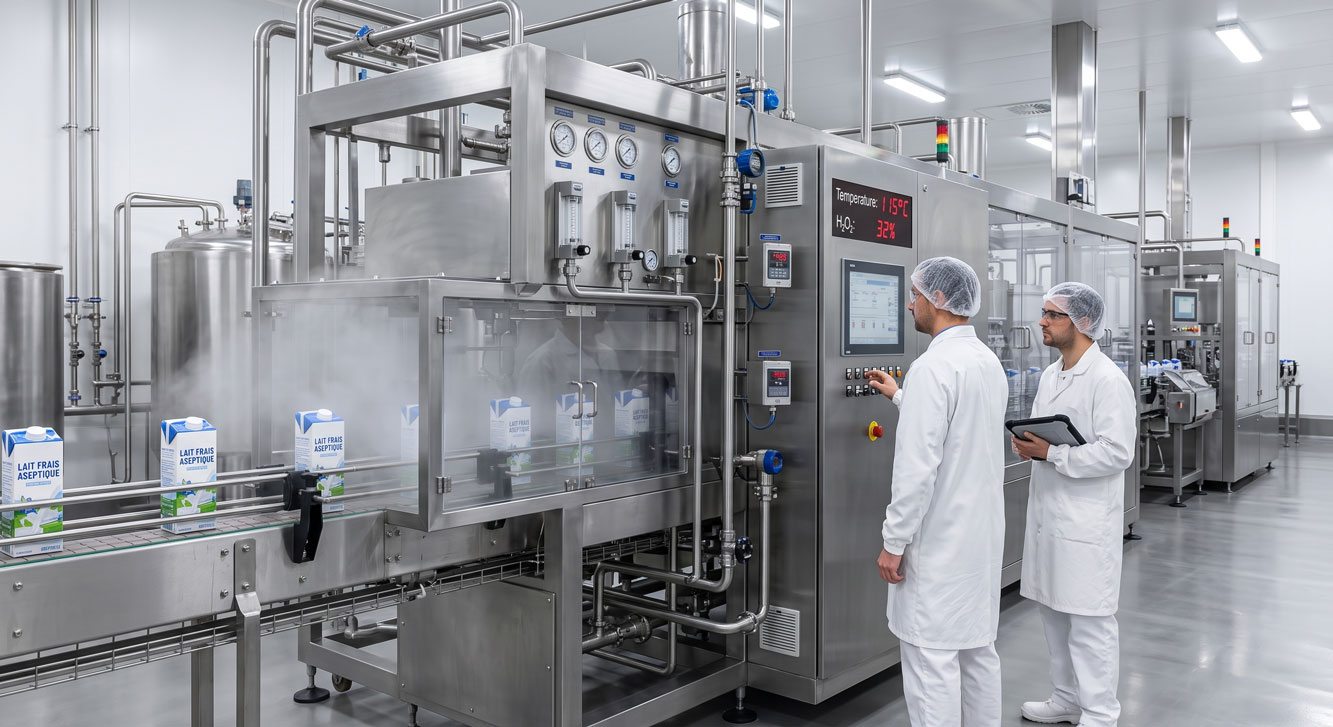
This principle is equally important in the production of UHT milk and other dairy products, where temperature control is a critical success factor for maintaining product quality and extending shelf life.
Packaging Material Performance: A Comparative Analysis
Glass: The Gold Standard
Glass provides the best preservation of ascorbic acid among common packaging materials. This is because glass is:
- An excellent oxygen barrier (effectively zero oxygen transmission)
- Completely opaque to UV light (when tinted or protected)
- Chemically inert, with no interaction with the juice
However, glass has significant disadvantages: it is heavy, breakable, and energy‑intensive to transport, making it less sustainable for large‑scale distribution.
PET Bottles: Variable Performance
The performance of PET bottles varies dramatically depending on the structure:
| PET Type | Vitamin C Retention | Key Characteristic |
|---|---|---|
| Monolayer PET | Poorest retention | High oxygen permeability; shortest shelf life |
| Multilayer PET | Better retention | Improved oxygen barrier; better color and vitamin C retention |
| PET with oxygen scavenger | Enhanced retention | Active oxygen removal extends shelf life |
Glass gave the best preservation of ascorbic acid, while for plastic packaging materials, ascorbic acid losses were correlated with their oxygen permeability. Ascorbic acid content and rate of browning were significantly affected by the level of dissolved oxygen in the juice.
Gable Top Cartons: The Advanced Barrier Solution
Gable top cartons, when properly engineered with advanced barrier layers, offer an excellent balance of protection and sustainability:
| Carton Type | Vitamin C Protection | Key Feature |
|---|---|---|
| Standard PE/Paperboard/PE | Limited retention | Poor oxygen barrier |
| Advanced Barrier (EVOH) | Good retention | Enhanced oxygen barrier |
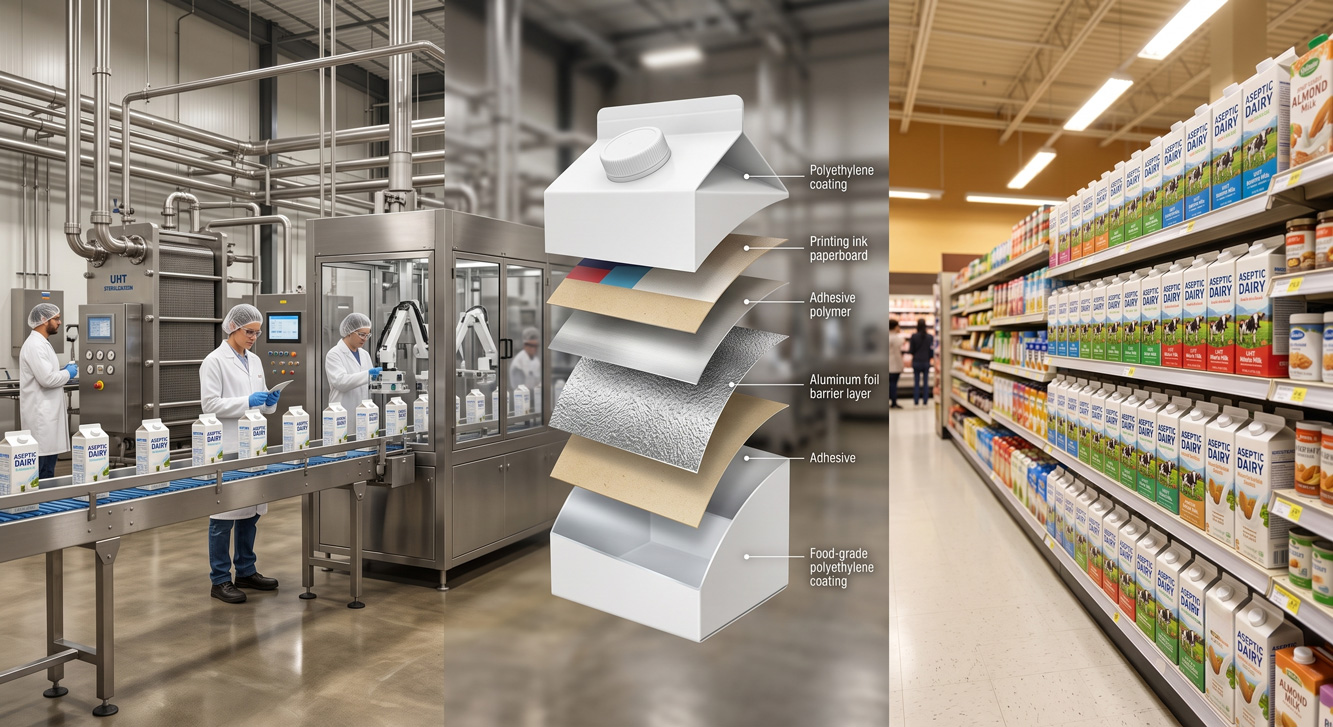
| Aluminum Barrier Carton | Best retention among cartons | Complete oxygen and light barrier |
Aluminum barrier cartons retained more vitamin C than EVOH barrier cartons. This is because aluminum provides a complete oxygen and light barrier, whereas EVOH, while effective, can still allow some oxygen permeation.
Interestingly, an EVOH gable top carton does not need to be perfectly free of barrier imperfections to retain vitamin C content. Of seven different perforations generated in EVOH cartons, four did not result in statistically different vitamin C content compared to a reference without perforations after 8 weeks. This suggests that there is a threshold below which minor barrier imperfections do not significantly affect vitamin C retention.
Barrier Imperfections: When Do They Matter?
Gas barrier imperfections in gable top cartons can lead to oxygen from the ambience permeating a carton, causing deterioration of vitamin C in fruit juices. However, not all imperfections are equal:
- Some, but not all, seal barrier imperfections affected vitamin C degradation
- The area of color penetration from a dye test did not correlate with vitamin C content
- Vitamin C deterioration did not correlate with OTR measured with the Ambient Oxygen Ingress Rate (AOIR) method
Headspace Management: A Critical Factor
Beyond the packaging material itself, headspace management is critical for vitamin C retention:
| Headspace Condition | Effect on Vitamin C |
|---|---|
| Minimal headspace | Reduced oxygen available for oxidation |
| Nitrogen flushing | Displaces oxygen; extends shelf life |
| Oxygen scavengers | Actively removes oxygen; near‑complete preservation possible |
A study on gallic acid‑based oxygen scavenger labels demonstrated remarkable efficacy: in the presence of the oxygen scavenger, oxygen levels in the headspace were reduced by half in under 1 hour at 21°C and within 2 hours at 4°C. Dissolved oxygen concentration decreased 50% after 8 hours at 21°C and after 1.2 days at 4°C. Vitamin C was nearly fully preserved for 105 days at both temperatures, while in its absence, vitamin C degraded completely within 30 days at 21°C and 45 days at 4°C. Browning was also significantly reduced in the presence of the oxygen scavenger.
The seal integrity of the carton is equally important—micro‑leaks can allow oxygen ingress that rapidly degrades vitamin C, which is why skiving and hemming is a critical manufacturing process for preventing oxygen ingress through seal imperfections.
Summary: Packaging Performance Comparison
| Packaging Material | Oxygen Barrier | Light Barrier | Vitamin C Protection | Sustainability |
|---|---|---|---|---|
| Glass | Excellent | Excellent (with tint) | Best | Poor (heavy, breakable) |
| Monolayer PET | Poor | Poor | Poorest | Moderate |
| Multilayer PET | Good | Poor | Good | Moderate |
| PET + oxygen scavenger | Enhanced | Poor | Better | Moderate |
| Standard Carton | Poor | Excellent | Poor | Good |
| EVOH Carton | Good | Excellent | Good | Good |
| Aluminum Carton | Excellent | Excellent | Best | Good |
Advanced Packaging Technologies for Vitamin C Protection
Oxygen Scavengers
Oxygen scavengers are materials that actively remove oxygen from the package environment. They can be incorporated as:
- Labels or sachets placed inside the package
- Integrated into the packaging material (oxygen‑scavenging films)
- Coatings applied to the inner surface of the package
The rapid removal of oxygen is critical for sustaining higher concentrations of ascorbic acid over long storage times. Oxygen scavenging materials can significantly reduce the initial oxygen in the headspace and dissolved in the juice, limiting the primary driver of vitamin C degradation.
Active Packaging
Active packaging goes beyond passive barrier protection to interact with the package environment. Gallic acid‑based oxygen scavengers represent an emerging active packaging technology that offers:
- Environmentally friendly reducing agent
- Rapid oxygen removal: headspace oxygen reduced by half in under 1 hour at 21°C
- Dissolved oxygen reduction: 50% decrease after 8 hours at 21°C
- Near‑complete vitamin C preservation for extended periods
The slowest ascorbic acid degradation and browning are obtained with PET + oxygen scavengers compared to other materials.
Barrier Laminate Innovation
Advanced barrier laminates provide effective barriers to the migration of essential oils, flavors, oxygen, and vitamins. These laminates are especially useful as fruit juice containers, enabling significant flavour and vitamin C retention over the normal shelf life of the product.
For beverage brands exploring sustainable options, the challenges faced by plant-based beverages offer valuable insights into barrier requirements for sensitive products.
Best Practices for Vitamin C Retention
For Juice Manufacturers
| Practice | Benefit |
|---|---|
| Minimize dissolved oxygen | Deaeration before filling reduces initial oxygen load |
| Use nitrogen flushing | Displaces oxygen in headspace |
| Maintain cold chain | 4°C storage significantly slows degradation |
| Avoid temperature fluctuations | Fluctuations accelerate degradation |
| Choose appropriate packaging | Match barrier properties to shelf‑life requirements |
For Packaging Selection
| Consideration | Recommendation |
|---|---|
| Short shelf‑life (weeks) | PET with UV blocker or EVOH carton may suffice |
| Long shelf‑life (months) | Aluminum barrier carton or glass required |
| Sustainability priority | Aluminum barrier carton offers best balance |
| Light exposure | Ensure complete light protection for any package |
The ASQ Packing Advantage
At ASQ Packing Group , we engineer gable top cartons specifically designed to protect the nutritional integrity of 100% natural juices.
Our Technical Capabilities
- Aluminum barrier cartons: Complete oxygen and light barrier for maximum vitamin C protection
- EVOH barrier options: Enhanced oxygen barrier with sustainable paperboard structure
- Precision sealing: Advanced skiving, hemming, and ultrasonic sealing technologies that prevent oxygen ingress through seal imperfections
- Headspace optimization: Carton designs that minimize headspace oxygen
- FSC‑certified paperboard: Sustainable materials from responsibly managed forests
- Custom engineering: Barrier solutions tailored to your specific shelf‑life requirements
Why Choose ASQ Packing for Juice Packaging
| Advantage | Benefit |
|---|---|
| Superior Barrier Performance | Aluminum and EVOH barriers protect vitamin C from oxygen and light |
| Seal Integrity | Advanced sealing technologies prevent oxygen ingress through micro‑leaks |
| Sustainability | FSC‑certified materials and recyclable designs |
| Technical Expertise | Deep understanding of vitamin C degradation and protection strategies |
Frequently Asked Questions
1. Why is vitamin C so unstable in fruit juice packaging?
Vitamin C (ascorbic acid) is highly sensitive to oxygen, light, and heat. Its chemical structure—an enediol group—makes it an excellent antioxidant but also means it readily reacts with oxygen, leading to degradation. The degradation pathway involves oxidation to dehydroascorbic acid (which retains activity) and then to 2,3‑diketogulonic acid (which has no vitamin activity).
2. How does light affect vitamin C in juice?
Light, particularly UV and fluorescent light, accelerates photo‑oxidation of vitamin C. It provides the energy needed to break chemical bonds, catalysing the oxidation reaction. Even in packages with good oxygen barriers, light can trigger degradation of remaining vitamin C.
3. What packaging material best preserves vitamin C?
Glass provides the best preservation of ascorbic acid because it is an excellent oxygen barrier and can be made light‑protective. Among plastic packaging, multilayer PET with improved oxygen barrier properties performs better than monolayer PET. Aluminum barrier cartons offer the best protection among paperboard‑based packaging.
4. How does headspace oxygen affect vitamin C retention?
There is a direct linear relationship between initial headspace oxygen concentration and the rate of vitamin C degradation. Higher headspace oxygen leads to faster degradation. Minimising headspace oxygen through nitrogen flushing or using oxygen scavengers is essential for preserving vitamin C.
5. Can oxygen scavengers help preserve vitamin C?
Yes. Studies have shown that oxygen scavengers can nearly fully preserve vitamin C for 105 days at both refrigerated and ambient temperatures, compared to complete degradation within 30 days at 21°C without oxygen scavengers. The rapid removal of oxygen is critical for sustaining higher concentrations of ascorbic acid over long storage times.
6. What is the role of temperature in vitamin C degradation?
Temperature increases the rate of both enzymatic and non‑enzymatic degradation reactions. Refrigerated storage (5°C) significantly slows vitamin C loss, while temperature fluctuations can accelerate degradation. The effect of temperature far outweighs the effect of total soluble solids on ascorbic acid degradation.
7. How does dissolved oxygen affect vitamin C stability?
Dissolved oxygen in the juice itself is a critical factor. Even before the package is sealed, dissolved oxygen can drive oxidation. The ascorbic acid content is significantly affected by the level of dissolved oxygen in the juice. Deaeration before filling is an important step in preserving vitamin C.
Ready to Protect Your Juice’s Nutritional Integrity?
Whether you are launching a new 100% natural juice brand or optimising packaging for an existing product, ASQ Packing Group has the technical expertise and manufacturing capability to deliver packaging solutions that protect vitamin C and extend shelf life.
👉 Contact us at ASQ Packing to discuss your juice packaging requirements, request samples, or schedule a technical consultation.