
Executive Summary – Shelf‑stable packaging is a system that enables food and beverage products to be safely stored at ambient temperature for extended periods—typically months or years—without refrigeration or added preservatives. The global ambient food packaging market was valued at approximately USD 86.64 billion in 2024 and is projected to reach USD 139.08 billion by 2033, growing at a CAGR of 5.4%. Within this sector, the shelf‑stable cartons segment alone reached USD 1.10 billion in 2025. The technology relies on three interdependent pillars: commercial sterilization of the product (typically via UHT at 135–150°C for 2–6 seconds), high‑barrier packaging materials (multi‑layer laminates with aluminum or EVOH barriers), and hermetic sealing to prevent recontamination. When all three elements are correctly integrated, the result is a product that retains its safety, nutritional value, and sensory qualities for 6 to 12 months at room temperature.
Defining Shelf‑Stable Packaging
A product is considered shelf‑stable when it retains its desirable qualities for an extended period without refrigeration. Shelf‑stable foods—sometimes called ambient foods—are those that can be safely stored at room temperature in a sealed container. This category includes products that would normally require refrigeration but have been processed to remain safe and stable at ambient temperatures.
According to the United States Department of Agriculture (USDA) , aseptic packaging is “the process by which microorganisms are prevented from entering a package during and after packaging. During aseptic processing, a sterilized package is filled with a commercially sterile food product and sealed within the confines of a hygienic environment”. In order to be shelf‑stable, perishable food must be treated by heat and/or dried to destroy foodborne microorganisms that can cause illness or spoil food.
Why Shelf‑Stability Matters
| Benefit | Impact |
|---|---|
| Reduced food waste | Shelf life measured in months rather than days means less spoilage in the distribution system |
| Supply chain efficiency | No refrigeration required during transport, warehousing, or retail display |
| Consumer convenience | Products can be stored in pantries and used as needed |
| Emergency preparedness | Essential for disaster relief and military rations |
| Global distribution | Enables export to markets without cold‑chain infrastructure |
The Core Principle: Breaking the Cold Chain
The fundamental principle behind shelf‑stable packaging is separating product sterilization from packaging sterilization—or, in the case of retort processing, sterilizing the product inside the sealed package.
In conventional refrigerated products, safety relies on continuous temperature control to suppress microbial growth. Shelf‑stable packaging eliminates the need for this cold chain by destroying microorganisms and then preventing recontamination. This is the core value proposition of aseptic processing in particular, as detailed in our comprehensive guide on aseptic filling machines .
The Three Pillars of Shelf‑Stability
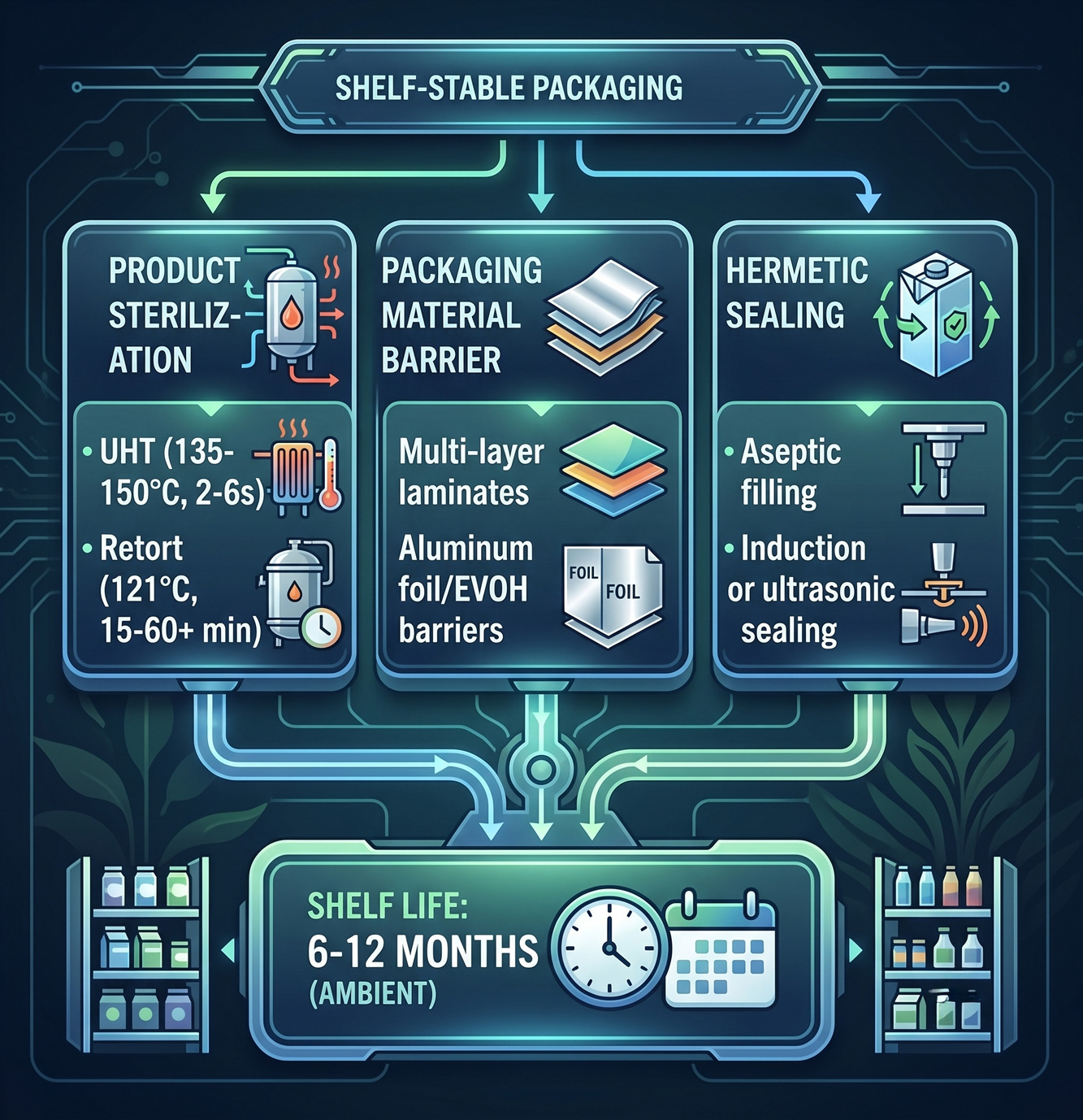
The Three Main Sterilization Processes
Three primary processes dominate the shelf‑stable packaging industry: aseptic processing, retort processing, and ESL (Extended Shelf Life) processing.
Aseptic Processing
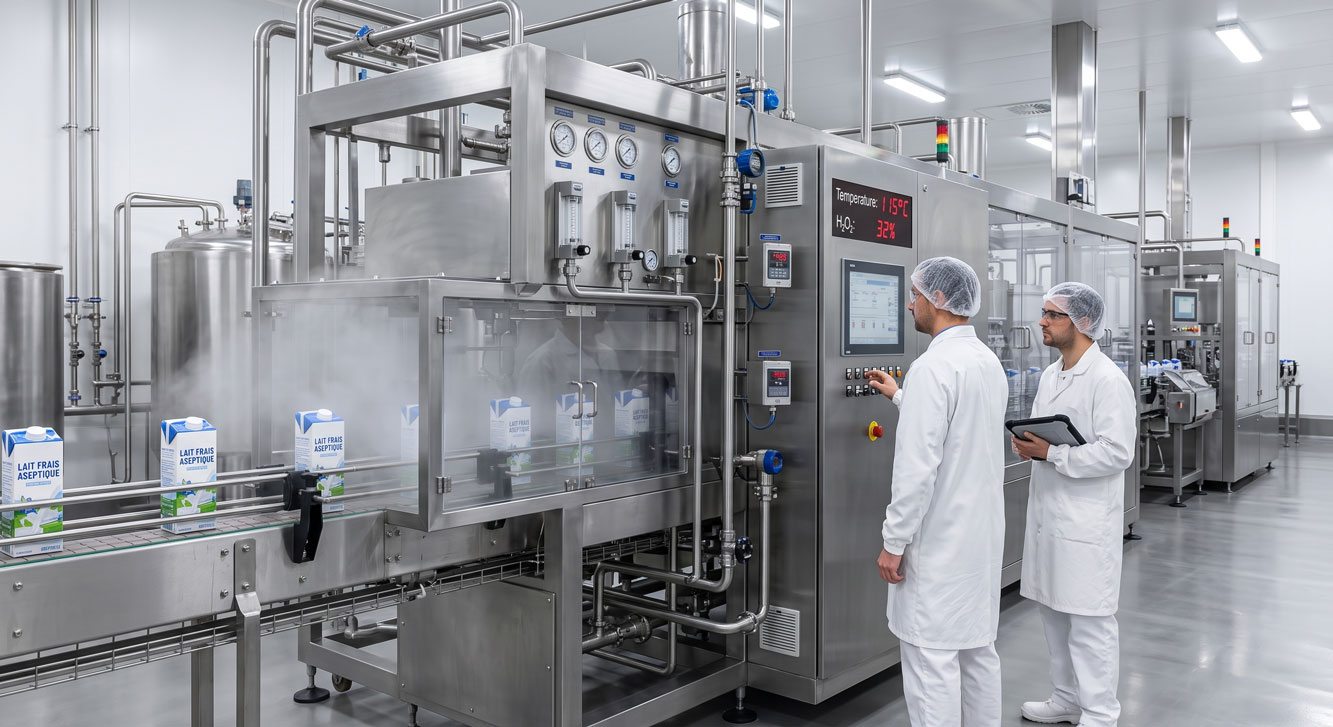
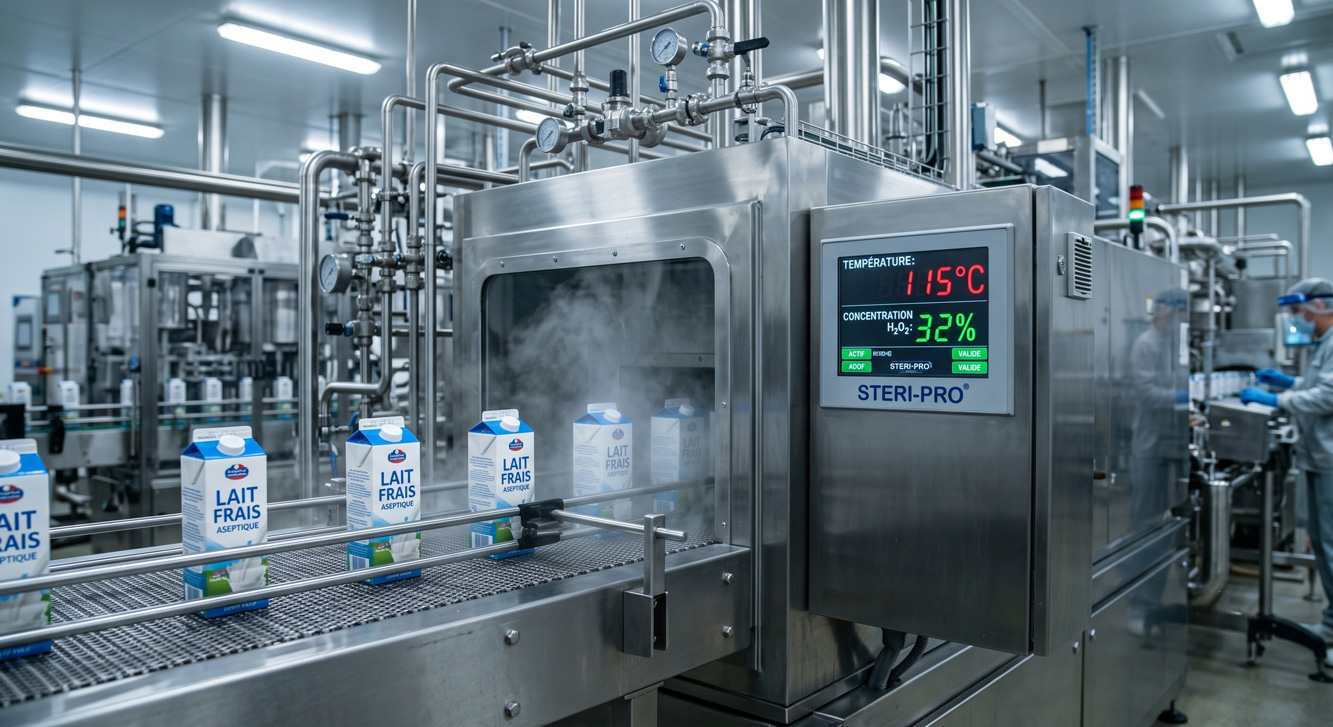
Aseptic is commonly used for beverages and homogeneous liquid products that do not require refrigeration. The process involves filling a commercially sterile food product into a sterile package within a sterile environment.
| Parameter | Aseptic Processing |
|---|---|
| Product sterilization | UHT: 135–150°C for 2–6 seconds |
| Package sterilization | Hydrogen peroxide (H₂O₂) or e‑beam |
| Sterile environment | Required throughout filling and sealing |
| Shelf life | 6–12 months at ambient temperature |
| Best for | Milk, juices, plant‑based beverages, soups, sauces |
Key advantage: The most important advantage of aseptic is shorter heating times, which minimize the impact of thermal processing on flavor, texture, and nutrition. However, it requires high capital investment and is limited to foods that can be pumped through heat exchangers. Modern filling machines are engineered to handle these demanding sterilization requirements while maintaining product quality. The choice of sterilization method directly impacts both the shelf life and the environmental footprint of the final package.
Retort Processing
Retort processing—the technology behind canned foods—involves filling and sealing the food in a non‑sterile environment, then subjecting the sealed container to sterilization temperatures in a pressure vessel.
| Parameter | Retort Processing |
|---|---|
| Product sterilization | 121°C (250°F) for 15–60+ minutes |
| Package sterilization | Occurs simultaneously with product (in‑container) |
| Sterile environment | Not required during filling |
| Shelf life | 1–5+ years at ambient temperature |
| Best for | Soups, vegetables, meats, pet food |
Retort processing exposes products to high temperatures for longer periods, which can alter texture, taste, and nutritional value. However, it offers the most flexibility in terms of the ability to handle an extremely vast range of products and package types.
ESL (Extended Shelf Life) Processing
ESL processing can be viewed as similar to aseptic, as both manage the environment around the package and product for increased shelf‑life. However, ESL does not aim to achieve sterility, but rather to extend shelf life by minimizing spoilage‑causing microbial growth. In fact, UHT milk demonstrates that while UHT achieves true commercial sterility, ESL occupies a middle ground with shorter refrigerated shelf life.
| Parameter | ESL Processing |
|---|---|
| Product sterilization | Lower temperature than UHT |
| Package sterilization | Clean, not sterile conditions |
| Shelf life | 30–45 days (refrigerated) |
| Best for | Fresh dairy, deli products |
Comparison: Aseptic vs. Retort vs. ESL
| Criterion | Aseptic | Retort | ESL |
|---|---|---|---|
| Sterility achieved | Yes (commercial sterility) | Yes (commercial sterility) | No |
| Sterile environment | Required throughout | Not required | Partial |
| Product heat exposure | Short (2–6 seconds) | Long (15–60+ minutes) | Moderate |
| Shelf life (ambient) | 6–12 months | 1–5+ years | Not ambient |
| Product quality | Best retention | Some degradation | Good |
The Role of Packaging Materials
Packaging materials are the second critical pillar of shelf‑stability. Even a perfectly sterilized product will spoil if the packaging allows oxygen, light, or moisture to enter, or if the seal fails. The barrier properties of the laminate directly influence how long the product can maintain its quality.
The Multi‑Layer Barrier Structure
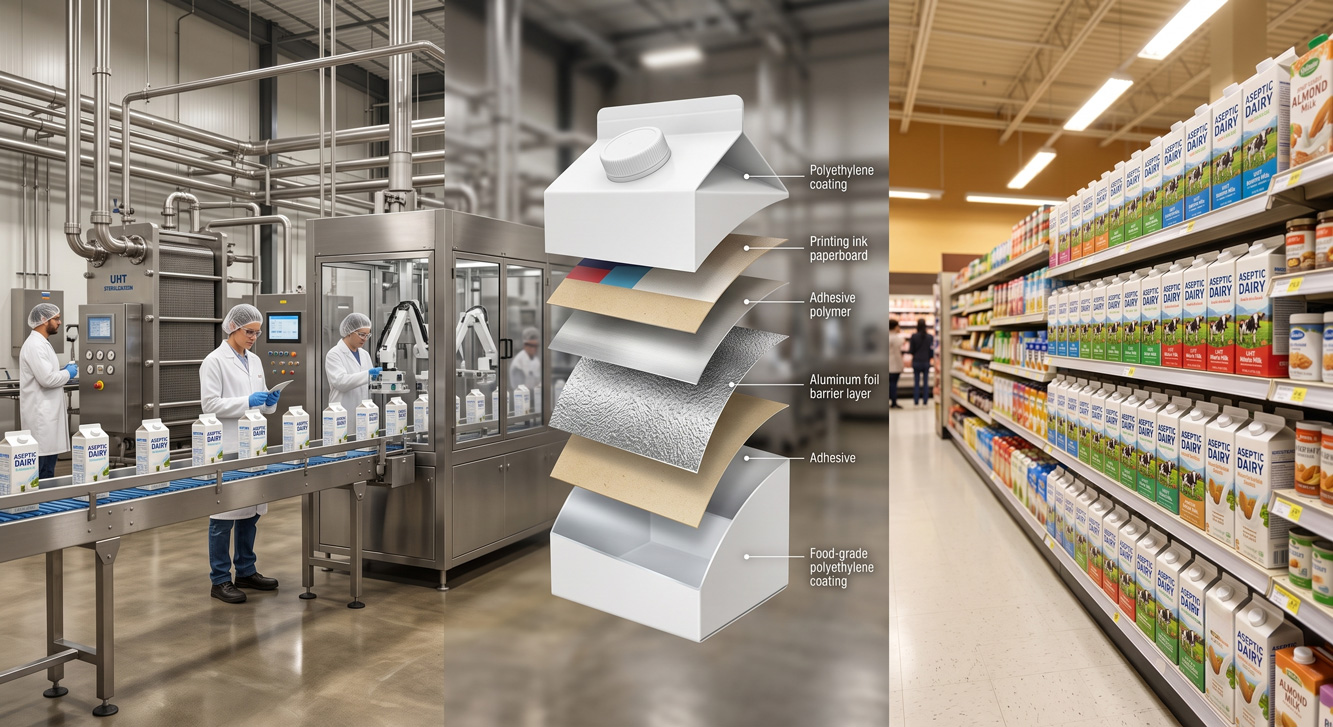
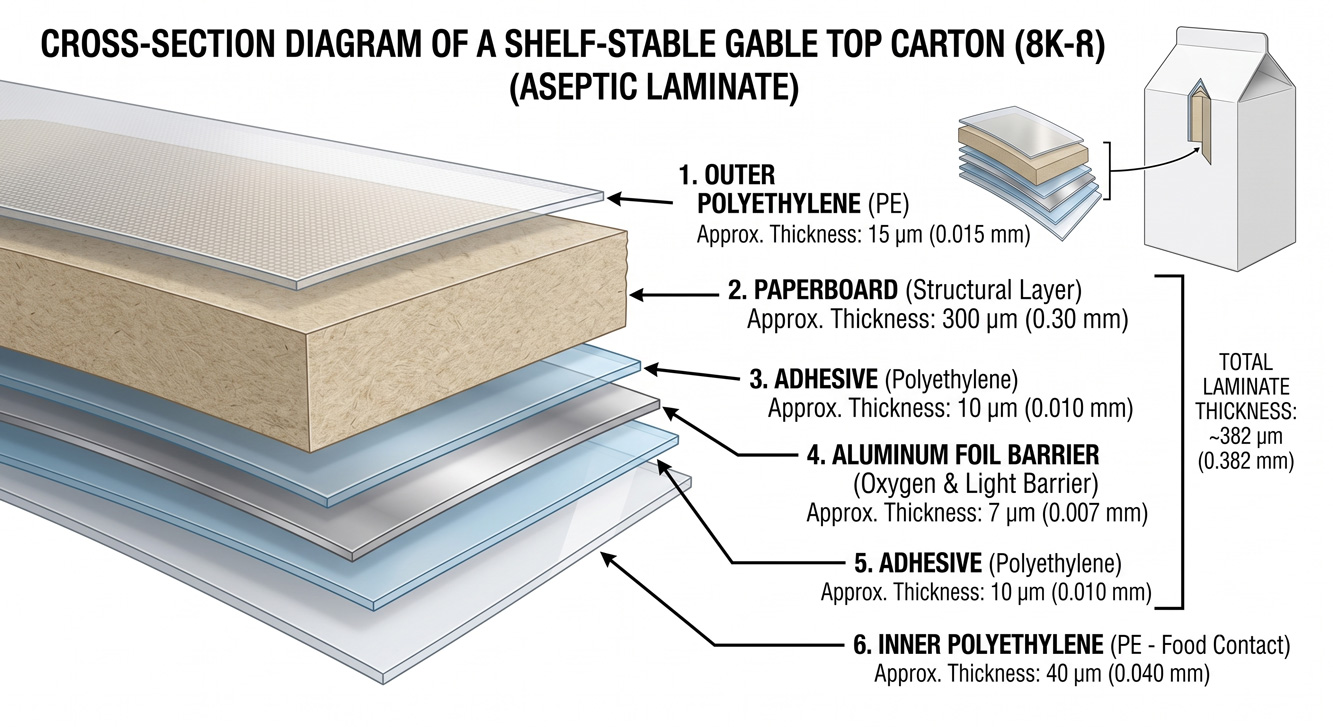
The most advanced shelf‑stable packaging—particularly for liquid products—uses multi‑layer laminates that combine different materials to achieve complete protection. Each layer performs a specific duty: one provides structural strength, another offers a heat‑sealable surface, and the critical barrier layer—typically a polymer like ethylene vinyl alcohol (EVOH) or aluminum foil—blocks oxygen or water vapor.
Typical Six‑Layer Structure (Aseptic Carton) :
| Layer | Material | Function |
|---|---|---|
| Outer | Polyethylene (PE) | Moisture barrier; print substrate |
| Strength | Paperboard (70–75% of weight) | Rigidity; structural support |
| Adhesive | Tie layer | Bonds paperboard to barrier |
| Barrier | Aluminum foil | Complete oxygen, light, and moisture barrier |
| Adhesive | Tie layer | Bonds barrier to inner layer |
| Inner | Polyethylene (PE) | Food‑contact surface; heat‑sealable |
The aluminum foil layer—though thinner than a human hair—is the critical component that provides complete oxygen and light barrier. For extremely oxygen‑sensitive foods, aluminum foil is often used due to its almost perfect barrier characteristics. However, emerging barrier technologies are offering more sustainable alternatives as the future of beverage packaging continues to evolve.
Alternative Barrier Materials
While aluminum foil remains the gold standard for complete barrier protection, alternative materials are available:
| Barrier Type | Key Feature | Sustainability Consideration |
|---|---|---|
| Aluminum foil | Complete O₂ and light barrier | Difficult to recycle |
| EVOH | Excellent oxygen barrier | Moisture‑sensitive |
| Paper‑based barrier | Renewable; nanometre metalized coating | More recyclable |
Hermetic Sealing: The Third Pillar
The seal is the package’s critical control point. If the seal fails, the sterile barrier is compromised, and the product becomes vulnerable to recontamination. Skiving and hemming is one critical process that prevents edge‑wicking and ensures seal integrity in gable top cartons.
Sealing Technologies
| Technology | Application | Key Feature |
|---|---|---|
| Induction sealing | Aseptic cartons | Requires aluminum layer |
| Ultrasonic sealing | Aseptic cartons | No aluminum required; seals through contamination |
| Heat sealing | Pouches, bags | Widely used; cost‑effective |
| Double seaming | Cans, metal containers | Mechanical interlocking |
The choice between induction and ultrasonic sealing depends on your packaging structure and sustainability goals. Ultrasonic sealing offers the advantage of sealing without an aluminum layer, enabling more sustainable packaging designs.
Seal Integrity Testing
| Test Method | Purpose |
|---|---|
| Peel strength test | Measures seal strength (>25 N/15 mm) |
| Vacuum chamber test | Detects micro‑leaks under negative pressure |
| Dye penetration test | Visual identification of leak paths |
| Headspace gas analysis | Detects oxygen ingress indicating seal failure |
Pin-hole defects in foil lamination are a common cause of seal failure, and understanding how to detect them is essential for maintaining package integrity.
Shelf‑Stable Packaging Applications
By Product Category
| Category | Typical Products | Primary Process | Packaging Format |
|---|---|---|---|
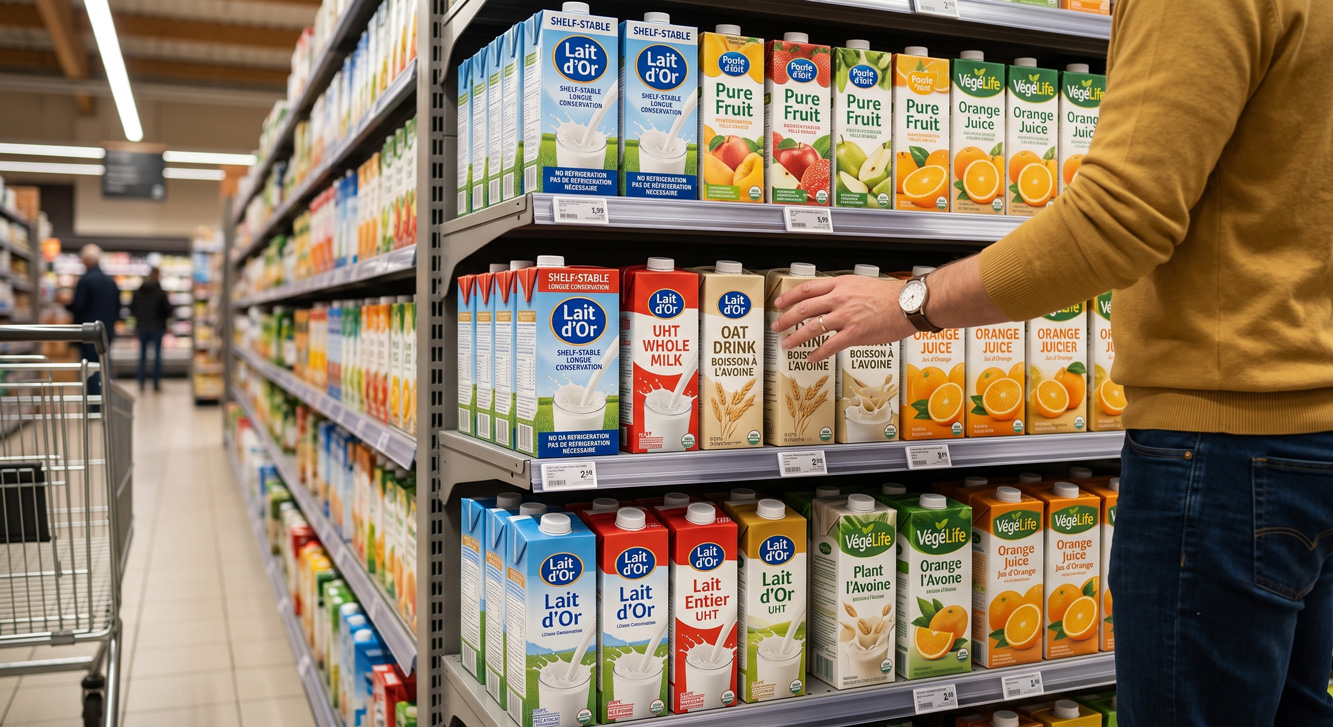
| Dairy | UHT milk, cream, flavored milk | Aseptic | Gable top cartons |
| Juices | 100% juice, nectars | Aseptic | Gable top cartons |
| Plant‑based | Oat, almond, soy milk | Aseptic | Gable top cartons |
| Soups & sauces | Broths, liquid soups | Aseptic or retort | Cartons, cans |
| Canned goods | Vegetables, fruits, meats | Retort | Metal cans |
| Ready meals | Shelf‑stable entrees | Retort | Trays, pouches |
By Packaging Format
| Format | Primary Use | Key Characteristic |
|---|---|---|
| Gable top cartons | Dairy, juices, plant‑based | 70–75% paperboard; aluminum barrier |
| Aseptic bricks | Milk, juice | Six‑layer laminate |
| Metal cans | Soups, vegetables, meats | Retort‑compatible |
| Retort pouches | Ready meals, pet food | Flexible; shelf‑stable |
| Glass bottles | Premium juices, sauces | Inert; heavy |
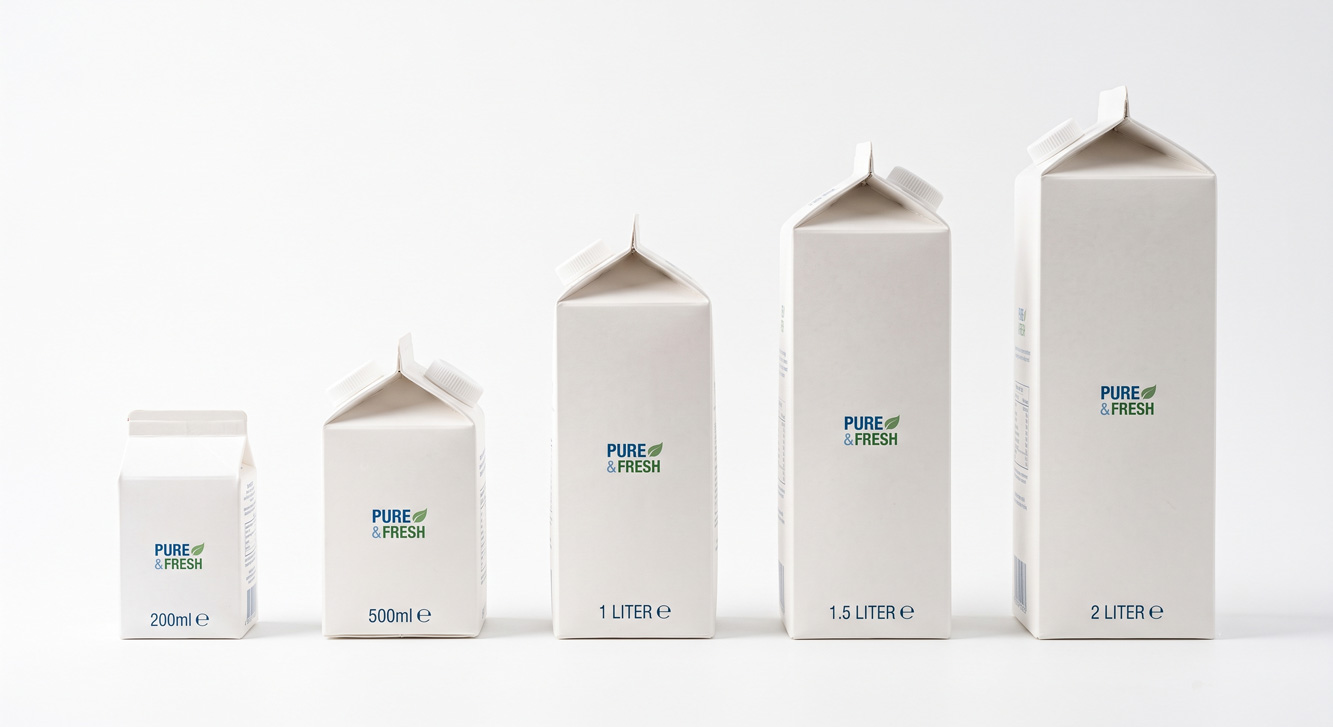
The range of carton sizes available makes this format highly versatile for different product categories and consumer segments.
Market Trends and Sustainability
Market Growth
The shelf‑stable packaging market is expanding rapidly:
- Global ambient food packaging market: USD 86.64 billion (2024) → USD 139.08 billion (2033) at 5.4% CAGR
- Shelf‑stable cartons market: USD 1.10 billion (2025) → USD 1.51 billion (2032) at 4.59% CAGR
Sustainability Innovations
| Innovation | Impact |
|---|---|
| Paper‑based barriers | Replaces aluminum; reduces carbon footprint |
| Renewable materials | Plant‑based polymers; FSC‑certified paper |
| Lightweighting | Reduced material usage |
The benefits of gable top cartons for milk packaging extend beyond shelf‑stability to include sustainability advantages that align with evolving consumer expectations.
The ASQ Packing Advantage
At ASQ Packing Group , we engineer premium gable top cartons specifically designed for shelf‑stable applications.
Our Technical Capabilities
- Aluminum barrier cartons: Complete oxygen and light barrier for extended shelf life
- EVOH barrier options: Enhanced oxygen barrier with sustainable structure
- Precision sealing: Advanced skiving and hemming technologies
- FSC‑certified paperboard: Sustainable materials from responsibly managed forests
- Custom engineering: Barrier solutions tailored to your shelf‑life requirements
Why Choose ASQ Packing
| Advantage | Benefit |
|---|---|
| Superior Barrier Performance | Complete protection against oxygen, light, and moisture |
| Seal Integrity | Advanced sealing technologies prevent recontamination |
| Sustainability | FSC‑certified materials and recyclable designs |
| Technical Expertise | Deep understanding of shelf‑stable packaging science |
Frequently Asked Questions
1. What is the difference between shelf‑stable and refrigerated products?
Shelf‑stable products can be safely stored at room temperature for months or years because they have been commercially sterilized and packaged to prevent recontamination. Refrigerated products rely on continuous cold storage to suppress microbial growth and typically have shelf lives of days to weeks.
2. How does aseptic packaging work?
Aseptic packaging involves sterilizing the product (via UHT at 135–150°C for 2–6 seconds), sterilizing the packaging material (with H₂O₂ or e‑beam), and filling the sterile product into the sterile package within a sterile environment.
3. What is the difference between aseptic and retort processing?
In aseptic processing, the product and package are sterilized separately and combined in a sterile environment. In retort processing, the product is filled into a package, sealed, and then sterilized together in a pressure vessel. Aseptic preserves product quality better but has higher capital costs.
4. Do shelf‑stable products contain preservatives?
No. Shelf‑stable products achieve their extended shelf life through thermal sterilization and barrier packaging alone—not through chemical preservatives.
5. How long do shelf‑stable products last?
Aseptically packaged products typically last 6–12 months at ambient temperature. Retort‑processed products can last 1–5+ years. Once opened, all shelf‑stable products must be refrigerated.
6. Why is aluminum foil used in shelf‑stable cartons?
Aluminum foil provides complete oxygen and light barrier protection. It prevents oxidation, vitamin degradation, and photo‑oxidation that would otherwise occur during extended ambient storage.
7. Are shelf‑stable cartons recyclable?
Yes, but the aluminum layer complicates recycling. Emerging paper‑based barrier technologies are improving recyclability while maintaining barrier performance.
8. What is the difference between ESL and aseptic?
ESL (Extended Shelf Life) processing does not achieve sterility—it extends shelf life by reducing spoilage organisms. ESL products must be refrigerated and have shelf lives of 30–45 days. Aseptic products are commercially sterile and shelf‑stable for 6–12 months at ambient temperature.
Ready to Engineer Your Shelf‑Stable Packaging Solution?
Whether you are launching a new UHT dairy product, plant‑based beverage, or shelf‑stable juice, ASQ Packing Group has the technical expertise and manufacturing capability to deliver premium packaging solutions.
👉 Contact us at ASQ Packing to discuss your shelf‑stable packaging requirements, request samples, or schedule a technical consultation.