
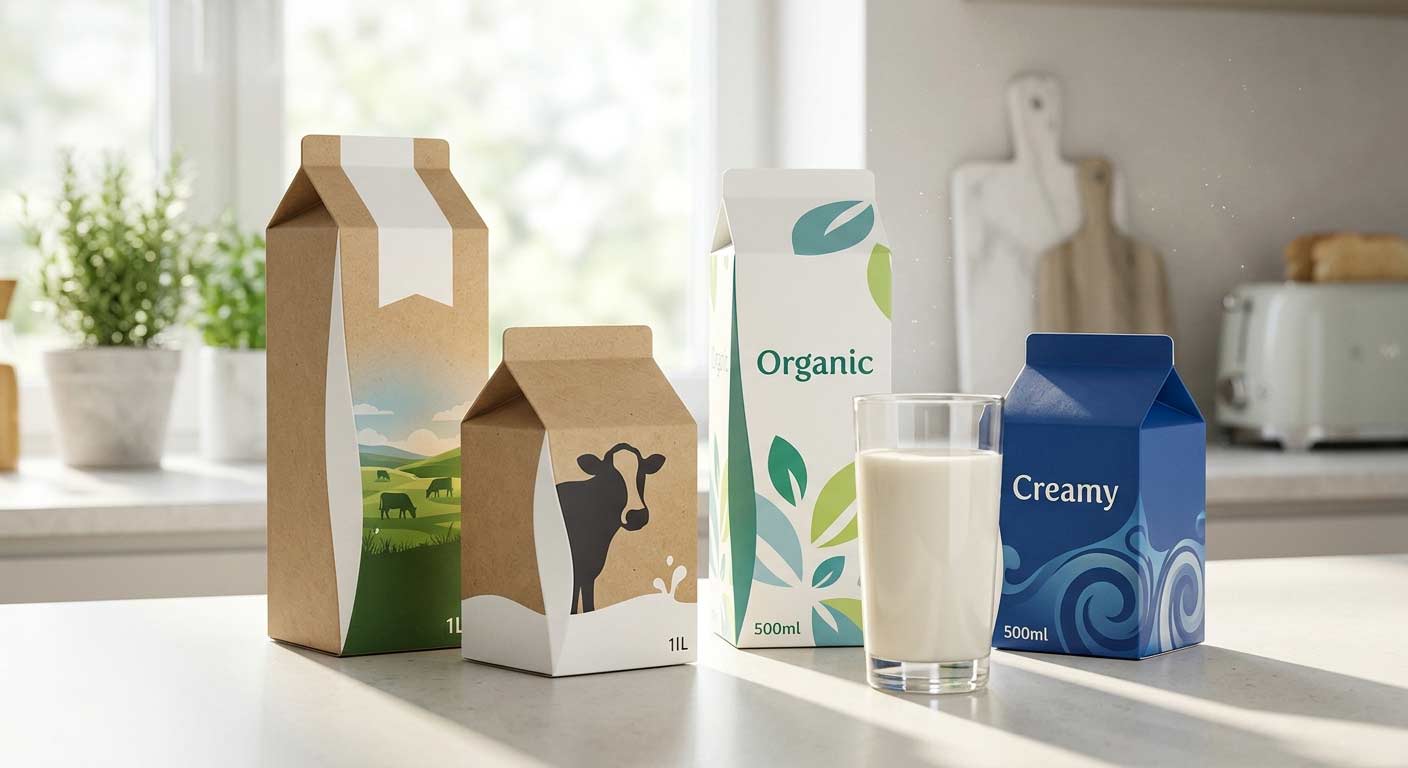
For over a century, the gable top carton has been synonymous with fresh milk. First patented in 1915 by John Van Wormer, this iconic packaging format has stood the test of time. Today, as the dairy industry undergoes a sustainability transformation, gable top cartons are experiencing a powerful resurgence—not as a nostalgic relic, but as the most advanced, sustainable, and consumer-preferred packaging solution for milk and dairy products.
At ASQ Packing, we manufacture premium gable top cartons that combine over 100 years of proven design with cutting-edge material science. Here is why leading dairies worldwide are choosing gable top cartons over plastic bottles—and why your brand should too.
1. Unmatched Sustainability: Renewable, Not Fossil-Based
A. Paperboard from Responsible Sources
Gable top cartons are primarily made from paperboard—a renewable material sourced from responsibly managed forests. Refrigerated gable top cartons typically consist of approximately 80% paper and 20% polyethylene, with no aluminum layer. This high paper content means that every carton starts with a renewable resource, not petroleum.
By contrast, plastic milk jugs are manufactured from HDPE (high-density polyethylene)—a fossil fuel derivative that is neither renewable nor biodegradable.
B. Verified Carbon Footprint Reduction
The environmental advantages are measurable. When German dairy Hochwald switched its Bärenmarke brand from plastic to gable top cartons, the new packaging cut plastic usage by half and increased the proportion of renewable materials by 10%, significantly reducing CO₂ emissions. Hochwald’s plant manager confirmed: “The new packaging significantly reduces our plastic consumption and helps us to reduce CO₂ emissions”.
C. Less Plastic Waste
Every gable top carton represents plastic that never reaches our oceans, landfills, or ecosystems. By switching from plastic bottles to cartons, dairies can dramatically reduce their plastic footprint while maintaining—and even improving—product protection and consumer experience.
D. Recyclability That’s Improving
Carton recycling infrastructure has expanded significantly. Today, 61% of U.S. households can recycle food and beverage cartons through local programs—up from just 37% in 2011. In California, 74% of households now have access to gable-top carton recycling. The carton recycling rate has grown from 6% in 2009 to approximately 20% today. For consumers, the gable top carton is also easier and more space-saving to dispose of thanks to its easy fold line.
2. Superior Product Protection & Extended Shelf Life
A. Light and Oxygen Barrier
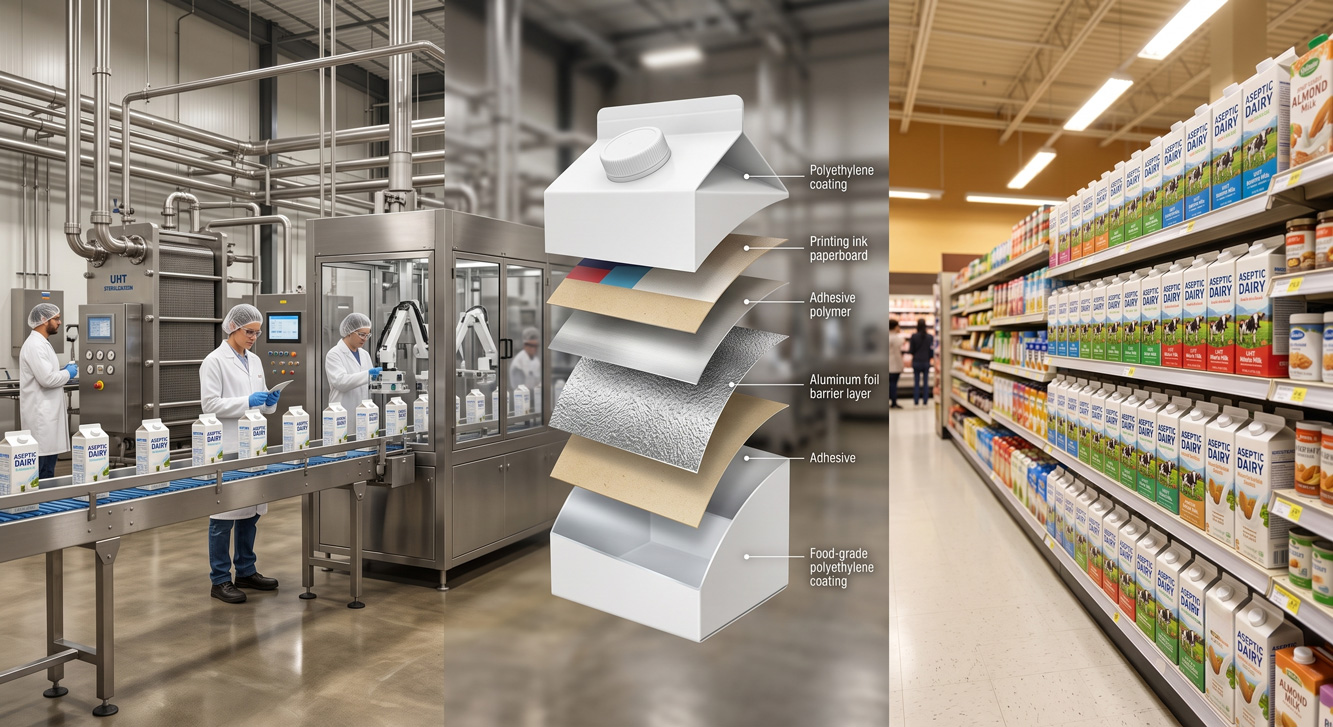
Milk is highly sensitive to light and oxygen—both of which degrade nutritional quality and shorten shelf life. Gable top cartons provide an excellent barrier against oxygen, light, and external agents through their multi-layer structure. The paperboard surface blocks 97% of harmful light that would otherwise destroy vitamins and cause off-flavors.
B. Vitamin Retention
A study conducted by Campden BRI on behalf of Elopak found that Pure-Pak gable top cartons are excellent at retaining vitamins A and B2 in milk for an extended duration, keeping milk fresher for longer. The light-shielding properties of the carton protect light-sensitive nutrients that would otherwise degrade in transparent or translucent plastic containers.
C. Freshness You Can Taste
Consumers consistently associate gable top cartons with freshness and premium quality. The superior barrier protection ensures that milk reaches consumers tasting exactly as it should—fresh, pure, and full of nutritional value.
D. Cold-Chain and Ambient Options
Gable top cartons are available in both short-term shelf life (refrigerated, 7-30 days) and long-term shelf life (aseptic, 3 months to 1 year) variants. Advanced liquid packaging cartons with paper–film–aluminium lamination technology keep beverages shelf-stable at room temperature for the long term, reducing the need for cold-chain logistics.
3. Logistical Efficiency: Flat Shipping = Lower Costs
A. Optimized Transport and Storage
Empty gable top cartons are shipped and stored flat—not pre-formed like plastic jugs. This compact shape optimizes logistics and warehouse storage. A single pallet can carry roughly twice as many units as glass bottles, dramatically improving transport efficiency. Before filling, flat-shipped cartons reduce material-storage space to about 1/50 that of equivalent glass bottles.
B. Reduced Carbon Emissions
Fewer trucks mean less fuel and lower emissions across the supply chain. The efficient product-to-packaging ratio—with shelf-stable cartons averaging 94% product and only 6% packaging—means that products in cartons can be shipped using fewer trucks, reducing fuel consumption and greenhouse gas emissions.
C. Streamlined Filling Operations
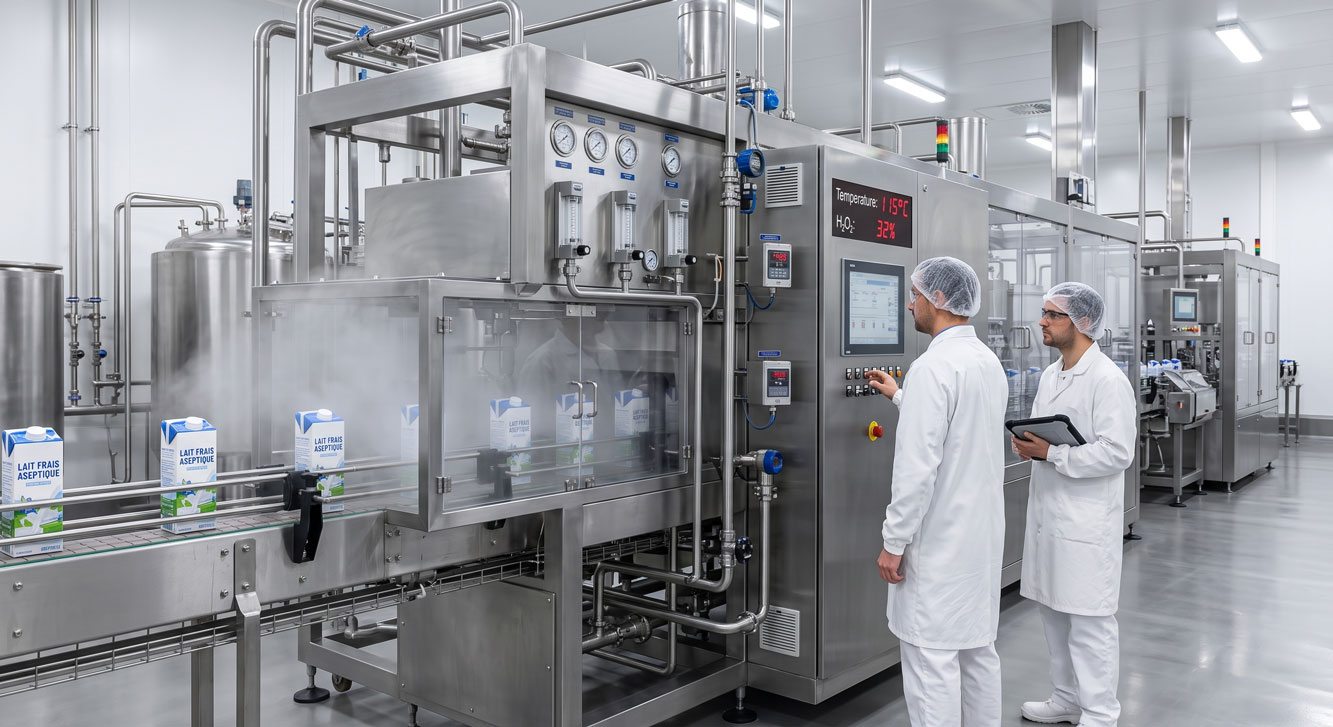
Unlike plastic packaging, which requires separate machines for bottle blowing, filling, and labeling, a single filling machine is sufficient for gable top cartons. This simplifies operations, reduces capital expenditure, and accelerates time-to-market. Modern filling machines can achieve 95% line efficiency and fill up to 14,000 cartons per hour.
D. Quick Format Changeovers
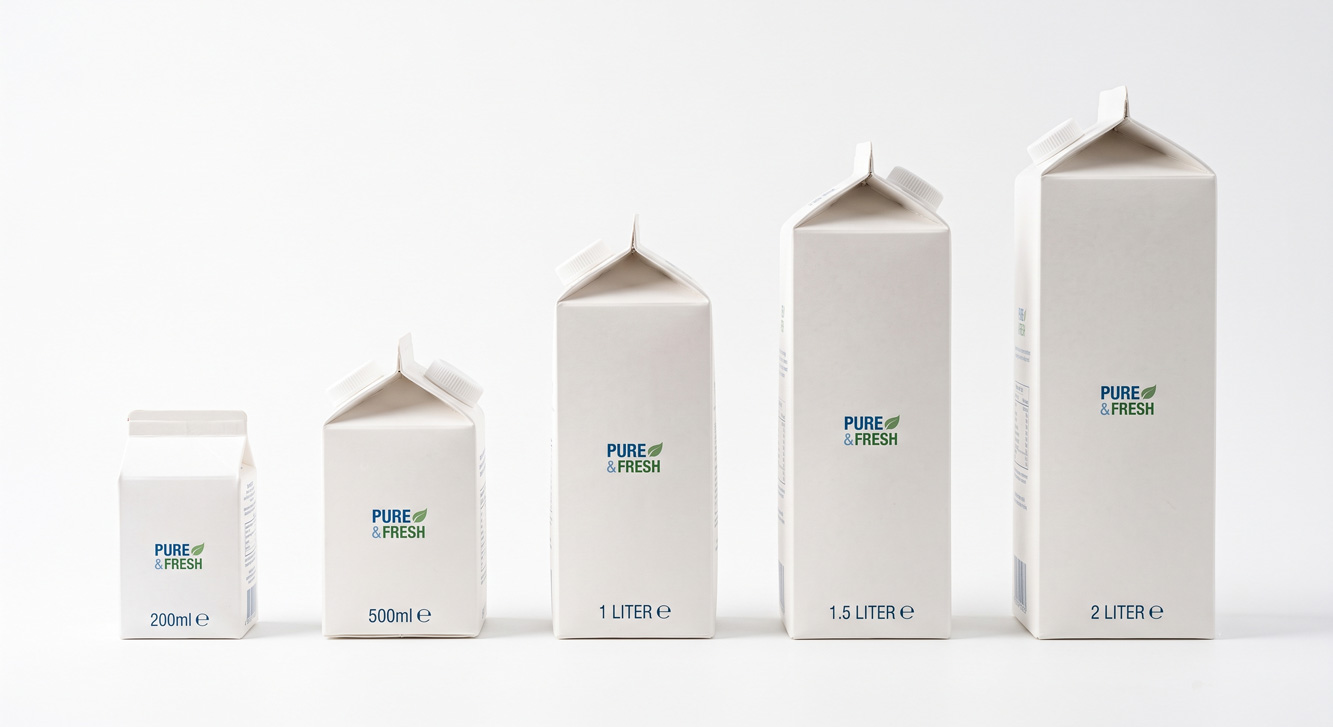
With the same machine and the same carton cross-section, manufacturers can package different volumes—from 200 ml to 2 liters—with quick and automated format changeovers. This flexibility allows dairies to respond rapidly to market demands without major equipment investments.
4. Premium Branding & Shelf Impact
A. Four-Sided Printable Canvas
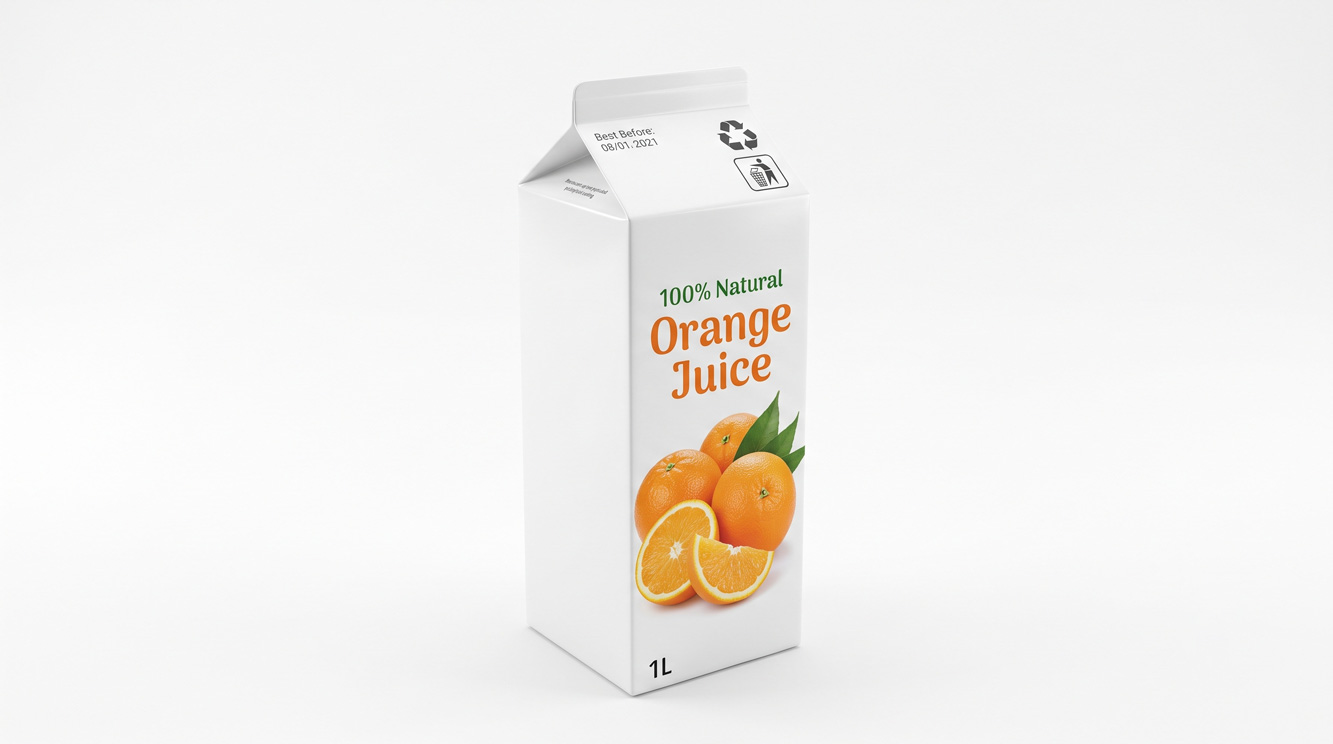
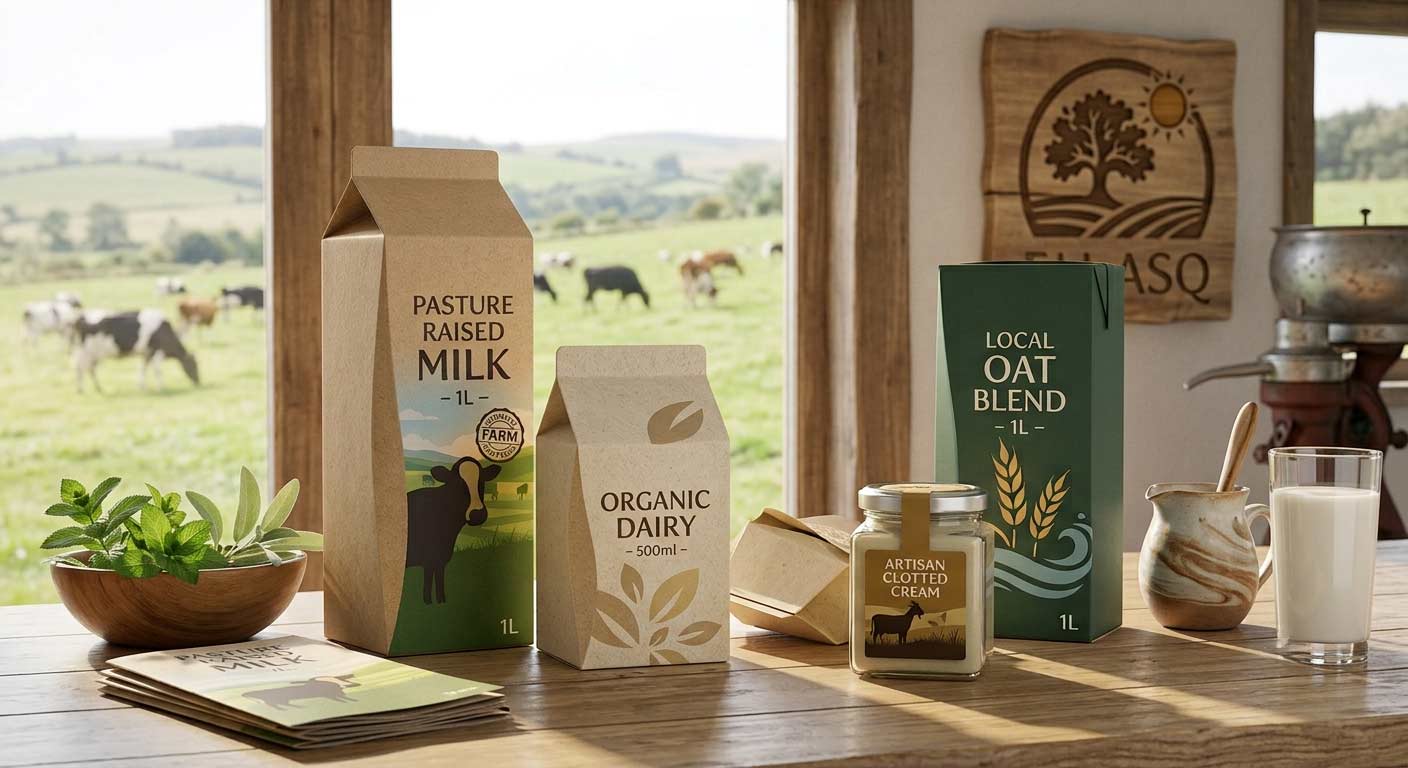
Unlike plastic bottles with their limited label area, gable top cartons offer four large printable panels for high-impact branding. This expansive surface allows dairies to feature nutritional information, storytelling imagery, and sustainability credentials prominently.
B. Distinctive Shelf Presence
The iconic “gable roof” shape creates immediate brand recognition and premium shelf appeal. As Arla Foods noted when launching its Milka chocolate milk in cartons: “It has a very premium appeal and helps our products to stand out on shelf. In addition, it delivers strong on sustainability”.
C. Consumer Preference
Independent consumer surveys consistently show strong preference for gable top cartons. When Hochwald tested Elopak’s gable top packaging, it garnered 77% purchase intent—the highest among all options presented. Consumers increasingly associate gable top cartons with freshness, quality, and environmental responsibility.
5. Consumer Convenience & Functionality
A. Easy Pouring and Resealing
The gable top design allows for a well-designed pour spout and secure resealability—features that consumers find convenient and fresh. Modern closures like tethered caps deliver a high level of user-friendliness when opening, resealing, and pouring.
B. Sturdy and Leak-Proof
High GSM paperboard makes gable top cartons sturdy and resistant to denting or squeezing—unlike rigid plastic bottles that can deform. This ensures milk stays safe throughout the supply chain, from processing plant to kitchen countertop.
C. Space-Efficient Design
The rectangular shape of gable top cartons allows for efficient stacking on shelves and in refrigerators—saving space for both retailers and consumers. Empty cartons are also easy to crush, minimizing household waste volume.
D. Superior Hygiene Performance
Modern gable top filling lines achieve hygiene standards comparable to aseptic filling machines. The carton and cap can be disinfected using vaporised hydrogen peroxide, achieving levels of hygiene stipulated by VDMA Class 4 standards. This ensures that milk remains safe from contamination throughout its shelf life.
6. Market Momentum: The Numbers Don’t Lie
A. A Growing Market
The global gable top liquid cartons market was valued at USD 10.17 billion in 2025 and is projected to grow to USD 16.79 billion by 2034, exhibiting a CAGR of 5.81%. Asia Pacific dominated the global market with a 37.91% share in 2024, driven by strong dairy consumption and growing demand for eco-friendly packaging.
B. Driving Forces
- Global milk production exceeds 881 million tonnes annually, with over 80% of the global population consuming dairy products regularly
- Approximately 133 million dairy farms operate globally, supporting a vast supply chain that depends on secure packaging
- The surge in e-commerce grocery delivery has increased demand for durable packaging that can withstand shipping stresses
C. Industry-Wide Adoption
Leading dairies are making the switch. Arla Foods, Hochwald, and Milk & More have all transitioned to gable top cartons for their fresh milk products. In the UK, Milk & More—the oldest and largest doorstep milk delivery service—introduced cartons for its fresh milk for the first time, giving customers the option between traditional glass bottles and recyclable cartons.
7. Innovation: The Future Is Even Better
A. Plant-Based Materials
Manufacturers are increasingly incorporating plant-based materials such as renewable paperboard and bio-based polymers derived from sugarcane and wood fibers. This reduces reliance on fossil fuels and further lowers the carbon footprint of gable top cartons.
B. Paper-Based Barriers
The industry is developing aseptic cartons using paper-based barriers that replace traditional aluminum foil layers. New structures consist of up to 80% paper, with renewable content reaching 92% when combined with plant-based polymers.
C. Smart Packaging
The integration of smart packaging technologies—such as QR codes, NFC, and RFID tags—is transforming gable top packaging into an interactive, traceable, and eco-friendly solution. This enables brand engagement, supply chain transparency, and consumer education at scale.
8. Why ASQ Packing Is Your Ideal Manufacturing Partner
Transitioning from plastic bottles to gable top cartons requires more than just a design change—it requires a reliable manufacturing partner with industrial expertise.
At ASQ Packing, we combine cutting-edge production technology with deep material science knowledge. We manufacture gable top cartons that:
- Optimize shelf life through precise barrier formulation
- Elevate your brand with high-precision, premium print quality across all four panels
- Future-proof your business against upcoming regulatory restrictions on single-use plastics
- Reduce your carbon footprint without compromising product integrity or consumer experience
We understand the dairy industry, the supply chain, and the end-consumer. If you are evaluating the switch from plastic to paper, we are ready to design a tailored solution for your product line.
Conclusion: The Case for Gable Top Cartons Is Clear
For milk packaging, gable top cartons offer a compelling combination of benefits that plastic bottles simply cannot match:
| Benefit | Gable Top Cartons |
|---|---|
| Renewable Material | ~80% paperboard from responsible sources |
| Carbon Footprint | Verified lower emissions vs. plastic |
| Product Protection | Blocks 97% of harmful light; retains vitamins A & B2 |
| Shelf Life | 7–30 days (fresh) to 1 year (aseptic) |
| Logistics | Flat shipping; 2× more units per pallet than glass |
| Branding | 4 full printable panels |
| Consumer Preference | 77% purchase intent in surveys |
| Recyclability | 61% U.S. household access; 20% recycling rate (growing) |
The evidence is overwhelming. Gable top cartons are more sustainable, more protective, more logistically efficient, and more consumer-preferred than plastic bottles. The global market is responding, and the infrastructure is evolving.
The question is no longer “Should I switch?” but “How quickly can I scale my transition?”
ASQ Packing is here to help you answer that question.
📦 Ready to Make the Switch?
Contact our team today to request samples or discuss your custom packaging requirements.
👉 Visit us: asqpacking.com
Frequently Asked Questions (FAQ)
1. Are gable top cartons better for milk than plastic bottles?
Yes. Gable top cartons are made primarily from renewable paperboard, block 97% of harmful light that degrades milk quality, and retain vitamins A and B2 for longer than plastic containers.
2. How long does milk stay fresh in a gable top carton?
Depending on the filling process, fresh milk in refrigerated gable top cartons stays fresh for 7–30 days. Aseptic (long-term shelf life) cartons can keep milk fresh for 3 months to 1 year without refrigeration.
3. Can gable top cartons be recycled?
Yes. 61% of U.S. households have access to carton recycling, and in California, 74% of households can recycle gable-top cartons. The recycling rate has grown from 6% in 2009 to approximately 20% today.
4. Are gable top cartons more expensive than plastic bottles?
Initial costs may be higher, but logistical savings from flat shipping and storage, combined with brand premium positioning and regulatory compliance, often offset the difference. One filling machine replaces multiple plastic packaging machines, reducing capital expenditure.
5. What sizes are available for milk cartons?
Gable top cartons are available from 200 ml to 2 liters and beyond, with the same machine able to handle multiple volumes with quick changeovers.