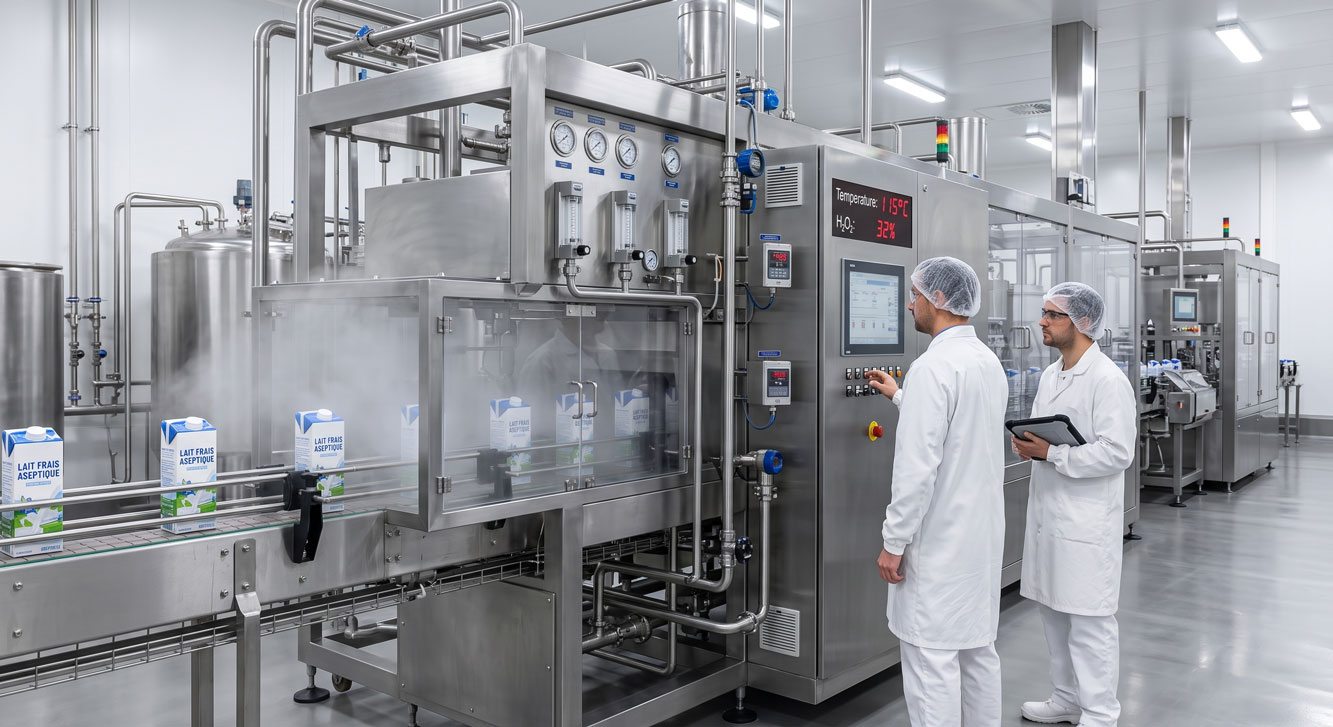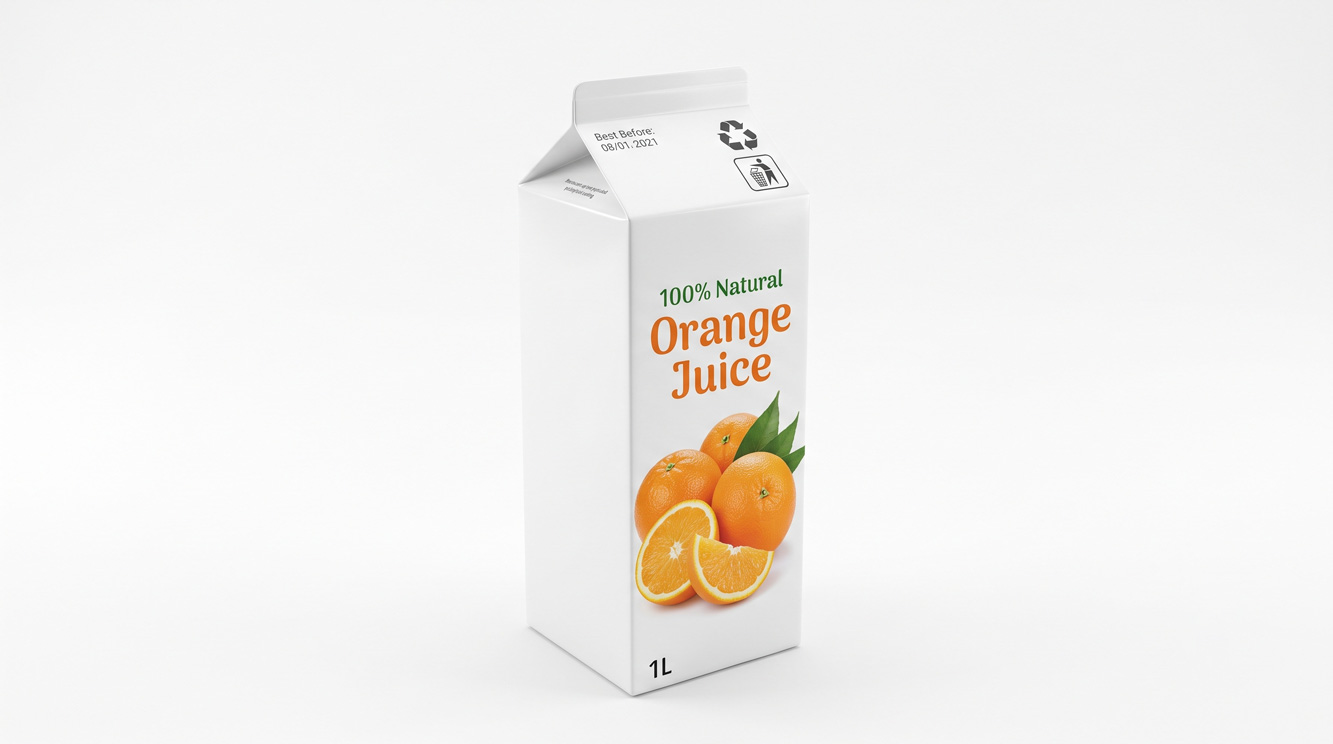

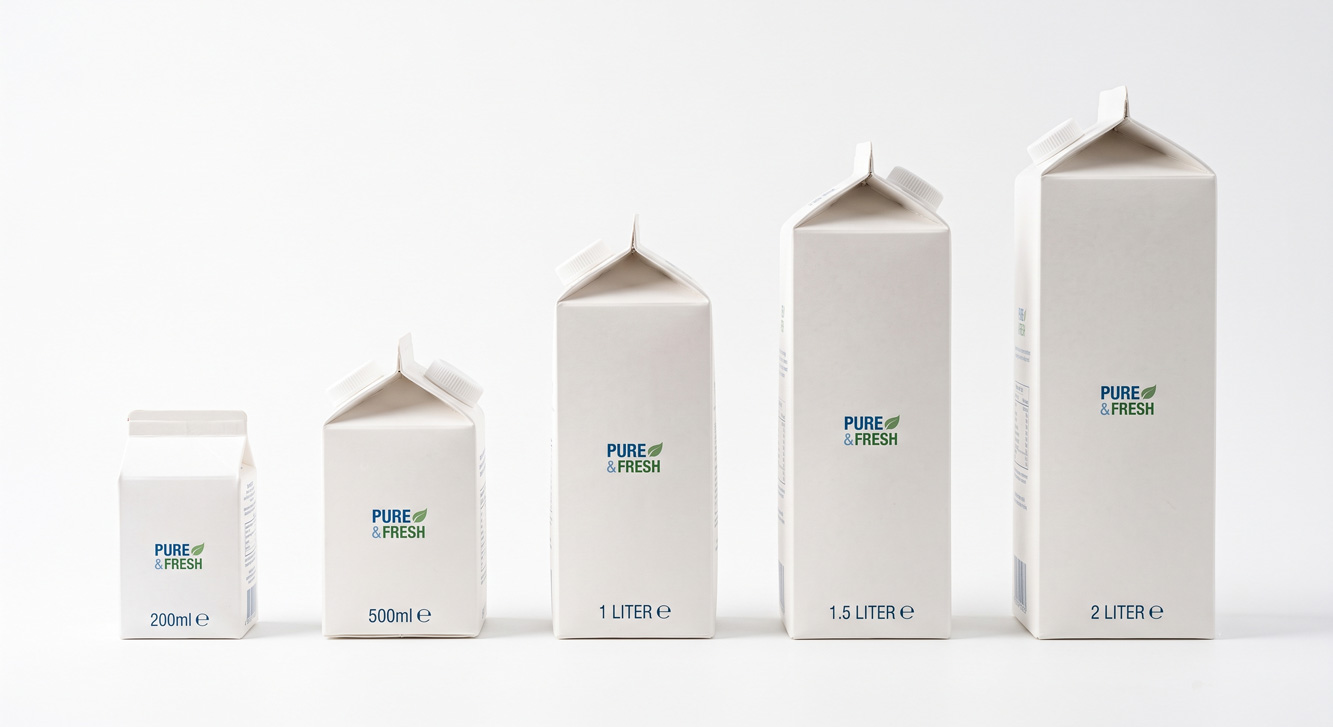
Gable top cartons are among the most recognizable and trusted packaging formats in the beverage and liquid food industry. From the small single-serving milk cartons found in school cafeterias to the large family-size juice containers on supermarket shelves, gable top cartons come in a surprisingly wide range of sizes.
This guide provides a comprehensive overview of standard gable top carton dimensions, capacity options, and the key factors to consider when selecting the right size for your product.
The Standard Base Sizes
The most critical dimension of a gable top carton is its base size—the cross-section dimensions of the carton’s bottom. This measurement determines which filling machine can process the carton and what range of volumes can be packaged.
The Most Common Base Dimensions
| Base Size (mm) | Base Size (inches) | Category |
|---|---|---|
| 57 × 57 | 2.24 × 2.24 | Mini / Slim |
| 65 × 65 | 2.56 × 2.56 | Slim |
| 70 × 70 | 2.76 × 2.76 | Standard |
| 70 × 95 | 2.76 × 3.74 | Rectangular |
| 91 × 91 | 3.58 × 3.58 | Jumbo |
| 95 × 95 | 3.74 × 3.74 | Large |
| 140 × 140 | 5.51 × 5.51 | Bulk |
These standard sizes are recognized across the packaging industry. Notably, a filling machine is typically designed for one specific base size—you cannot run 57mm cartons on a machine built for 70mm cartons without significant equipment changes. To ensure compatibility, it’s essential to work with an experienced carton packaging supplier who can help match the right base size to your specific filling line requirements.
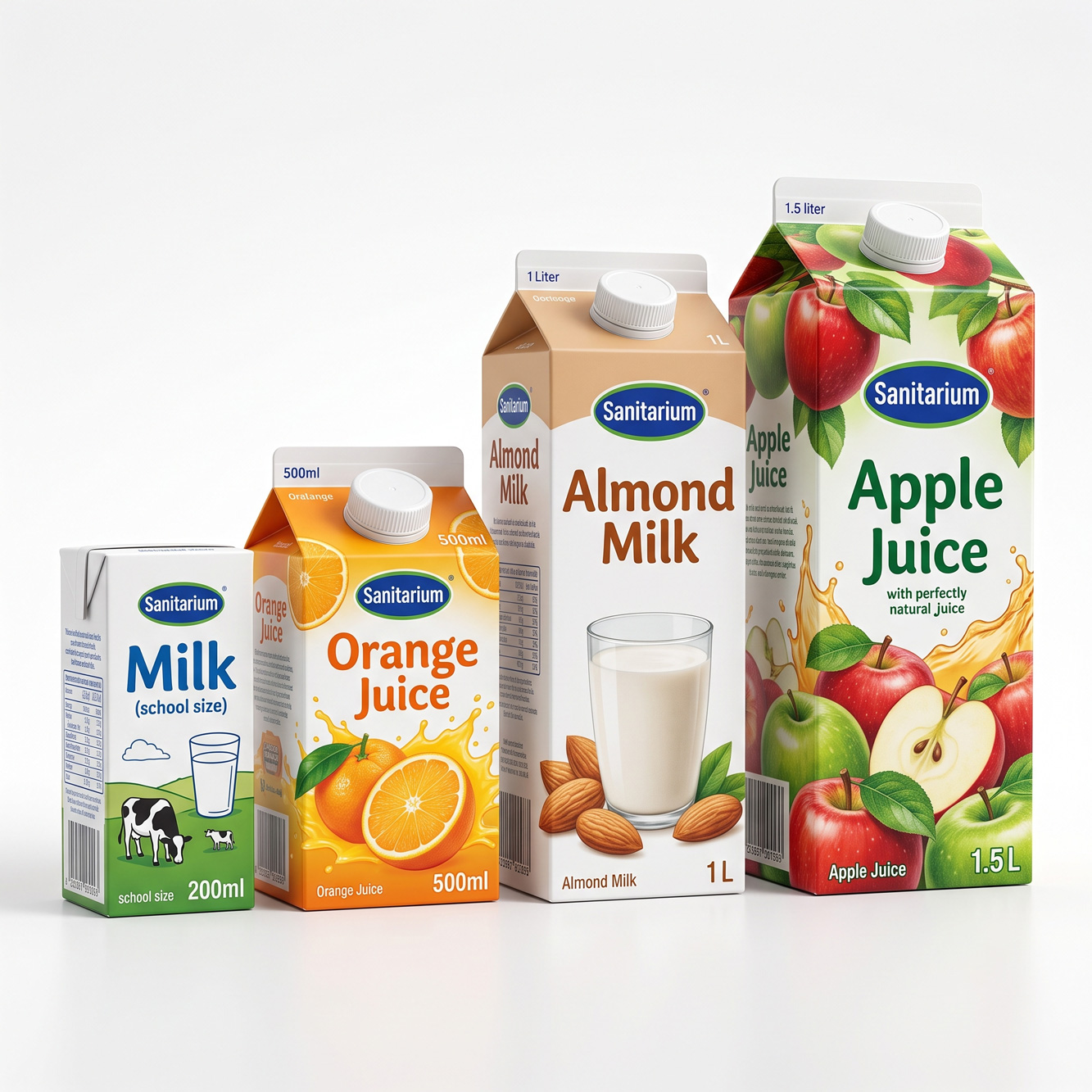
Complete Size Chart by Base Dimension
Below is a detailed breakdown of the most common gable top carton sizes, organized by base dimension.
57mm × 57mm – Mini / Slim
This is the smallest standard base size, ideal for single-portion products and on-the-go consumption.
| Capacity (ml) | Capacity (oz) | Common Applications |
|---|---|---|
| 200 ml | ~6.8 oz | Single-serve milk, school milk programs |
| 250 ml | ~8.4 oz | Single-serve juice, flavored milk |
| 330 ml | ~11.2 oz | Energy drinks, premium juices |
| 400 ml | ~13.5 oz | Plant-based beverages, smoothies |
| 500 ml | ~16.9 oz | Larger single-serve, meal accompaniments |
Some sources also list a 65mm × 65mm slim base with capacities of 350 ml and 750 ml.
70mm × 70mm – Standard
The most common and versatile base size. This is the industry workhorse, compatible with a vast range of filling equipment and capable of packaging volumes from 250 ml to 1.1 liters.
| Capacity (ml) | Capacity (oz) | Common Applications |
|---|---|---|
| 250 ml | ~8.4 oz | School milk, single-serve juice |
| 320 ml | ~10.8 oz | Premium juice, plant-based milk |
| 350 ml | ~11.8 oz | Yogurt drinks, flavored milk |
| 500 ml | ~16.9 oz | Standard single-serve milk and juice |
| 568 ml | ~19.2 oz | “Pint” size (UK market) |
| 750 ml | ~25.4 oz | Medium family-size |
| 875 ml | ~29.6 oz | Larger medium-size |
| 1,000 ml (1L) | ~33.8 oz | Popular family-size carton |
| 1,100 ml | ~37.2 oz | Extra-large single-serve |
Some manufacturers also offer 2000 ml capacity on this base.
70mm × 95mm – Rectangular
This rectangular base offers a wider, more stable footprint for larger volumes while using the same width as the standard 70mm base.
| Capacity (ml) | Capacity (oz) | Common Applications |
|---|---|---|
| 1,250 ml | ~42.3 oz | Premium juice, large plant-based milk |
| 1,500 ml | ~50.7 oz | Family-size juice, cream |
91mm × 91mm – Jumbo
A larger square base designed for bulk and family-size packaging.
| Capacity (ml) | Capacity (oz) | Common Applications |
|---|---|---|
| 2,000 ml (2L) | ~67.6 oz | Family-size milk, large juice |
95mm × 95mm – Large
The most common base for large-format gable top cartons.
| Capacity (ml) | Capacity (oz) | Common Applications |
|---|---|---|
| 1,000 ml (1L) | ~33.8 oz | Large single-serve / small family |
| 1,500 ml | ~50.7 oz | Family-size milk and juice |
| 2,000 ml (2L) | ~67.6 oz | Standard large family-size |
140mm × 140mm – Bulk
The largest standard base size, designed for high-volume commercial and food service applications.
| Capacity (ml) | Capacity (oz) | Common Applications |
|---|---|---|
| 4,000 ml (4L) | ~135.3 oz | Food service, commercial kitchens |
| 5,000 ml (5L) | ~169.1 oz | Bulk liquid ingredients, catering |
Common Market Volumes
While the base size determines the technical compatibility with filling machines, the most commonly referenced capacities in the market are:
- 200 ml – Single-serve, school programs
- 250 ml – Standard single-serve
- 500 ml – Popular single-serve / small multi-serve
- 1,000 ml (1 Liter) – Most common family size
- 2,000 ml (2 Liters) – Large family size
Manufacturers also offer intermediate sizes such as 330 ml, 350 ml, 568 ml, 750 ml, and 1,500 ml to meet specific market needs. For brands in the dairy sector, the benefits of gable top cartons for milk packaging are well-documented, with size flexibility being a key advantage.
Cross-Section Flexibility
One of the key advantages of modern gable top packaging is that with the same machine and the same carton cross-section, you can package different volumes—for example, 1,000 ml, 1,500 ml, 1,750 ml, half-gallon, and 2,000 ml. This allows brands to offer multiple product sizes without investing in different filling equipment.
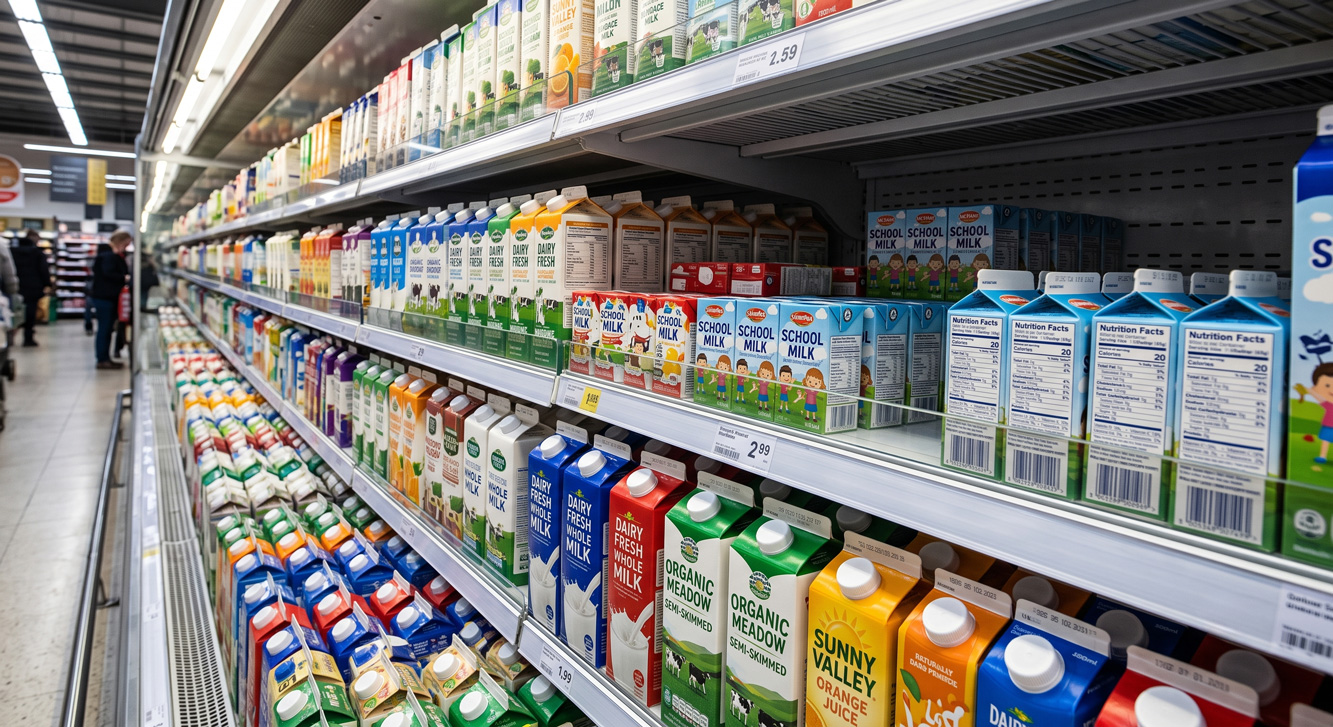
3-Layer vs. 6-Layer Cartons: What’s the Difference?
The size of the carton does not determine its layer structure, but the intended shelf life does.
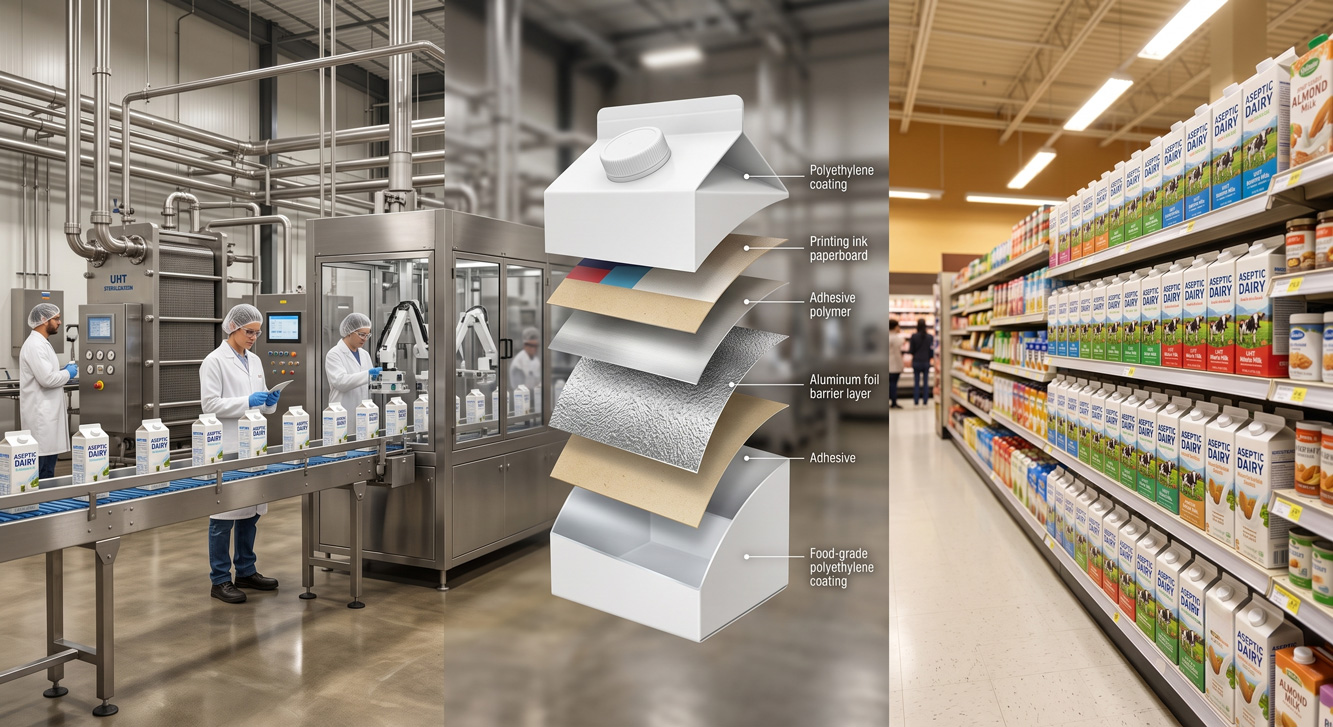
| Feature | 3-Layer Carton | 6-Layer Carton (with Aluminum Foil) |
|---|---|---|
| Structure | PE + Paperboard + PE | PE + Paperboard + Aluminum Foil + PE |
| Shelf Life | Short (7–21 days, refrigerated) | Long (6–12 months, ambient) |
| Filling Type | Cold filling | Hot filling (85–88°C) |
| Common Products | Fresh milk, yogurt, fresh juice | UHT milk, shelf-stable juice, plant-based drinks |
| Post-Filling Treatment | Refrigeration required | Inverted sterilizing and spray cooling |
3-layer cartons are suitable for products that must be kept under cold storage with a short shelf life, while 6-layer cartons with aluminum foil provide an oxygen and light barrier that enables long shelf life at ambient temperature. Understanding these differences is crucial when selecting the right barrier properties for your product’s packaging.
Why Size Matters: Key Selection Criteria
Filling Machine Compatibility
This is the most critical factor. A filling machine is typically designed for one specific base size. Before selecting a carton size, verify that your existing or planned filling equipment can handle that base dimension. For a deeper understanding of how different filling technologies handle various carton sizes, explore the comparison of web-fed vs. blank-fed machines in aseptic lines .
Product Type and Volume
| Product Category | Typical Sizes | Base Size |
|---|---|---|
| School milk | 200–250 ml | 57 × 57 |
| Single-serve milk/juice | 250–500 ml | 70 × 70 |
| Family-size milk | 1–2 L | 95 × 95 |
| Plant-based beverages | 250 ml–1.5 L | 70 × 70 or 95 × 95 |
| Food service / bulk | 4–5 L | 140 × 140 |
Target Consumer
- On-the-go / convenience: 200–330 ml (mini size)
- Individual consumption: 250–500 ml
- Small family: 750 ml–1 L
- Large family: 1.5–2 L
- Food service / commercial: 4–5 L
Supply Chain and Storage
Gable top cartons are shipped and stored flat (as sliced carton pieces), which dramatically reduces storage space requirements. A medium-size cardboard box can hold approximately 1,000 sliced carton pieces. This flat shipping also reduces transport costs and warehouse space.
Custom Printing and Branding
The size of the carton determines the printable surface area. Larger cartons offer more space for branding, nutritional information, and storytelling. All gable top cartons provide strong panel space for up to 8–10 color carton printing. For brands looking to maximize shelf impact, custom printed gable top cartons offer the flexibility to create distinctive packaging that stands out, regardless of size.
Beyond Standard: Customization Options
While standard sizes cover most applications, gable top cartons can be customized in several ways:
- Custom base dimensions – Available from many manufacturers
- SPOUT-PAK® closures – Threaded closures that prevent spills and allow resealing
- Windows – To see the packaged product
- Braille text – For blind consumers
- Ring pulls – For easier opening
- Custom printing – Up to 8–10 colors with high-quality lithographic or flexographic printing
Frequently Asked Questions
1. What is the most common gable top carton size?
The 70mm × 70mm base with 1,000 ml (1 liter) capacity is the most commonly used size in the market.
2. Can I use different carton sizes on the same filling machine?
No. A filling machine is typically designed for one specific base size (e.g., 57mm, 70mm, or 95mm). However, with the same base size, you can package different volumes.
3. What is the difference between a 3-layer and a 6-layer carton?
3-layer cartons (PE + paperboard + PE) are for short shelf-life products (7–21 days, refrigerated). 6-layer cartons (with aluminum foil) are for long shelf-life products (6–12 months, ambient).
4. Are gable top cartons available in sizes larger than 2 liters?
Yes. Sizes up to 4 liters and 5 liters are available, typically with a 140mm × 140mm base.
5. What size is best for school milk programs?
200 ml or 250 ml in the 57mm × 57mm mini base size.
6. How are gable top cartons stored before filling?
They are stored as flat, sliced carton pieces, which take up very little space. A medium-size box can hold about 1,000 pieces.
7. Where can I find more information about gable top carton options?
For a comprehensive overview of what to consider when selecting a packaging partner, review these top 10 questions to ask before choosing a carton packaging supplier .
Conclusion
Gable top cartons offer an impressive range of sizes, from 200 ml single-serve containers to 5-liter bulk packages. Understanding the relationship between base dimensions, capacity options, and filling equipment compatibility is essential for making the right packaging choice. With the ability to customize both size and features, gable top cartons continue to be one of the most versatile and sustainable packaging solutions available to beverage and food brands worldwide. For more insights on sustainable packaging innovations, explore the future of sustainable beverage packaging .