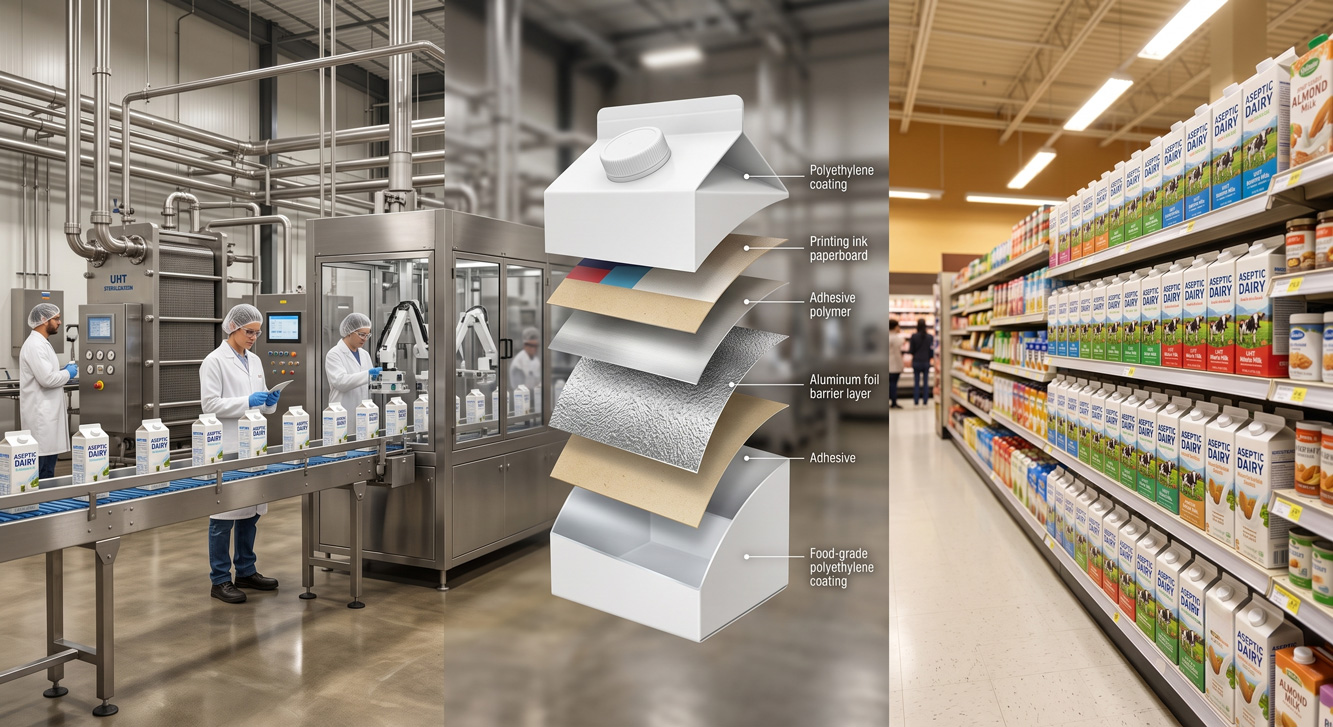

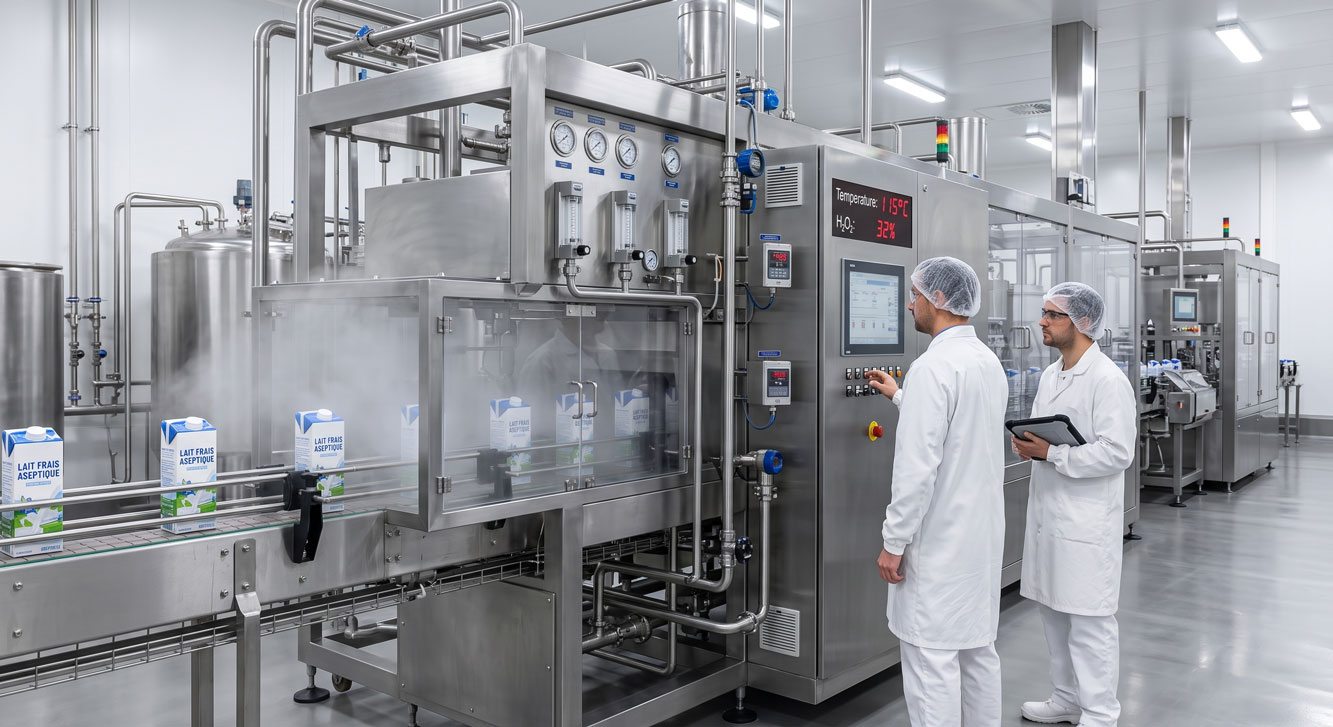
Executive Summary – High-speed filling machinery, operating at speeds reaching 1,500 containers per minute, generates significant noise and vibration that impact worker safety, equipment longevity, and product quality. The primary noise sources include high-speed rotating components (augers, motors), pneumatic systems, and mechanical impacts during sealing and indexing operations. Sound levels at filling machine operator positions typically range from 80 to 96 dBA—approaching or exceeding OSHA’s 90 dBA permissible exposure limit. Effective reduction requires a multi-layer approach combining passive isolation (elastomeric mounts, acoustic enclosures), active control (adaptive motion control, active noise cancellation), structural optimization (polymer composites, balanced rotors), and predictive monitoring (continuous vibration analysis). Studies demonstrate that polymer-filled machine components can achieve up to 50% reduction in vibration amplitudes and 66% reduction in acoustic emission, while acoustic enclosures can reduce sound levels by 10–12 dBA. For packaging manufacturers, investing in these technologies delivers measurable ROI through reduced downtime, extended equipment life, and improved worker safety compliance.
Sources of Noise and Vibration in High-Speed Fillers
High-speed filling machinery generates noise and vibration through multiple mechanisms that interact and amplify one another. Understanding these sources is the first step toward effective mitigation—whether you’re operating aseptic filling machines or conventional filling lines.
Mechanical Sources
| Source | Mechanism | Typical Contribution |
|---|---|---|
| Rotating augers and impellers | High-speed rotation creates aerodynamic noise and mechanical imbalance | Primary source |
| Motors and drive systems | Electromagnetic forces and bearing friction generate vibration that resonates throughout the machine | Primary source |
| Sealing and indexing mechanisms | Mechanical impacts during sealing operations create transient vibration | Significant |
| Pneumatic systems | Compressed air exhaust and valve operation generate high-frequency noise | Significant |
| Container handling | Bottle/carton conveyance and indexing create impact noise and surface vibration | Moderate |
The high-speed rotation of the auger, the impact of products on the filling head, and the vibration of the machinery all contribute to noise production. Research has demonstrated that increasing the speed of filling operations amplifies vibration intensity—Laser Doppler vibrometer measurements confirm that machine frame vibration intensifies at higher speeds, leading to powder densification and fill weight variability.
The Vibration-Noise Connection
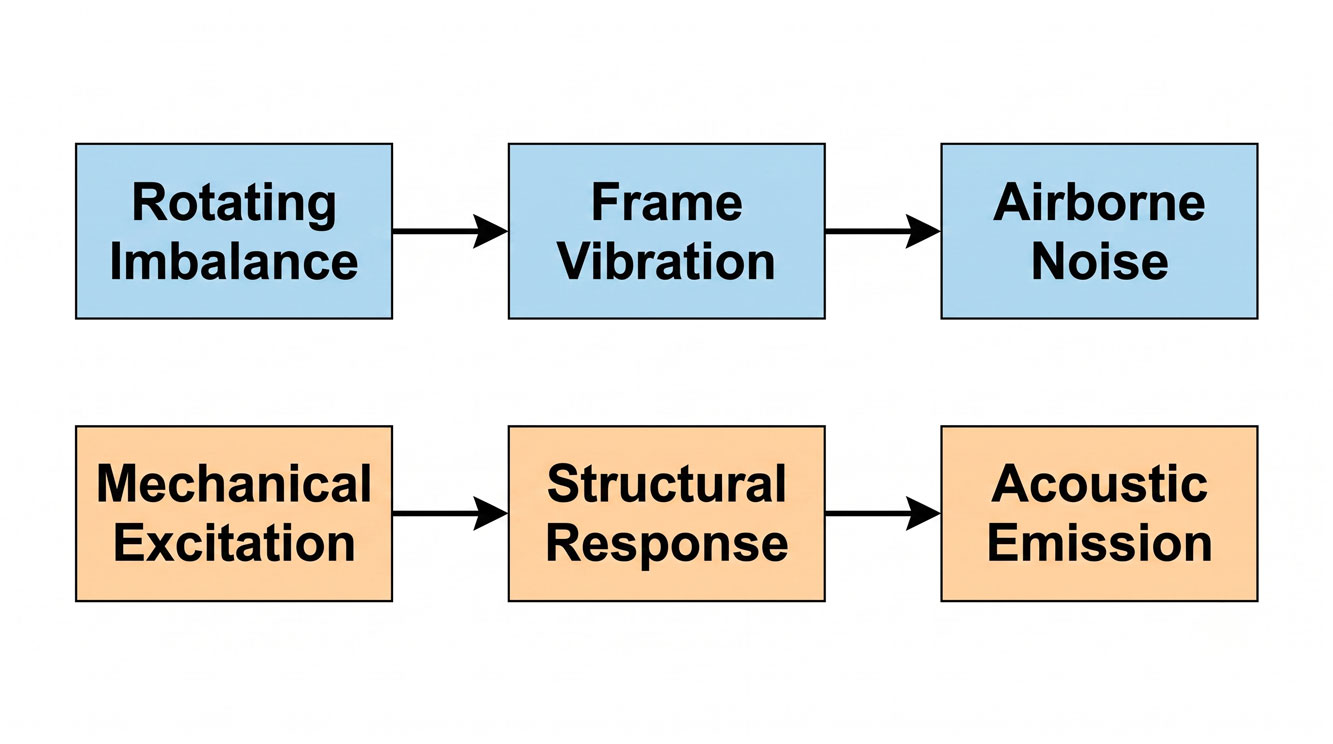
Vibration is the fundamental driver of noise in high-speed machinery. When components vibrate, they transmit mechanical energy to the surrounding air as sound waves. The relationship is direct: reducing vibration amplitudes reduces noise emissions proportionally.
Health and Safety Impacts
Excessive noise in filling operations creates significant workplace hazards:
- Hearing loss – Prolonged exposure to levels above 85 dBA causes permanent damage
- Communication impairment – Excessive noise hinders collaboration and emergency warnings
- Increased stress – Chronic noise exposure raises operator fatigue and error rates
- Regulatory non-compliance – OSHA and local regulations mandate noise controls
Passive Vibration Isolation and Damping
Elastomeric Mounts and Dampers
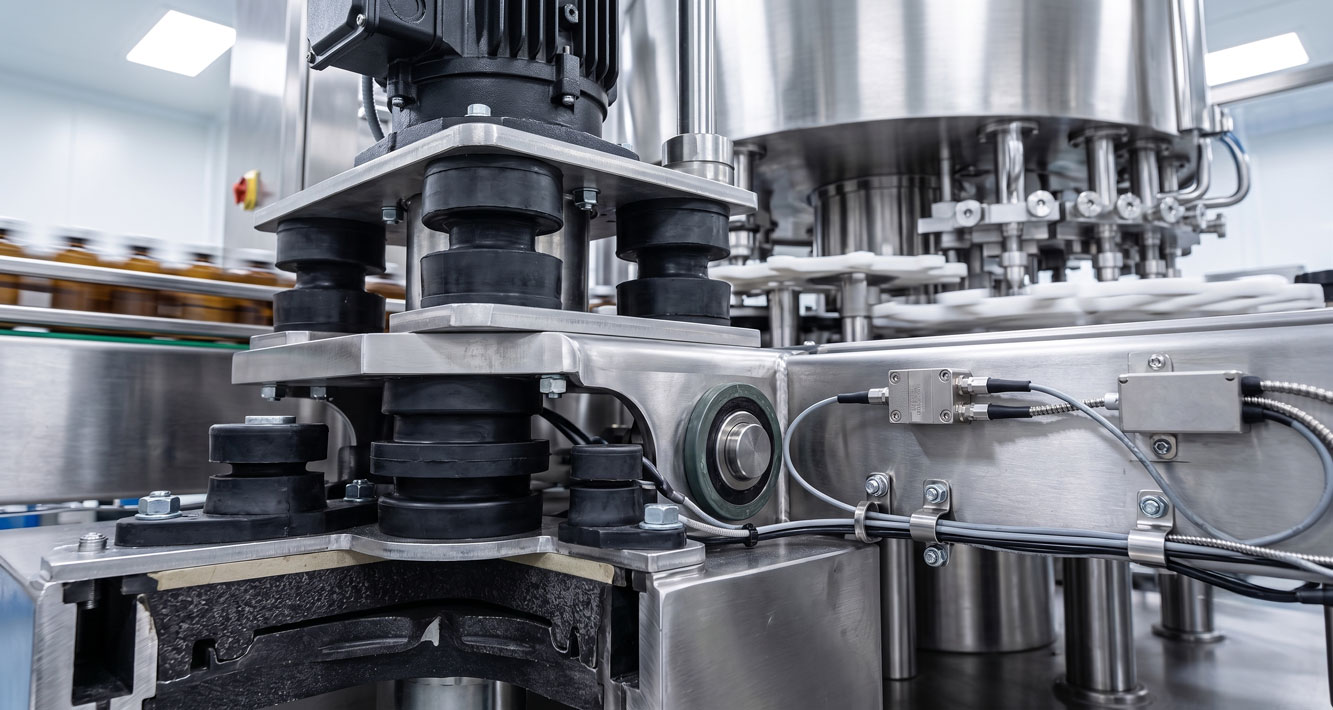
Elastomeric vibration dampers are among the most cost-effective solutions for reducing noise and vibration in high-speed filling machinery. These components absorb kinetic energy generated by vibrations and convert it into heat energy.
| Component | Function | Application |
|---|---|---|
| Rubber isolation mounts | Decouple vibrating components from machine frame | Motors, pumps, compressors |
| Vibration-dampening bearings | Minimize transmission of rotational vibration | Rotating shafts, auger assemblies |
| Hydraulic dampers | Suppress vibration during high-speed operation | Linear motion systems, indexing mechanisms |
| Spring isolation systems | Absorb low-frequency vibrations | Heavy machine bases |
Rubber dampers can be used to isolate labeling heads, filling heads, and other subassemblies from the rest of the machine, ensuring accurate operation and a quieter working environment.
Polymer Fillings and Composite Structures
A re-design approach using polymer fillings in existing machine components has demonstrated remarkable results. By filling hollow machine structures with polymer composites, manufacturers can:
- Reduce vibration amplitudes by up to 50%
- Reduce acoustic emission by up to 66%
- Reduce maximum peak in acoustic emission FFT spectrum by 85%
- Increase damping by over 300% using mineral fillers
The principle behind this approach is that the polymer filling adds material damping without significantly increasing weight. When excited by high-frequency signals (up to 5g acceleration), the benefits are most pronounced—the polymer filling absorbs vibrational energy that would otherwise be transmitted through the machine structure.
Structural Optimization
Machine frame design plays a critical role in vibration transmission. Key design principles include:
- Robust steel construction with integrated vibration-dampening features
- Thermal expansion compensation to maintain accuracy across varying operating conditions
- Rigid connections that minimize mechanical play and backlash
- Lightweight components with high damping properties—carbon fiber-reinforced alloys can reduce weight by 25% while lowering inertia
Acoustic Enclosures and Soundproofing
Full Machine Enclosures
Acoustic enclosures are specially designed structures that contain noise at its source. They work by:
- Absorbing sound energy through acoustic foam and porous materials
- Blocking sound transmission through dense, mass-loaded panels
- Containing noise within the enclosure to prevent escape into the work environment
| Enclosure Type | Noise Reduction | Best Application |
|---|---|---|
| Full acoustic hood | 10–15 dBA | High-noise machines in dedicated areas |
| Partial enclosures | 5–10 dBA | Subassemblies with localized noise sources |
| Acoustic screens | 3–5 dBA | Barrier between operator and machine |
| Sound-insulating chambers | 10–12 dBA | Automatic packaging machines |
The “acoustic box” approach—creating a laboratory-scale enclosure to test soundproofing measures—has proven highly effective for identifying optimal design changes such as openings, gaps, cable passages, door seals, and viewing windows.
Silencers and Mufflers
Pneumatic systems are a major source of high-frequency noise in filling machinery. Installing silencers on exhaust systems and ventilation ducts effectively mitigates noise propagation.
Common silencer types include:
- Reactive silencers – Reflect sound waves back toward the source
- Absorptive silencers – Use porous materials to absorb acoustic energy
- Combination silencers – Provide both reflection and absorption
3.3 Sound-Absorbing Panels
Many modern filling machines are designed with sound-absorbing panels integrated into their structure. These panels:
- Reduce noise levels in the surrounding environment
- Can be retrofitted to existing machines
- Require minimal maintenance over their service life
Active Noise and Vibration Control
Adaptive Speed Control
Advanced control systems automatically adjust motor and pump speeds based on the filling process, minimizing noise without compromising efficiency. By optimizing component speeds, manufacturers can reduce noise generation while maintaining production throughput.
Vibration Suppression Technology
Modern vibration suppression systems use sensors and actuators to actively counteract unwanted vibrations:
- Accelerometers detect vibration in real-time
- Control algorithms calculate counteracting forces
- Actuators apply opposing forces to cancel vibration
This technology has been shown to shorten liquid stabilization wait times by up to 20%, enabling faster machine speeds with reduced vibration.
4.3 Low-Noise Motors and Drives
Replacing standard motors with low-noise motors and optimized mechanical designs significantly reduces the fundamental noise source. Key features include:
- Precision-balanced rotors
- Improved bearing quality
- Optimized gear geometries
- Reduced electromagnetic noise
Predictive Monitoring and Maintenance
Continuous Vibration Analysis
Vibration analysis on both rotating and reciprocating equipment is essential for early detection of mechanical issues. Continuous monitoring enables:
- Early warning of bearing wear and imbalance
- Predictive maintenance scheduling to prevent catastrophic failures
- Root cause analysis of recurring vibration issues
Temperature and Bearing Monitoring
Temperature sensors on bearings provide early warnings of potential failures, allowing maintenance teams to intervene before vibration levels escalate.
| Monitoring Parameter | Detection Capability | Action Trigger |
|---|---|---|
| Vibration amplitude | Imbalance, misalignment, bearing wear | Exceeds baseline by 30% |
| Temperature rise | Bearing degradation, lubrication failure | >10°C above normal |
| Acoustic emission | Early-stage friction, impact damage | Unusual frequency peaks |
5.3 Maintenance Strategies
- Regular calibration of filling heads and indexing mechanisms
- Lubrication management – automatic lubrication systems reduce friction and vibration
- Component balancing – ensuring all rotating parts are properly balanced
- Structural integrity checks – identifying loose connections and worn mounts
Case Study: Polymer Filling in High-Speed Machinery
A study on re-designing machine tool joint components using polymer fillings for high-speed performance demonstrated exceptional results:
| Metric | Without Polymer | With Polymer | Improvement |
|---|---|---|---|
| Vibration amplitude | 5g excitation | 2.5g excitation | 50% reduction |
| Acoustic emission | Baseline | 66% reduction | 66% reduction |
| Peak FFT amplitude | Baseline | 85% reduction | 85% reduction |
The study confirmed that polymer filling is most effective when:
- Excitation frequencies are high (above 1 kHz)
- Component stiffness is sufficient to maintain structural integrity
- The polymer is properly bonded to the metal structure
The Role of Packaging Quality in Filling Performance
The quality and consistency of gable top cartons directly influence filling machine vibration and noise levels. Cartons with dimensional variations, inconsistent seal areas, or material defects can cause:
- Jams and misfeeds – Increasing mechanical impact noise
- Seal inconsistencies – Requiring higher sealing pressures that generate vibration
- Increased downtime – More frequent machine stops for clearing jams
Our custom printed gable top cartons guide provides detailed insights into how carton design and quality impact filling line performance.
The ASQ Packing Advantage
At ASQ Packing Group , we understand that high-speed filling lines require precision engineering to maintain product quality while minimizing noise and vibration.
Our Technical Capabilities
- Precision carton design – Optimized for smooth filling and sealing operations
- Advanced barrier materials – Multi-layer laminates that perform consistently at high speeds
- Quality assurance – Rigorous testing to ensure carton dimensions remain within tight tolerances
- Expert technical support – Assistance with filling line integration and optimization
Why Choose ASQ Packing for High-Speed Filling Operations
| Advantage | Benefit |
|---|---|
| Consistent carton quality | Reduces machine jams and vibration-inducing impacts |
| Precise dimensional tolerances | Ensures smooth indexing and sealing operations |
| Superior material compatibility | Optimized for high-speed filling and sealing processes |
| Technical expertise | Deep understanding of filling line dynamics |
For a comprehensive understanding of how machine architecture impacts filling performance, see our Web-Fed vs. Blank-Fed Machines in Aseptic Lines comparison.
Frequently Asked Questions
1. What is the typical noise level of a high-speed filling machine?
Typical sound levels range from 80 to 96 dBA at operator positions. Some advanced machines with noise-reduction features operate at approximately 60 dBA.
2. What are the main sources of noise in filling machines?
The primary sources are high-speed rotating components (augers, motors), pneumatic systems, and mechanical impacts during sealing and indexing operations.
3. How can polymer fillings reduce noise and vibration?
Polymer fillings absorb vibrational energy, reducing amplitudes by up to 50% and acoustic emission by up to 66%. The polymer adds material damping without significantly increasing weight.
4. Are acoustic enclosures effective for filling machines?
Yes. Acoustic enclosures can reduce sound levels by 10–15 dBA by absorbing and blocking noise at its source.
5. What is the difference between passive and active noise control?
Passive control uses physical barriers, isolation mounts, and damping materials to reduce noise. Active control uses sensors and actuators to detect and counteract vibrations in real-time.
6. How does vibration affect product quality in filling operations?
Vibration can cause powder densification, fill weight variability, and product degradation. In liquid filling, vibration can cause foaming, splashing, and inaccurate fill levels.
7. What maintenance practices reduce noise and vibration?
Regular maintenance includes component balancing, bearing inspection, lubrication management, and structural integrity checks. Continuous vibration monitoring enables predictive maintenance before failures occur.
Ready to Optimize Your High-Speed Filling Line?
Whether you are upgrading existing equipment or designing a new filling line, ASQ Packing Group has the technical expertise and manufacturing capability to support your high-speed packaging operations.
👉 Contact us at ASQ Packing to discuss your filling line requirements, request samples, or schedule a technical consultation.