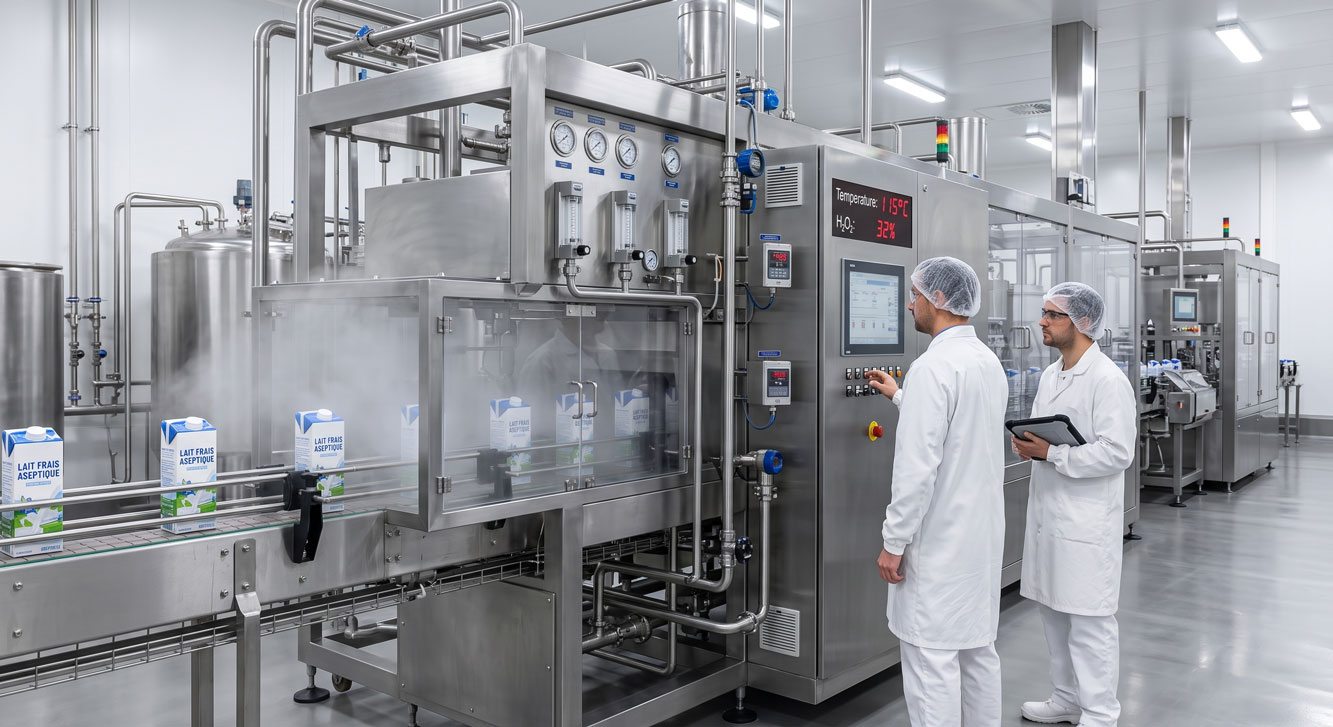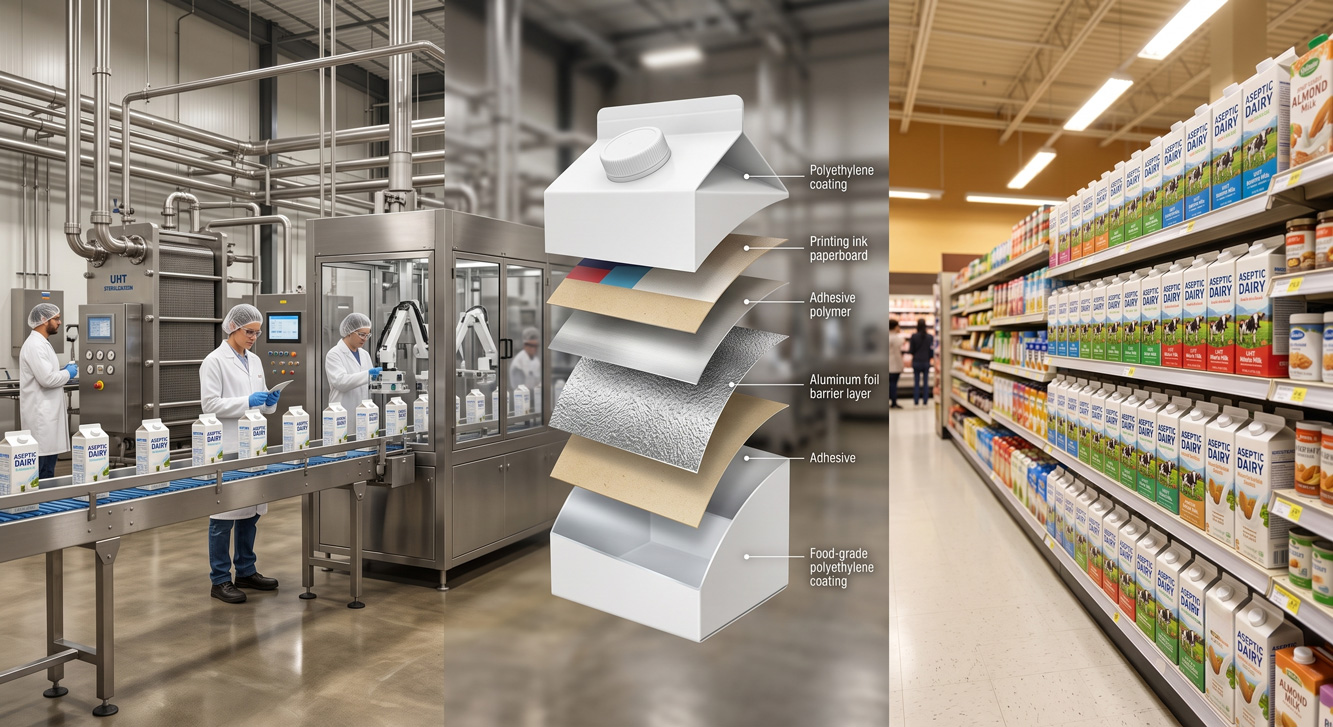

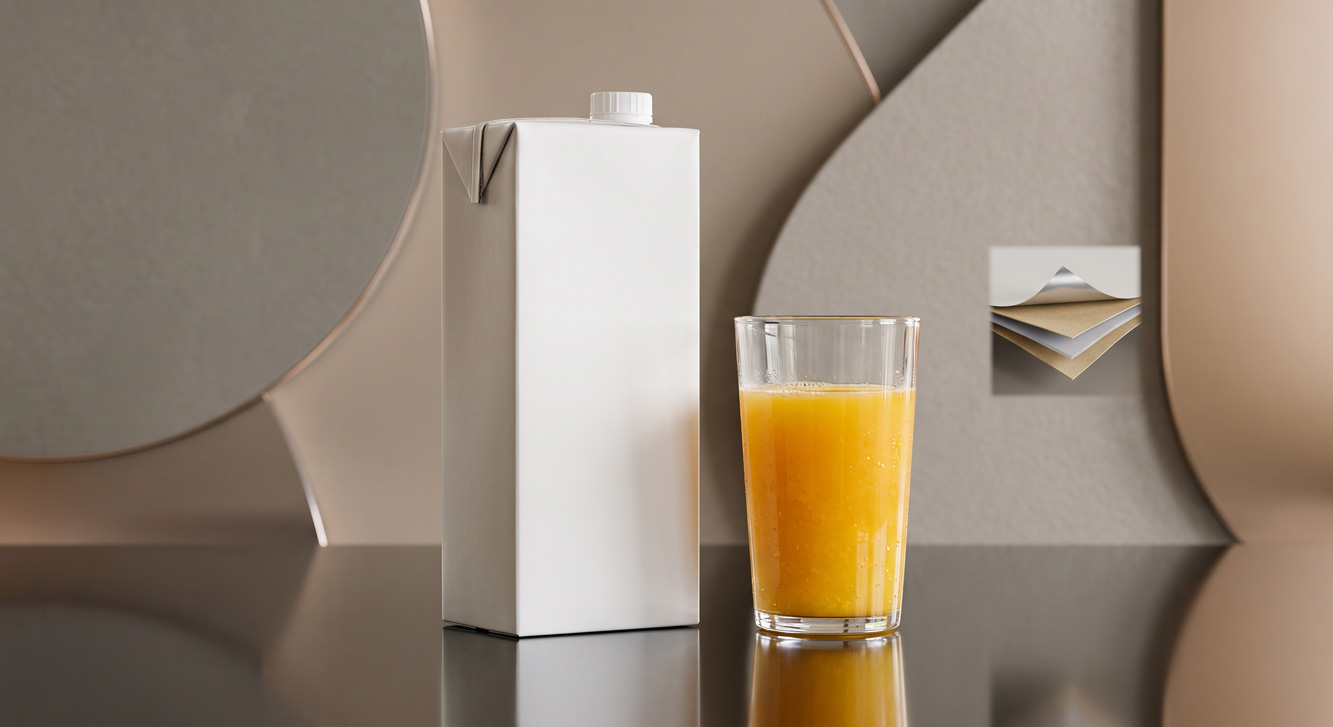
In high-speed aseptic filling lines, shelf-life integrity is not a marketing claim—it is a rigorous calculation of mass transfer. When packing sensitive liquid assets like UHT milk, 100% natural juices, or premium tomato paste, your product is constantly under siege from ambient oxygen, moisture vapor, and UV light.
Understanding and optimizing the barrier properties of your packaging material is the single most critical factor that separates a product with a 12-month stable ambient shelf-life from a catastrophic line-wide product recall.
Beyond the Basics: The Physics of Permeation in Aseptic Networks
For procurement and plant managers, a barrier is often simplified as “leak prevention.” In packaging engineering, however, we look at molecular permeation. Gases can diffuse through microscopic free volumes in polymers even if the package is completely watertight.
To quantify this risk, global B2B operations rely on two non-negotiable metrics:
- Oxygen Transmission Rate (OTR): This measures the exact volume of oxygen gas passing through a specific area of the packaging over a full day (measured in cubic centimeters per square meter every 24 hours). High oxygen transmission leads to rapid vitamin C degradation, flavor profile shifting (off-taste), and color browning in juices.
- Water Vapor Transmission Rate (WVTR): This measures the mass of moisture passing through the packaging (measured in grams per square meter every 24 hours) under high humidity conditions. High moisture transmission causes the structural paperboard layer to absorb environmental moisture, leading to package softening and warehouse crushing.
High-Performance Substrates: A B2B Benchmarking Matrix
When auditing your packaging bills of materials (BOM), compare your material specs against this industry benchmark. This structural data is exactly what technical buyers evaluate when sourcing reliable suppliers:
| Barrier Layer Substrate | OTR Performance (Cubic cm per sq. meter / 24 hrs) | WVTR Performance (Grams per sq. meter / 24 hrs) | UV Light Block | Commercial Shelf-Life Window |
| ASQ Aseptic Foil Laminate | 0.00 (Absolute Zero) | 0.00 (Absolute Zero) | 100% Total Block | 6 to 12 Months (Ambient) |
| EVOH Co-polymer (Non-Foil) | 0.2 to 1.5 (Degrades in High Humidity) | 1.5 to 2.8 | Low (Requires UV blockers) | 3 to 6 Months (Ambient) |
| Standard PET Bottle | 45.0 to 85.0 | 12.0 to 18.0 | Zero (Highly Transparent) | Cold Chain / Short-Term |
| Monolayer HDPE Jug | Over 1,200 (Extreme Ingress) | 3.5 to 5.0 | Translucent | 7 to 14 Days (Refrigerated) |
Operational Troubleshooting: Preventing Barrier Failures
Excellent raw material barrier properties mean nothing if the material degrades on your Form-Fill-Seal (FFS) lines. Quality Control teams must actively monitor three critical failure vectors during conversion:
Extrusion Pinholes and Material Defects
During the lamination process, trace impurities or incorrect polymer melt temperatures can cause microscopic micro-voids. Understanding the causes of pin-hole defects in foil lamination and partnering with a supplier that utilizes cleanroom extrusion and automated vision inspection systems is non-negotiable.
Flex Cracking of the Metallic Core
Aluminum foil is highly effective but possesses low elasticity. If your web tension is set too high or the folding jaws on the filling machine are misaligned, the foil layer can suffer micro-fractures (flex cracking). The structural plastic remains intact, but the oxygen barrier is instantly compromised.
Delamination via Aggressive Products
High-acid products can chemically attack the bonding interface between the inner sealing polymer and the aluminum foil. This requires specialized EAA (Ethylene Acrylic Acid) copolymer tie layers to ensure the barrier does not peel apart from the inside out.
Frequently Asked Questions (FAQ) on Aseptic Barriers
Q: Can EVOH replace aluminum foil in aseptic packaging?
A: While EVOH provides an excellent oxygen barrier, its performance drops significantly in high-humidity environments. For ambient shelf-lives exceeding 6 months, aluminum foil remains the industry standard due to its absolute zero transmission rates for both oxygen and moisture.
Q: How does thickness affect the aluminum foil barrier?
A: In aseptic laminates, foil thickness typically ranges from 6.35 to 9 microns. This specific gauge is engineered to eliminate pinholes while maintaining enough flexibility to fold without cracking on filling machines.
Q: Why is my aseptic package losing structural integrity in the warehouse?
A: This is usually a moisture transmission failure. If the outer polymer layer fails to block high ambient humidity, the internal paperboard absorbs moisture, significantly reducing its structural compression strength and causing boxes to collapse.
The ASQ Strategic Sourcing Advantage
Optimizing your barrier properties is a balance between raw material costs and product security. At ASQ Packing, we engineer the exact layer configuration your filling line demands based on your specific product viscosity, acid profile, and logistical climate zones.
To ensure you are securing the best material for your operations, review the top 10 questions to ask your packaging supplier before finalizing your procurement contracts, or contact our engineering team today to audit your current laminate specifications.