
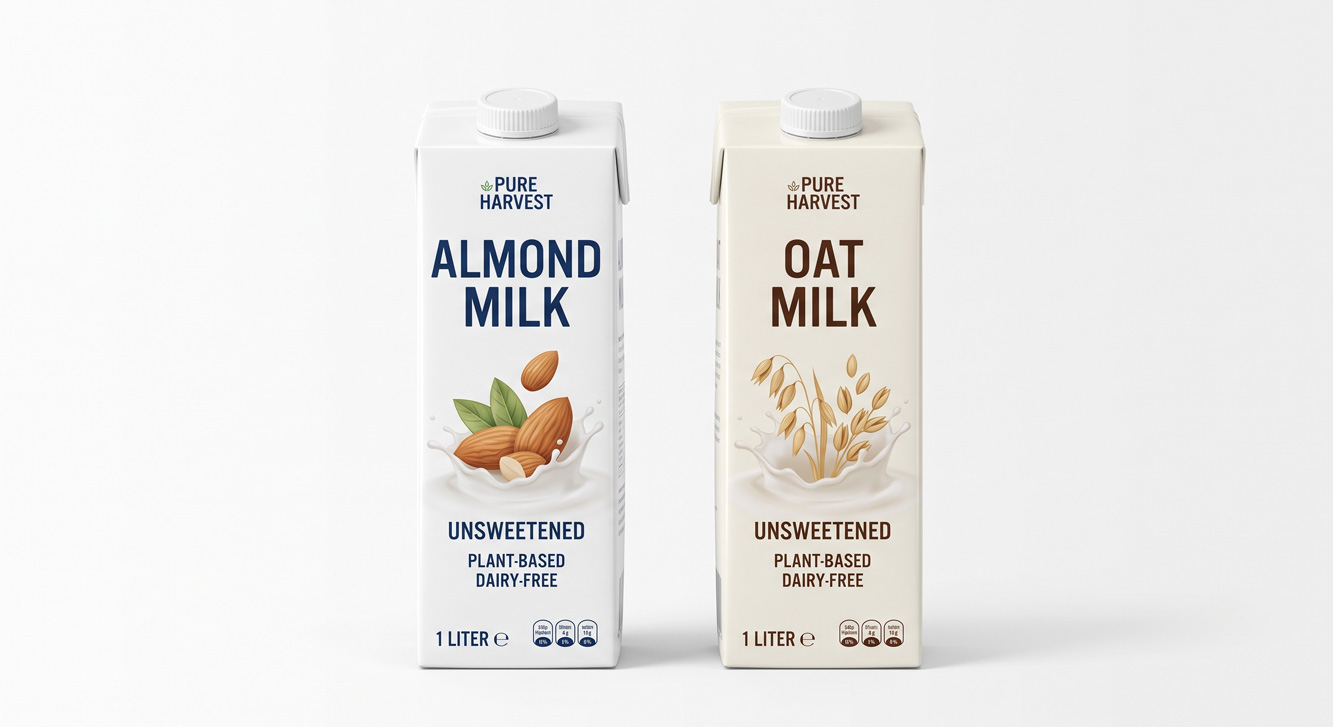
Executive Summary – Plant-based beverages such as oat and almond milk present a unique set of packaging challenges that distinguish them from traditional dairy products. Their varied ingredient compositions—ranging from high-fat coconut milks to high-carbohydrate rice milks—create inconsistent processing behaviors and stability profiles. These products are highly susceptible to photo-oxidation, with light exposure causing rancid and cardboard off-notes within days. They exhibit higher densities than dairy milk, with pallets weighing 2,700–3,000 lbs—heavier than many dairy loads. Their delicate, clean flavor profiles mean consumers immediately detect any off-taste from packaging materials. Additionally, plant-based proteins are less heat-stable than dairy proteins, leading to fouling and denaturation during UHT processing. This guide examines the critical packaging challenges facing oat and almond milk producers and presents engineering solutions to address each one.
The Fundamental Challenge: No Single Formula, No Single Solution
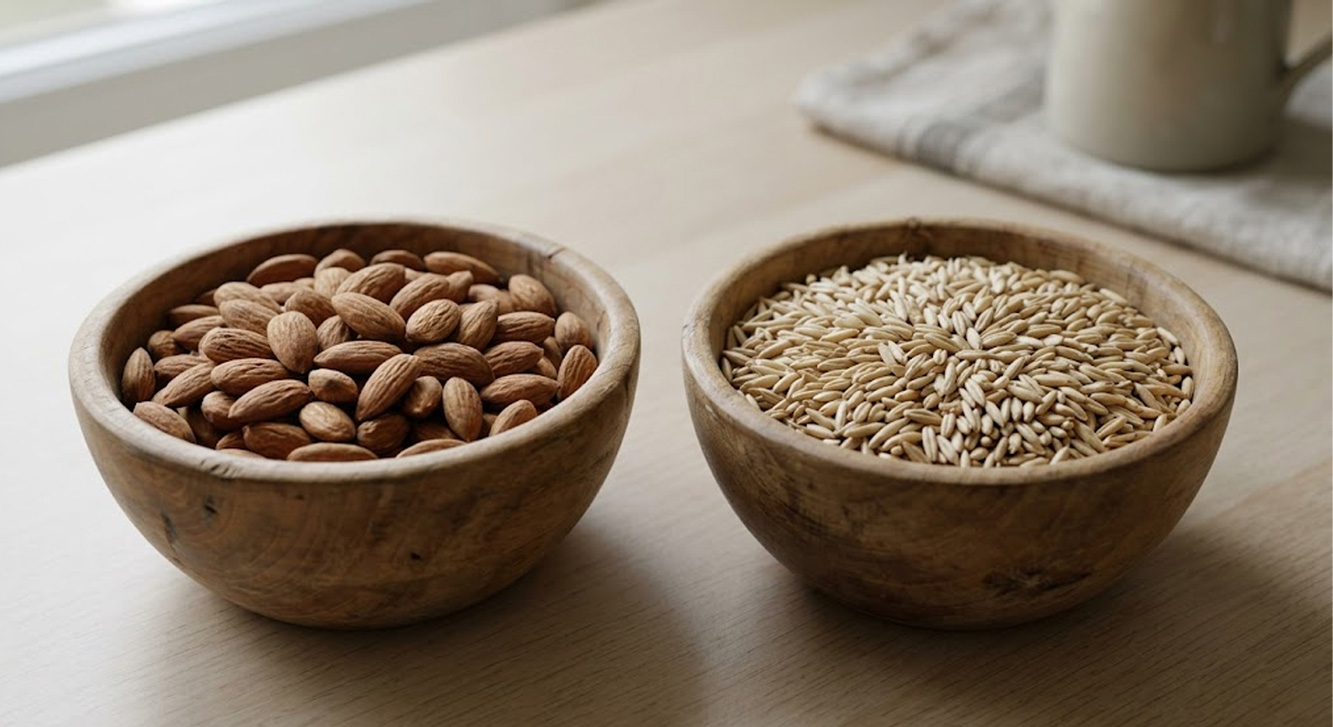
Plant-based beverages differ fundamentally from dairy milk in both composition and processing requirements. Unlike dairy milk—which comes from a singular source with well-defined standards of identity—plant-based beverages are made from a wide variety of ingredients including legumes (soybeans, peanuts), seeds (almonds, coconuts), grains (oats), and nuts.
| Beverage Type | Protein Content | Fat Content | Key Processing Challenge |
|---|---|---|---|
| Oat Milk | Moderate | Low-Moderate | Starch gelatinization; enzymatic hydrolysis; sedimentation |
| Almond Milk | Low-Moderate | Moderate | Protein denaturation; lipid oxidation; sedimentation |
| Coconut Milk | Low | High | Fat separation; emulsion stability |
| Soy Milk | High | Moderate | Heat-induced fouling; beany flavor development |
Each source differs significantly in fats, proteins, starches, sugars, and minerals. This variability means there is no single “plant-based milk formula” and therefore no single basic aseptic or ESL process. The commercial history of these products is comparatively short, making the knowledge base for processing them less established than for dairy.
The Processing Reality: Low-Acid Aseptic Requirements
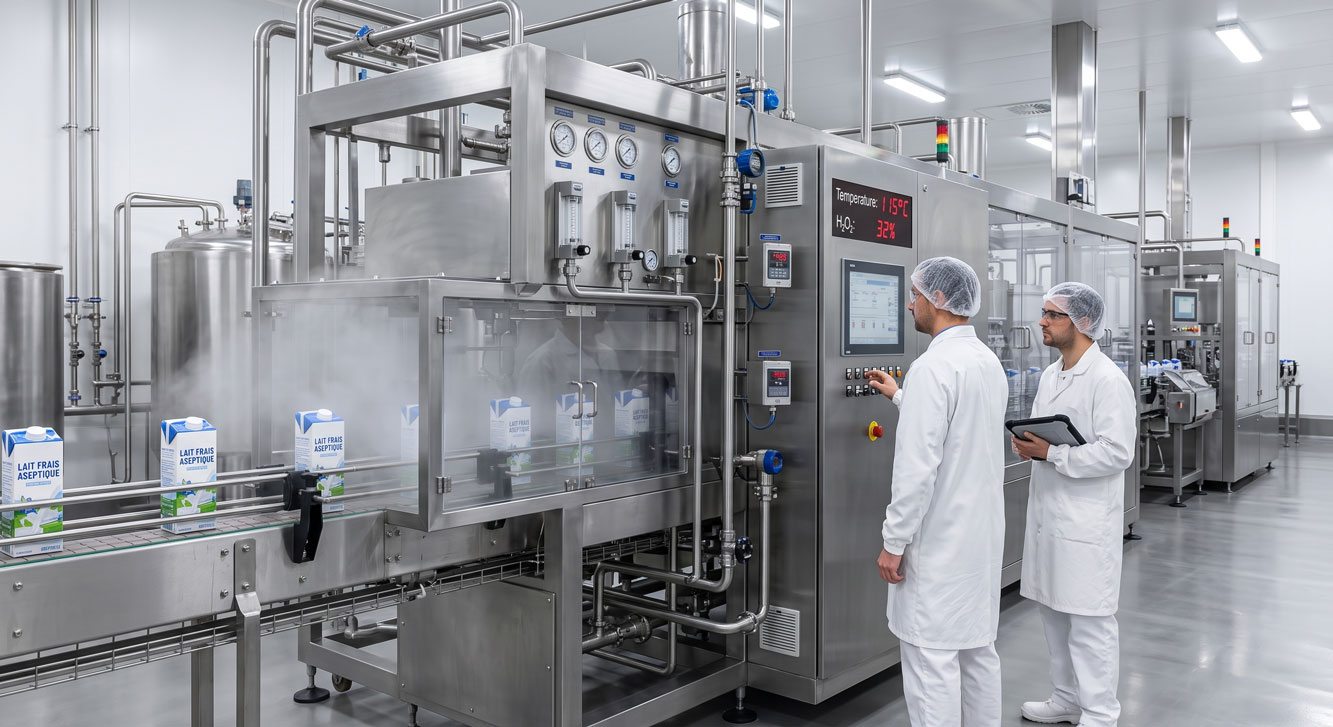
Most plant-based beverages are low-acid products (pH > 4.6), requiring the most extreme thermal processing. They must achieve a 12-log reduction of bacteria and are commonly processed at 137° to 150°C, with hold times of 1-10 seconds. They must be filled under sterile conditions into hermetically sealed, sterile packages to achieve a non-refrigerated shelf-life of 6 or more months.
However, plant-based proteins are less heat-stable than most dairy proteins. They denature and foul more readily during UHT processing, creating significant operational challenges. This thermal sensitivity directly impacts packaging requirements, as the packaging must compensate for any processing limitations.
Chemical and Sensory Challenges: Protecting Flavor and Nutrition
Light Sensitivity and Photo-Oxidation
Plant-based milks are highly sensitive to light exposure. Research has demonstrated that light has a significant effect on the organoleptic properties of both fermented cow and almond milks. Rancid and cardboard off-notes were detected in fermented almond milk exposed to light.
Oat, almond, and soy milks contain plant oils, natural pigments, and fortified vitamins. Under harmful lighting, these degrade quickly. Plant oils oxidize, producing bitter or stale flavors, while vitamins A and D lose potency. This degradation can begin within hours of display, even inside sealed packaging.
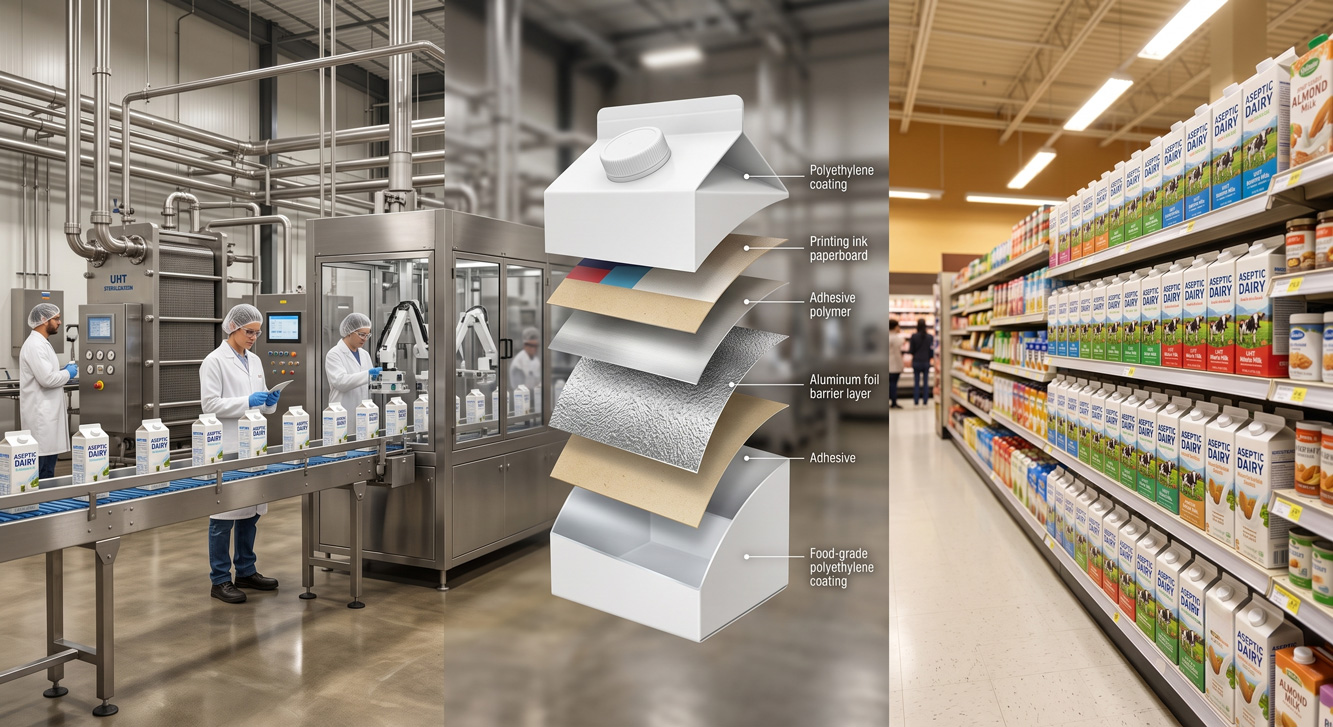
Packaging implication: Complete light barrier protection is non-negotiable for plant-based beverages. This is why traditional aseptic cartons use a 6–9 µm aluminum foil layer to achieve 100% opacity. Emerging paper-based barrier technologies—such as those using ultra-thin polymer barriers—are being developed to provide comparable protection without aluminum.
Flavor Scalping and Off-Taste from Packaging
Plant-based beverages have mild, clean flavor profiles, meaning consumers immediately detect any off-taste caused by packaging materials. This is arguably the most critical requirement for any packaging component.
The cap seal liner’s polymer layers must not leach any volatile organic compounds that could impart a taste or smell. This is especially crucial for plant-based milks like almond or oat, which often have a more subtle, clean taste than whole dairy milk. Even minor flavor contamination can ruin the product experience.
Packaging implication: All food-contact materials—from the inner polyethylene layer to the cap seal liner—must be rigorously tested for organoleptic neutrality. Some brands now demand cap seal liners that are free from certain plastics of concern, such as PVC.
Oxygen Sensitivity and Lipid Oxidation
Lipid oxidation is a primary degradation pathway for plant-based beverages, particularly those with higher fat content. Oxygen exposure triggers lipid oxidation, leading to off-flavors, rancidity, and nutritional degradation.
Research on dairy and dairy-analog products demonstrates that fluorescent and UV-heavy lighting accelerates lipid oxidation and vitamin loss, causing off-flavors and shortened shelf life. The presence of oxygen in the headspace accelerates these reactions, making oxygen barrier performance critical.
Packaging implication: Low oxygen transmission rate (OTR) packaging is essential. This typically requires:
- Aluminum foil barriers (OTR approaching zero)
- Advanced EVOH or paper-based barrier layers
- Headspace gas flushing with nitrogen or carbon dioxide
- Complete hermetic seals
Physical Challenges: Density, Stability, and Handling
Higher Density and Pallet Weight
Plant-based beverages are surprisingly heavy. Almond milk, oat milk, and coconut beverages have higher densities than dairy milk. Cases weigh 44-52 lbs, creating 2,700-3,000 lb pallets—heavier than many dairy products.
| Physical Parameter | Plant-Based Beverages | Dairy Milk |
|---|---|---|
| Case weight | 44–52 lbs | 40–45 lbs |
| Pallet weight | 2,700–3,000 lbs | 2,400–2,600 lbs |
| Density | Higher | Standard |
This higher density creates significant supply chain challenges:
- Standard tier sheets can saturate with moisture in refrigerated distribution, losing 70–80% compression strength
- Generic corner protectors buckle under aggressive cold chain strapping tension (400–600 lbs)
- Pallets collapse as tier sheets saturate and fail
Packaging implication: Secondary packaging must be engineered for higher load-bearing requirements. Moisture-resistant tier sheets, heavy-duty corner protectors (ECT 55+), and honeycomb pads (5,000+ lbs compression strength) are necessary for plant-based beverage distribution.
Dual-Temperature Distribution
Plant-based beverages exist in both refrigerated and shelf-stable formats, each requiring different handling. Refrigerated formats face identical cold chain challenges as dairy—continuous 34–40°F temperatures, high humidity, and condensation on containers. Shelf-stable aseptic variants require different handling altogether.
Packaging implication: Packaging systems must accommodate both temperature regimes, with appropriate moisture resistance for cold chain distribution and barrier integrity for ambient storage.
Sedimentation and Separation
Plant-based beverages are inherently unstable suspensions. Oat drinks contain granules that affect smooth taste. Almond milk particles can settle over time. The gas-tight nature of aseptic cartons has been shown to reduce whey separation, with EVOH-coated cartons resulting in statistically significantly lower separation compared to PE-only cartons.
Packaging implication: The packaging’s oxygen and moisture barrier properties directly influence product stability. EVOH barriers provide superior protection against separation compared to standard PE coatings.
Sustainability Challenges: Balancing Protection with Environmental Responsibility
The Aluminum Paradox
Traditional aseptic cartons achieve their extended shelf life through a multi-layer structure including paperboard (for rigidity), polyethylene (for moisture resistance and sealability), and aluminum foil (for complete oxygen and light barrier).
However, aluminum foil presents sustainability challenges:
- It complicates recycling due to the difficulty of separating bonded layers
- It represents a finite resource with a significant carbon footprint
Emerging Solution: Paper-based barrier technologies are replacing aluminum foil while maintaining comparable protection. When combined with plant-based polymers derived from sugarcane, renewable content can reach 87%, with carbon footprint reductions of up to 26%. Some manufacturers have achieved 40% carbon footprint reduction compared to standard aseptic cartons.
The Demand for Premium, Clean-Label Packaging
Plant-based beverages are often positioned as premium, clean-label alternatives. The packaging must align with this philosophy. Some brands now demand:
Packaging implication: The packaging must communicate sustainability credentials while maintaining the barrier performance required for extended shelf life.
Processing and Filling Challenges
Protein Fouling and Heat Sensitivity
Plant-based proteins are less heat-stable than dairy proteins. They denature and foul more readily during UHT processing. This creates several downstream packaging implications:
| Processing Issue | Packaging Impact |
|---|---|
| Fouling | Reduced heat transfer efficiency; potential for inconsistent product quality |
| Protein denaturation | Changes in viscosity; potential for sedimentation |
| Inconsistent product | Variable filling behavior; potential for seal contamination |
Packaging implication: The packaging must accommodate potential variations in product viscosity and composition while maintaining seal integrity.
Sterilization Compatibility
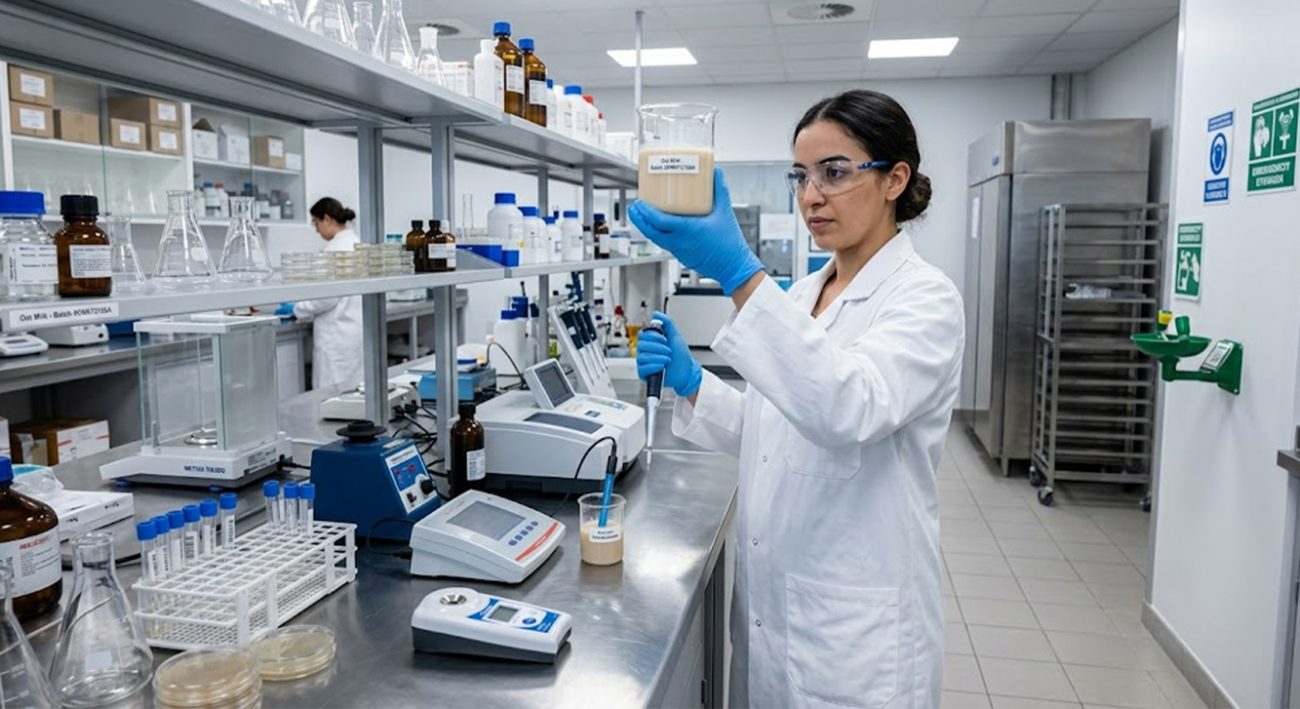
Packaging materials must withstand the sterilization process without degrading. The cap seal liner must be sterilizable—typically via hydrogen peroxide, steam, or gamma radiation—without losing its sealing properties. The induction seal must create a weld entirely free of micro-channels, as any gap can allow bacteria or mold to enter.
Packaging implication: All packaging components must be validated for compatibility with the chosen sterilization method (H₂O₂, e-Beam, or steam).
The ASQ Packing Advantage
At ASQ Packing Group , we engineer gable top cartons specifically designed to address the unique challenges of plant-based beverage packaging.
Our Technical Capabilities
- Complete barrier protection: Multi-layer laminates with aluminum or emerging paper-based barriers for total light and oxygen block
- Organoleptic neutrality: Food-contact materials rigorously tested for flavor and odor neutrality
- Precision sealing: Advanced skiving, hemming, and ultrasonic sealing technologies for hermetic seals
- FSC-certified paperboard: Sustainable materials from responsibly managed forests
- Custom engineering: Tailored barrier solutions for your specific shelf-life requirements
Why Choose ASQ Packing for Plant-Based Beverages
| Advantage | Benefit |
|---|---|
| Superior Barrier Performance | Complete protection against light, oxygen, and moisture |
| Flavor Protection | Organoleptically neutral materials preserve delicate flavors |
| Seal Integrity | Advanced sealing technologies prevent micro-leaks |
| Sustainability | FSC-certified materials and recyclable designs |
| Technical Expertise | Deep understanding of plant-based product challenges |
For more insights on packaging technologies that protect sensitive products, see our articles on How Skiving and Hemming Technology Prevents Edge-Wicking in Liquid Cartons , Packaging Sterilization Methods: H₂O₂ vs. e‑Beam , and Aseptic Packaging Guide for UHT Milk and Dairy Products .
Frequently Asked Questions
1. Why are plant-based beverages more challenging to package than dairy milk?
Plant-based beverages have varied ingredient compositions, less heat-stable proteins, higher sensitivity to light and oxygen, and delicate flavor profiles that are easily affected by packaging materials. Unlike dairy, there is no single formula or standard process.
2. What is the biggest packaging challenge for oat and almond milk?
The combination of light sensitivity and flavor neutrality is the most critical challenge. Both oat and almond milk develop rancid off-flavors when exposed to light, and their mild flavor profiles mean consumers immediately detect any off-taste from packaging.
3. Why do plant-based beverages require aluminum foil in their packaging?
Aluminum foil provides complete oxygen and light barrier protection, which is essential for achieving 6–12 months of ambient shelf life. Without it, photo-oxidation and lipid oxidation would cause rapid spoilage.
4. Are there sustainable alternatives to aluminum foil for plant-based packaging?
Yes. Paper-based barrier technologies are emerging that replace aluminum foil while maintaining comparable protection. These can achieve up to 87% renewable content and 26% carbon footprint reduction.
5. How does light affect plant-based milk quality?
Light exposure triggers photo-oxidation of plant oils and vitamins, producing rancid, cardboard off-notes within days. Vitamins A and D lose potency, and consumers may perceive the milk as “old” even before the expiration date.
6. Why are plant-based beverage pallets heavier than dairy pallets?
Plant-based beverages have higher densities than dairy milk. Cases weigh 44–52 lbs, creating 2,700–3,000 lb pallets—significantly heavier than many dairy loads.
7. What is the typical shelf life of aseptically packaged plant-based milk?
Aseptically packaged plant-based beverages typically achieve 6 to 12 months of ambient shelf life when properly processed and packaged.
Ready to Engineer Your Plant-Based Beverage Packaging Solution?
Whether you are launching a new oat milk brand or optimizing packaging for an existing almond milk line, ASQ Packing Group has the technical expertise and manufacturing capability to deliver premium packaging solutions.
👉 Contact us at ASQ Packing to discuss your plant-based beverage packaging requirements, request samples, or schedule a technical consultation.