
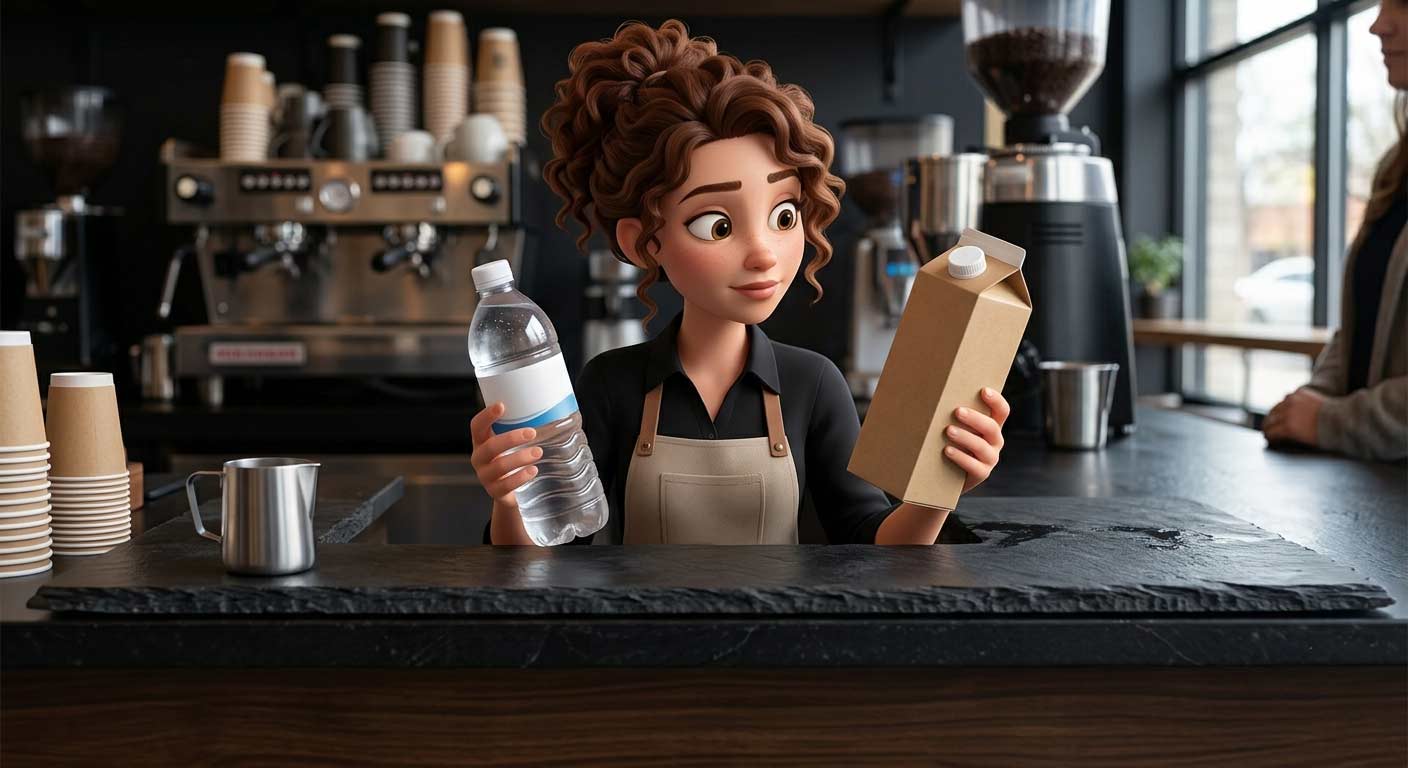
The debate between gable top cartons and PET plastic bottles is one of the most critical decisions facing beverage and liquid product brands today. Both packaging formats have passionate advocates, and both offer distinct advantages. But when you examine the full picture—from raw material sourcing to end-of-life disposal—a clear winner emerges.
Here is a comprehensive, data-driven comparison to help you make the right choice for your brand, your consumers, and the planet.
1. Raw Materials: Renewable vs. Fossil-Based
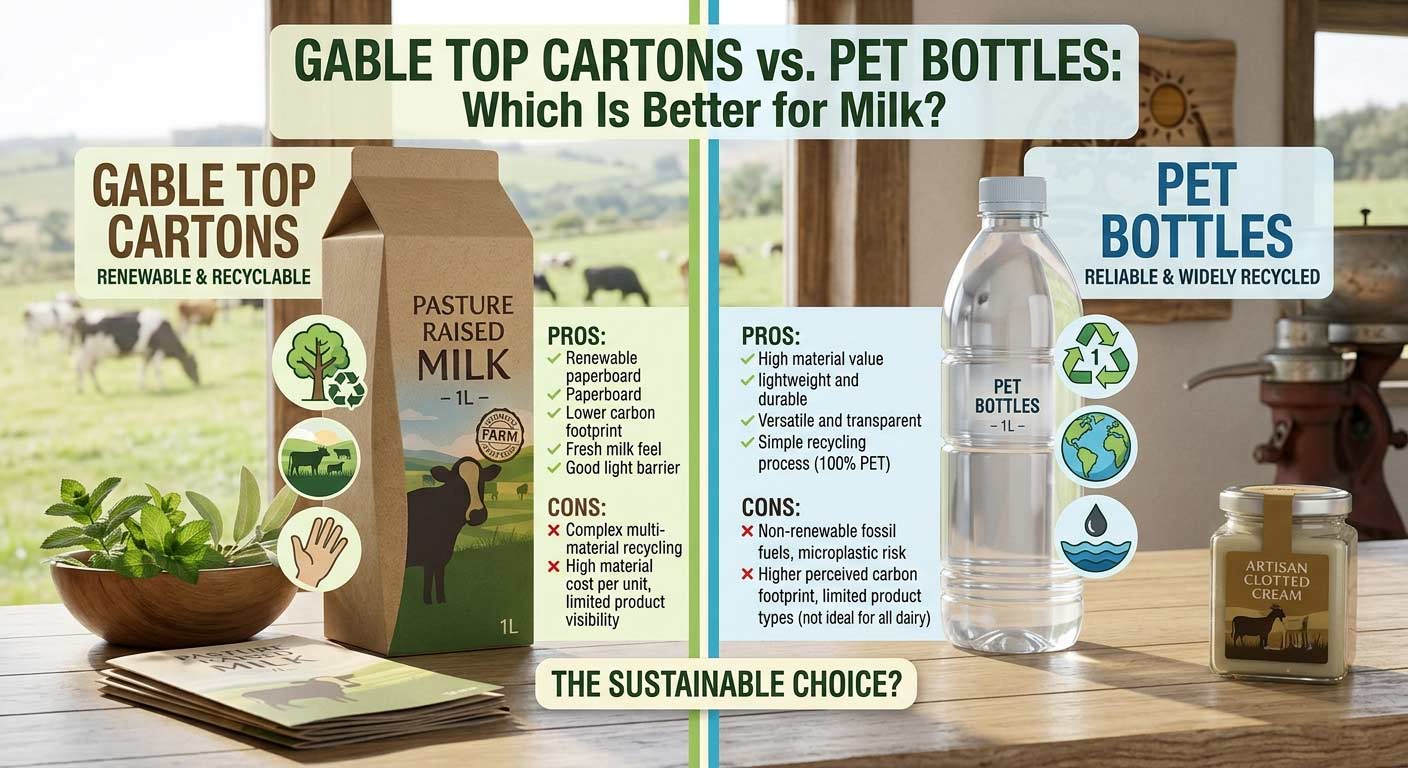
Gable Top Cartons: Made primarily from paperboard sourced from responsibly managed forests. This is a renewable resource that can be regrown and replenished. Many cartons carry FSC (Forest Stewardship Council) certification, verifying sustainable forestry practices.
PET Bottles: Manufactured from petroleum-based plastic derived from fossil fuels. This is a finite, non-renewable resource that contributes to greenhouse gas emissions from the very start of its life cycle.
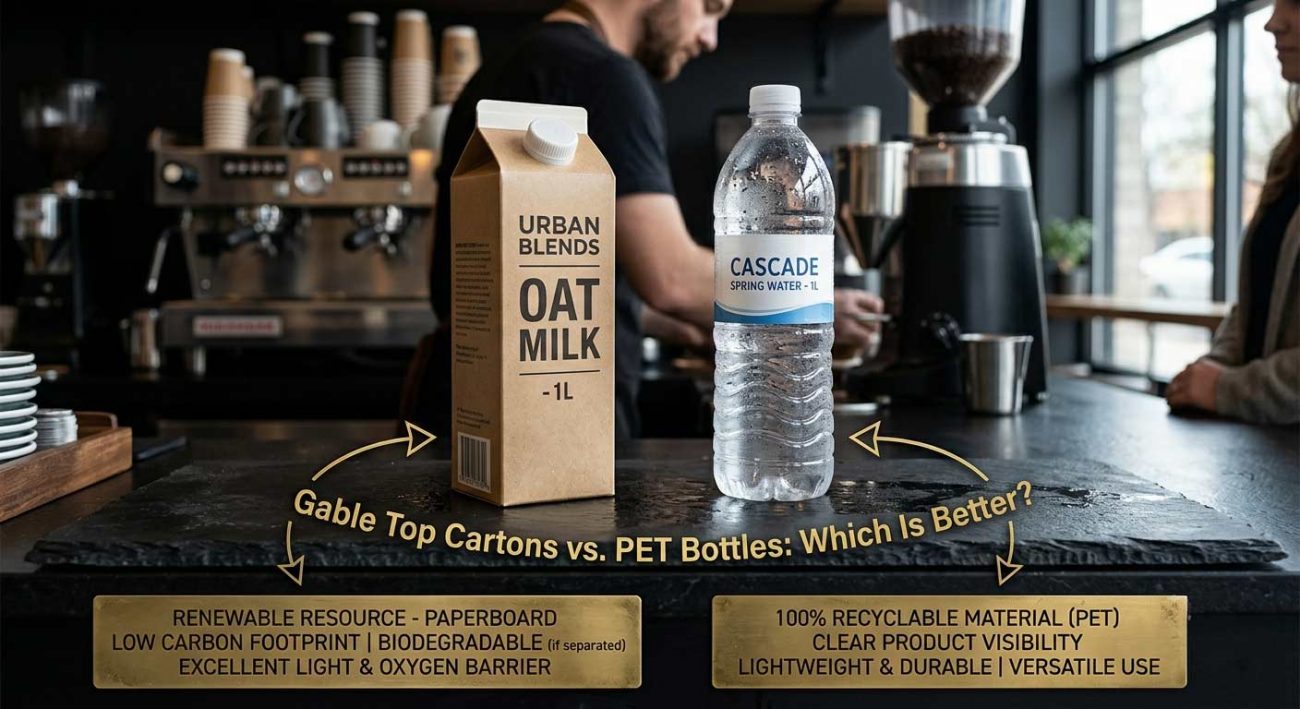
Winner: Gable Top Cartons. Renewable paperboard vs. fossil-fuel plastic is a fundamental advantage.
2. Carbon Footprint: The Emissions Gap
Gable Top Cartons: Studies consistently find that cartons have a lower carbon footprint than plastic bottles. Some research shows cartons can produce up to 60% fewer CO₂ emissions than PET bottles. The difference comes from renewable materials, efficient production, and flat shipping that reduces transport fuel consumption.
PET Bottles: Manufacturing PET bottles requires significant energy, leading to higher carbon emissions. Single-use PET options, especially those without recycled content, generate the highest emissions among beverage packaging types.
Winner: Gable Top Cartons. Verified lower carbon footprint across multiple life cycle assessments.
3. Recyclability: A Complex Picture
The Case for Gable Top Cartons
- Carton recycling has grown from just 6% in 2009 to approximately 20% today
- 61% of U.S. households can now recycle food and beverage cartons—up from 37% in 2011
- In California, 74% of households have access to gable-top carton recycling
- Gable top cartons are accepted in 62.8% of American communities (2021 data)
- Cartons are approximately 75% paperboard, which recycling facilities readily process
The Case for PET Bottles
- PET bottles are accepted by over 89% of U.S. recycling programs
- They are efficiently processed into new bottles and products
- Existing infrastructure is already built for plastic recycling
The Challenge
- National acceptance for cartons stands at only 49%—below the 60% threshold
- If rates don’t improve by 2026, gable top cartons could be downgraded to “Check Locally”
- PET bottles face their own challenge: only about 20% of PET bottles are actually recycled
Winner: PET Bottles (for now). Superior recycling infrastructure gives plastic bottles the edge in practical recyclability, though both formats face significant end-of-life challenges.
4. Logistics & Transport Efficiency
Gable Top Cartons: Empty cartons are shipped and stored flat—not pre-formed. This compact shape optimizes logistics and warehouse storage dramatically. Carton blanks can be transported in much higher volumes per truckload compared to bulky plastic bottles. This reduces fuel consumption, lowers carbon emissions, and cuts warehousing expenses.
PET Bottles: PET bottles are typically shipped in their formed shape, taking up more space and requiring more fuel per unit. Their cylindrical form is less efficient for transport.
Winner: Gable Top Cartons. Flat shipping is a game-changer for logistics costs and emissions.
5. Product Protection & Shelf Life
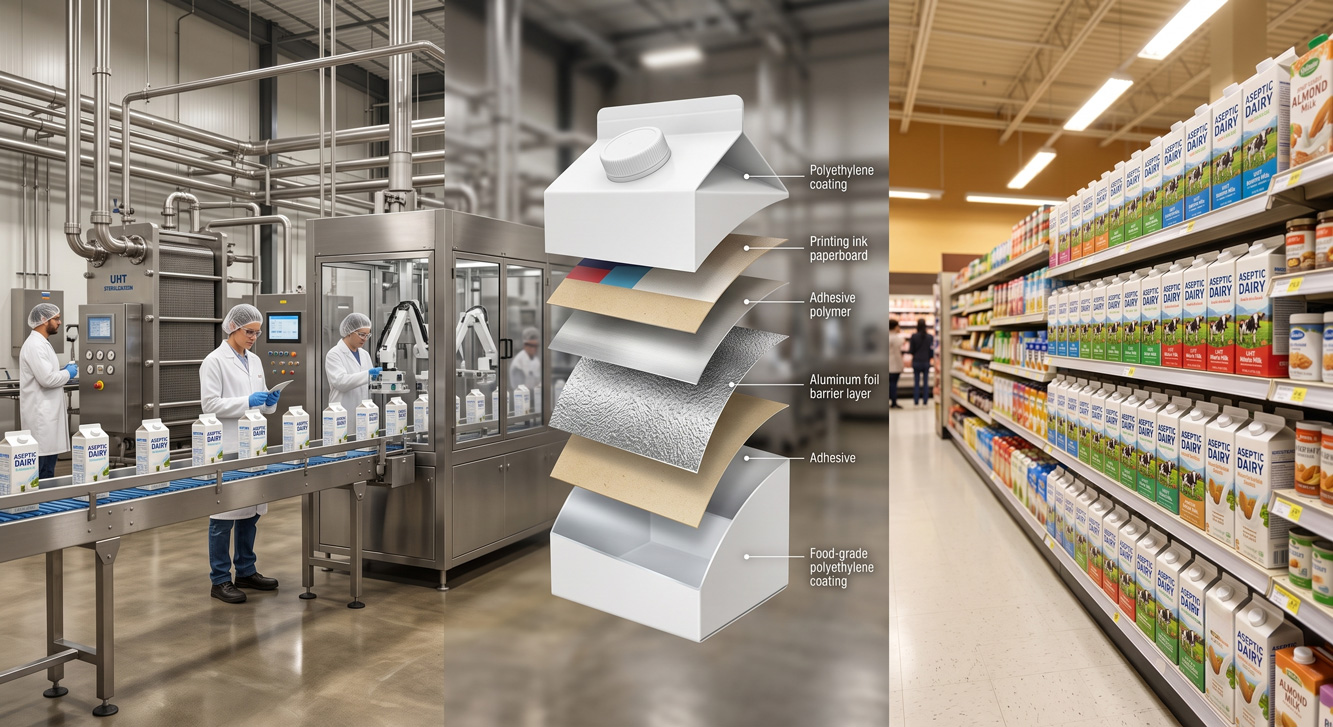
Gable Top Cartons: The multi-layer structure of paperboard composites, polyethylene, and (in some cases) aluminum creates an excellent barrier against light and oxygen. This protects product quality, flavor, and nutritional value. Studies show cartons are excellent at retaining vitamins A and B2 in milk for extended periods. The paperboard surface blocks harmful light that would otherwise degrade sensitive products.
PET Bottles: Gas permeation can sometimes impact product quality over time. When heated, conventional PET bottles can release microplastics into the product. Light exposure can also degrade light-sensitive nutrients.
Winner: Gable Top Cartons. Superior barrier protection keeps products fresher longer.
6. Branding & Shelf Impact
Gable Top Cartons: Offer four large printable panels for branding, product information, and storytelling. The distinctive gable-top shape catches consumer attention on crowded shelves. Consumers associate the format with freshness, premium quality, and environmental responsibility.
PET Bottles: Branding is typically restricted to a label area, which can be limited on curved surfaces. While shrink sleeves offer more coverage, they add complexity and material.
Winner: Gable Top Cartons. Superior canvas for brand communication and premium perception.
7. Consumer Perception
Gable Top Cartons: Increasingly associated with eco-friendly, sustainable brands. Consumers view them as a quality, environmentally conscious packaging solution. The design evokes tradition and craftsmanship. Independent surveys show strong purchase intent—Hochwald’s gable top packaging garnered 77% purchase intent.
PET Bottles: Facing growing consumer concern about plastic pollution, microplastics, and potential health risks. Perceived as less eco-friendly and increasingly avoided by environmentally conscious consumers.
Winner: Gable Top Cartons. Consumer sentiment is shifting decisively toward paper-based packaging.
8. Cost Considerations
Gable Top Cartons: May have higher initial costs for raw materials and specialized filling equipment. However, logistical savings from efficient stacking and transport can offset these costs. A single filling machine handles the entire process—blowing, filling, and labeling—versus multiple machines for plastic packaging.
PET Bottles: Often have lower initial costs and widely available equipment. But transport costs can be higher due to inefficient space usage. The total cost of ownership may not be as favorable when logistics and disposal are factored in.
Winner: PET Bottles (initial cost). Lower upfront investment, but the gap narrows when logistics and brand value are considered.
Side-by-Side Comparison
The Verdict: Which Is Better?
The answer depends on your priorities:
Choose Gable Top Cartons if you value:
- ✅ Renewable materials over fossil fuels
- ✅ Lower carbon footprint
- ✅ Premium brand positioning and consumer preference
- ✅ Superior product protection and shelf life
- ✅ Logistical efficiency through flat shipping
- ✅ Alignment with sustainability regulations and consumer expectations
Choose PET Bottles if you value:
- ✅ Lower initial investment
- ✅ Widely available existing infrastructure
- ✅ Immediate, broad recycling access (though actual recycling rates are similar)
The Market Is Speaking
The global gable top liquid cartons market was valued at USD 10.17 billion in 2025 and is projected to reach USD 14.92 billion by 2032, growing at a CAGR of 5.63%. Brand owners and retailers are progressively substituting plastic bottles with gable top cartons to align with sustainability narratives and consumer expectations.
Leading dairies are making the switch. Hochwald cut plastic usage by half and increased renewable materials by 10%. Arla Foods chose cartons because they “have a very premium appeal and deliver strong on sustainability”.
The shift is not slowing down. It’s accelerating.
About ASQ Packing
At ASQ Packing, we manufacture premium gable top cartons designed to outperform PET bottles in every critical metric—sustainability, product protection, branding, and consumer appeal.
If you are evaluating the switch from plastic to paper, we are ready to design a tailored solution for your product line.
👉 Visit us: asqpacking.com
Frequently Asked Questions
1. Which packaging has a lower carbon footprint: gable top cartons or PET bottles?
Gable top cartons have a significantly lower carbon footprint, with studies showing up to 60% fewer CO₂ emissions compared to PET bottles.
2. Are gable top cartons recyclable?
Yes. Carton recycling is available to over 61% of U.S. households, and the recycling rate has grown from 6% in 2009 to approximately 20% today.
3. Which packaging protects products better?
Gable top cartons provide superior protection against light and oxygen, keeping products fresher longer and retaining vitamins more effectively than PET bottles.
4. Are gable top cartons more expensive than PET bottles?
Initial costs may be higher, but logistical savings from flat shipping and storage, combined with brand premium positioning, often offset the difference.
5. Why are brands switching from PET bottles to gable top cartons?
Three factors: consumer demand for sustainable packaging, regulatory restrictions on single-use plastics, and brand commitments to reduce carbon footprints.