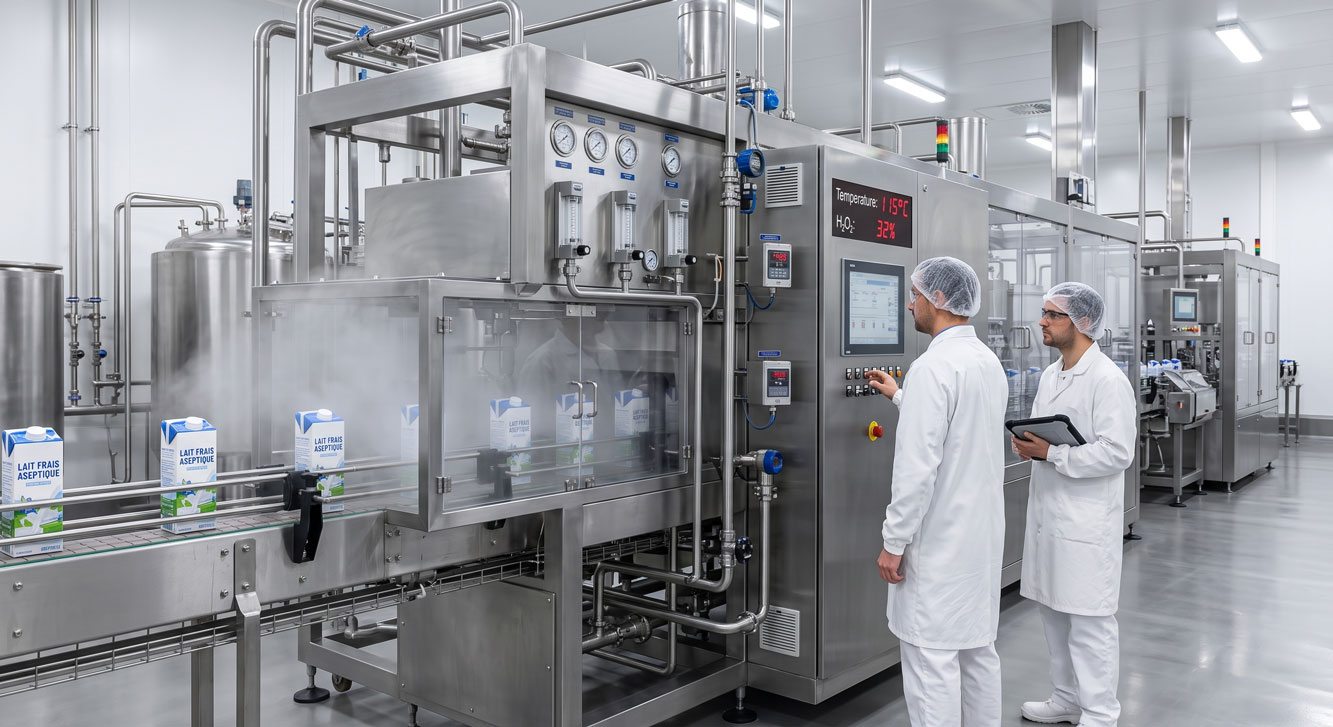

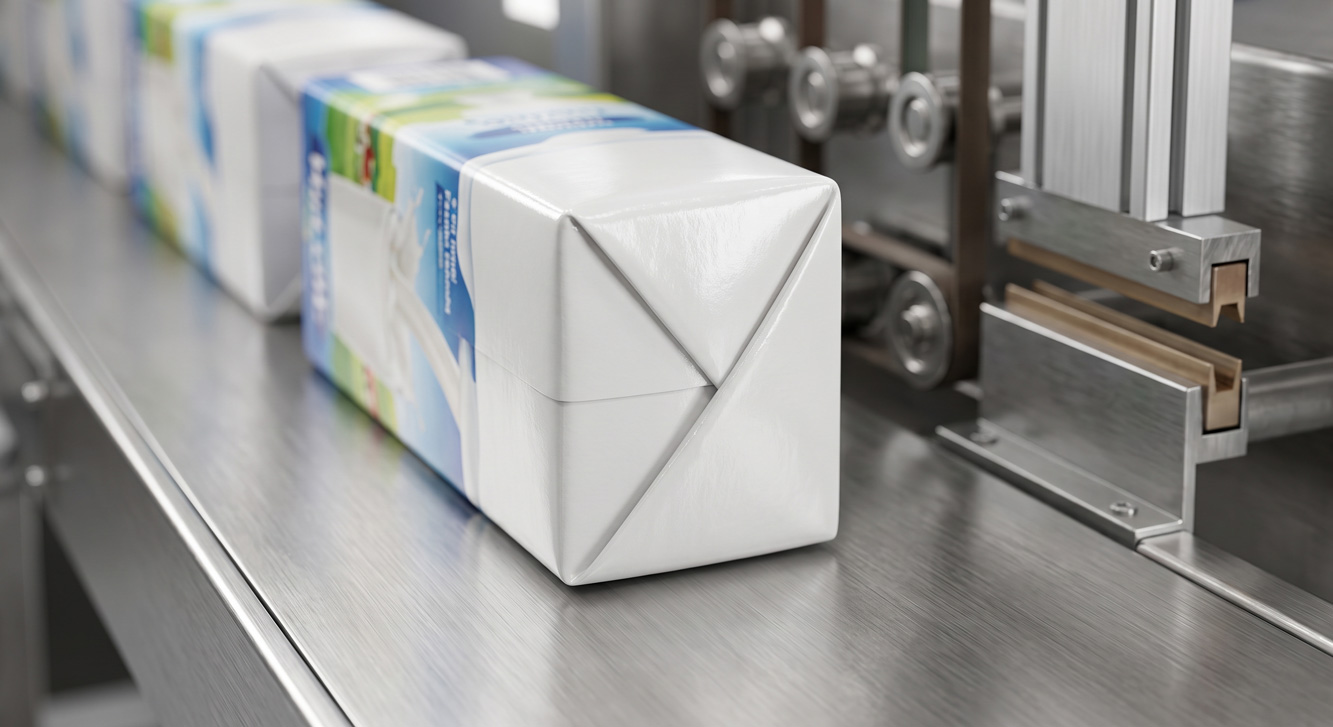
Executive Summary – Liquid carton leakage is a critical failure mode that compromises product safety, brand reputation, and shelf life. The primary causes fall into three categories: edge wicking (capillary migration of liquid into raw paperboard edges), seal integrity failures (poorly sealed seams or fin seals), and material defects (pin-holes or delamination). Prevention requires a multi-layered approach: skiving and hemming technology creates a fluid-impervious barrier by folding and heat-sealing the fifth panel edge; advanced barrier materials (aluminum foil, EVOH, or paper-based barriers) block oxygen, light, and moisture; and in-line leak detection systems (laser profile measurement, X-ray fill level checks) identify micro-leaks before packages reach consumers. For B2B decision-makers, investing in these technologies delivers measurable ROI through reduced product returns, extended shelf life, and enhanced brand trust.
Understanding the Root Causes of Leakage
Edge Wicking: The Silent Saboteur
Edge wicking occurs when liquid is drawn by capillary action into the exposed raw edge of the paperboard. In gable top cartons, liquids stored in the carton are likely to wick into the paperboard material generally adjacent to the seams. The liquid travels upward through the fibrous paperboard material and into the top seal area, creating a pathway for leakage and compromising the structural integrity of the carton.
The problem arises because the cut or raw edge of the paperboard blank is exposed to the liquid contents. Any liquid in the container will wick into the cut or raw edge of the blank and enter the paperboard component of the laminate. This wicking action eventually weakens the container and prevents it from being used for long-term storage of products like juices or syrups.
Seal Integrity Failures
A leaking carton involves the escape of product by way of flow through an area where two pieces of board were poorly sealed together. Common seal-related issues include:
| Failure Type | Description | Consequence |
|---|---|---|
| Incomplete heat sealing | Insufficient temperature, pressure, or dwell time | Weak seals prone to failure |
| Contamination in seal area | Product residue preventing proper bonding | Incomplete fusion of seal layers |
| Misaligned sealing jaws | Uneven pressure distribution across seal | Inconsistent seal strength |
| Material inconsistencies | Variations in coating thickness or polymer composition | Unreliable seal formation |
The “Weeper” Phenomenon
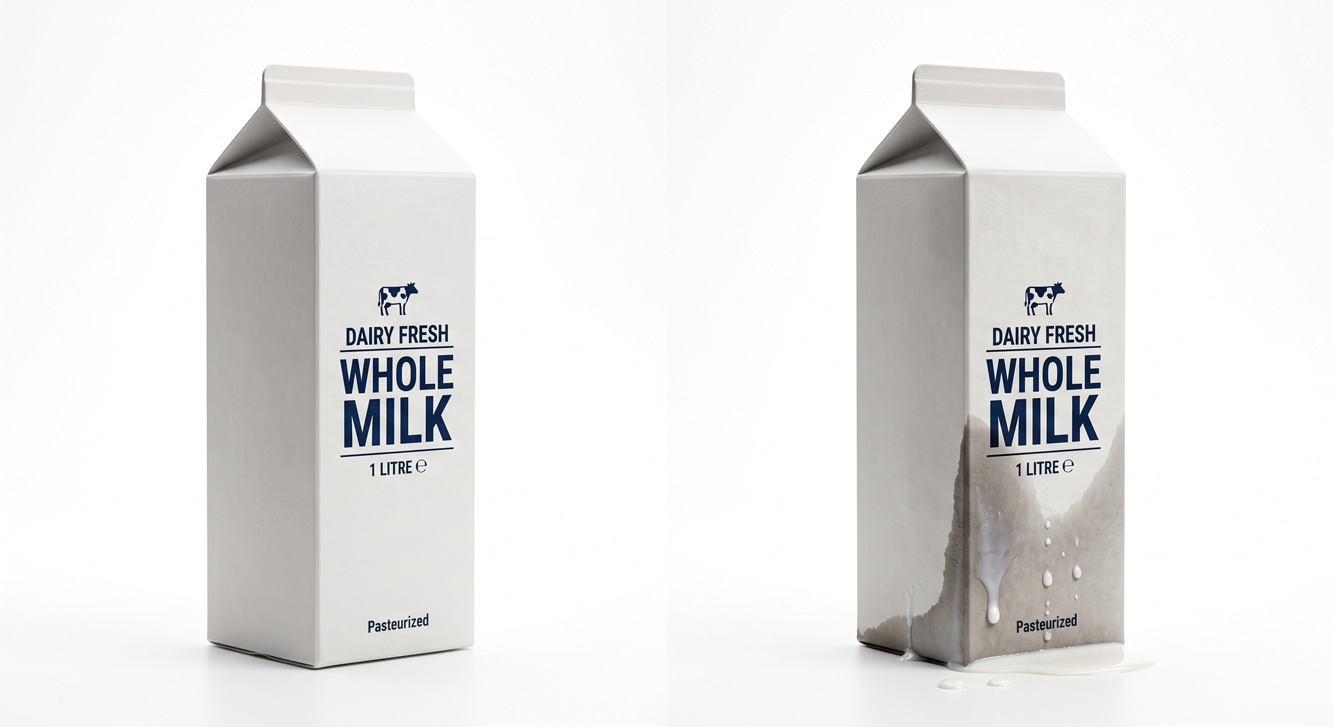
A “weeper” describes a situation where liquid product drips from the container—distinct from a leaking carton, which involves flow through a poorly sealed area. In a weeper situation, product gets into the board by way of a hole in the inside polyethylene coating. The product saturates the board and seeps or weeps through the outside polyethylene coating before it works its way out of the carton.
During carton formation, bottom closure panels or flaps sometimes puncture the inside polyethylene coating and become embedded in the adjacent board. This creates a weeper condition. Eventually, liquid product will enter the puncture, saturate the board and outside coating, and weep from the carton. If a weeper condition exists, the vibrations that are normally encountered during transport aggravate the situation further.
Critical Prevention Technologies
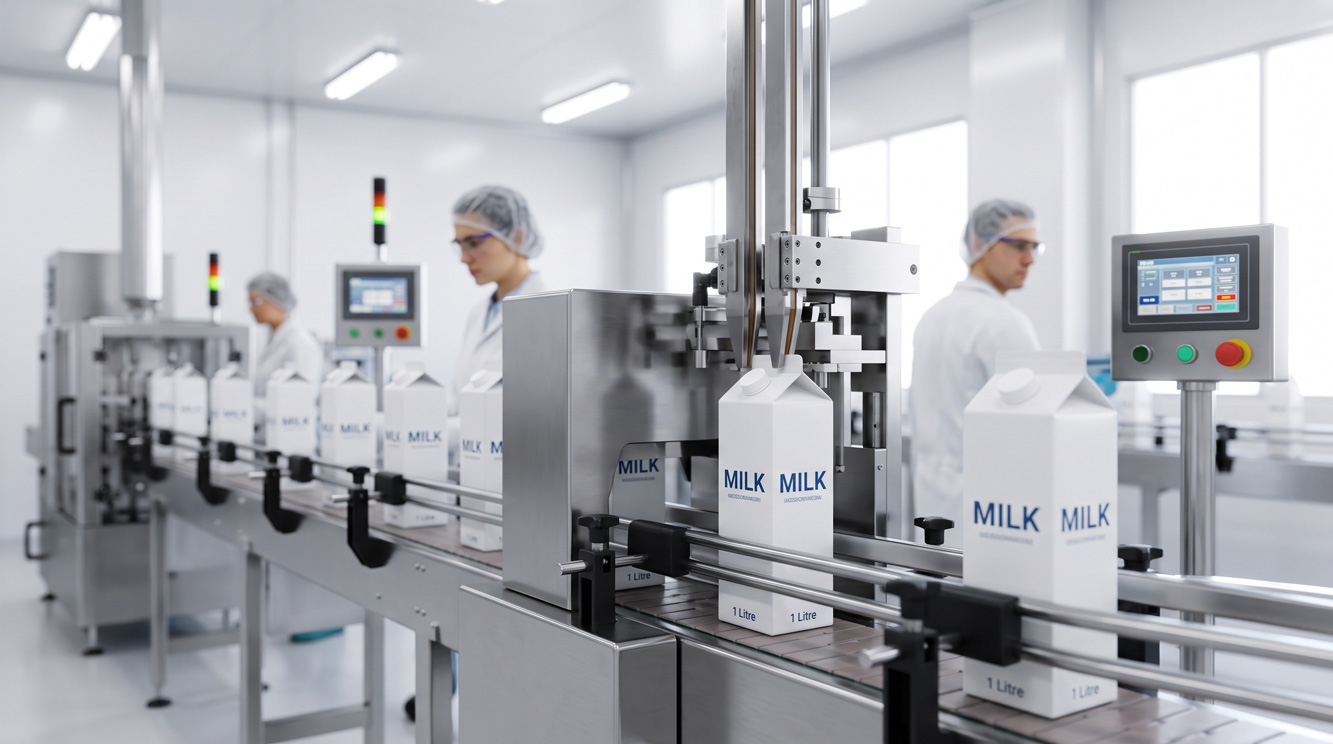
Skiving and Hemming: The Gold Standard
Skiving and hemming is the most effective technology for preventing liquid penetration into the raw edge of the paperboard. The Skiving and Hemming process creates an additional barrier that separates the package contents from the backing board, which prevents liquid from entering the raw edge of the fifth panel material on the inside of the glued workpiece. Bending this edge not only seals and prevents damage to the package, but also avoids subsequent deterioration of the contents and can increase their shelf life.
The process works as follows:
- Skiving: A skiving apparatus removes a portion of a carton blank material at a predetermined area such as a first half of an edge portion. The skived flap is defined by a rabbeted portion extending into the exterior surface of the blank. The skived portion extends into the blank a major portion of the thickness of the paperboard material.
- Folding: A folding apparatus folds the skived portion onto the blank, irons it, and then opens the hem to lie in a predetermined plane.
- Hemming and Sealing: The skived flap can be adhered in face-to-face contact with the exterior surface of the blank to ensure that the liquid stored in the gable top carton formed from the blank does not directly contact the edge of the paperboard material, thereby preventing wicking of liquid through the paperboard material.
The result is a perfect skived hem that is heat-sealed in the same section, creating a barrier that prevents liquids from penetrating into the fifth panel raw edge. The entire carton is finished with skiving and hemming—trimming and folding the board edge into a seamless seal that shuts off permeation paths. This achieves extended liquid-tight packing shelf life.
Advanced Barrier Materials
The barrier layer protects the carton contents from oxygen, water vapor, and other external factors that shorten shelf life. Three primary barrier materials are available:
| Barrier Type | Key Properties | Best Application |
|---|---|---|
| Aluminum foil | Complete oxygen and light barrier; 6–12 µm thickness | Long shelf life, flavor-sensitive products |
| Transparent vapor-deposited film | Good oxygen barrier; transparent | Products requiring visibility |
| Paper-based barrier | Renewable; lower carbon footprint | Sustainable packaging initiatives |
The laminate may contain an optional barrier of metallic foil or other material that forms an essentially gas impermeable membrane. Light-shielding and aroma-retention functions can also be incorporated.
The Laminate Structure
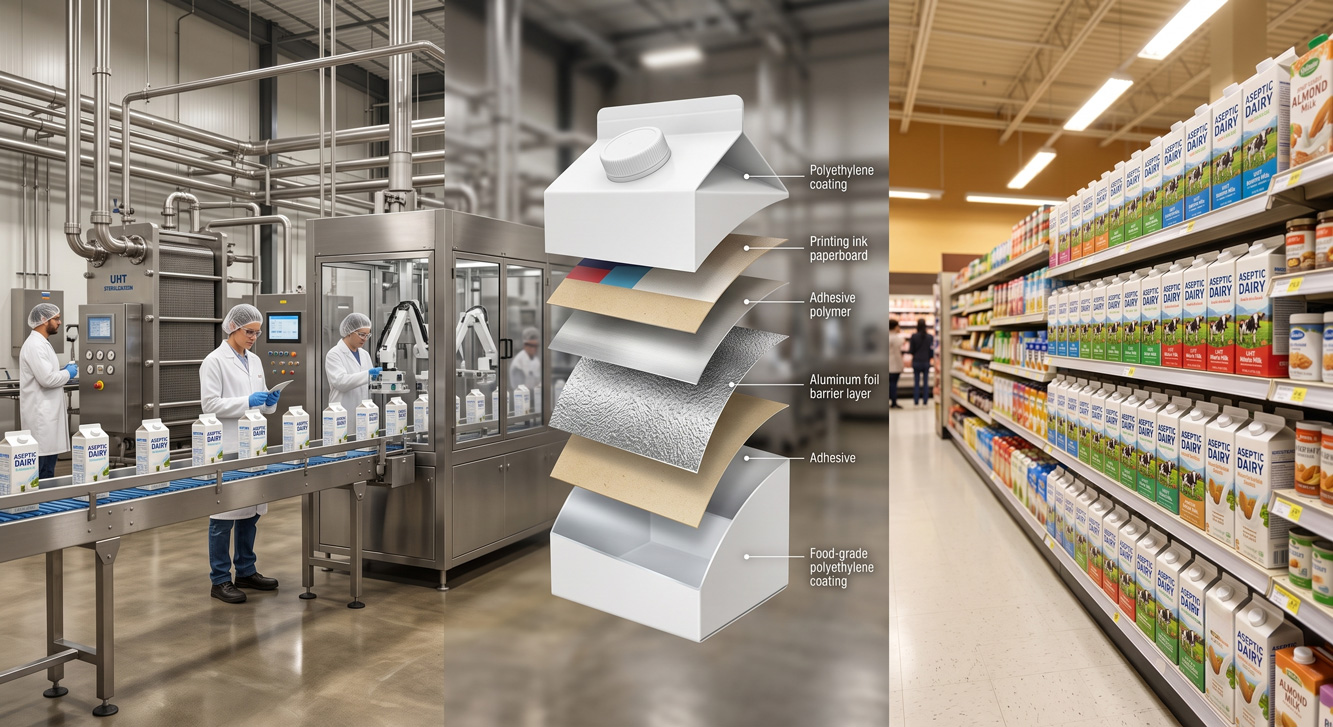
A typical liquid packaging carton consists of:
- Liquid Paperboard (LPB): Accounts for 70–80% of total weight and provides rigidity
- Polyethylene (PE) layers: Provide moisture resistance and heat-sealability
- Barrier layer: Aluminum foil, EVOH, or paper-based barrier
- Additional PE layer: Bonds the barrier to the paperboard and prevents contact with the pack’s contents
The carton blanks generally are laminated with a paper board core and outer coatings of a high or low density polyethylene or other thermoplastic.
Preventing Edge Wicking Through Design
Patented solutions for preventing wicking include:
- Skived flaps extending entirely along one edge of the blank and adjacent the glue panel and the top and bottom panels articulated to the glue panel
- Rabbeted portions extending into the exterior surface of the blank
- Face-to-face adhesion of the skived flap to the exterior surface of the blank
These design features ensure that the liquid stored in the gable top carton formed from the blank does not directly contact the edge of the paperboard material, thereby preventing wicking of liquid through the paperboard material.
Quality Control and Leak Testing
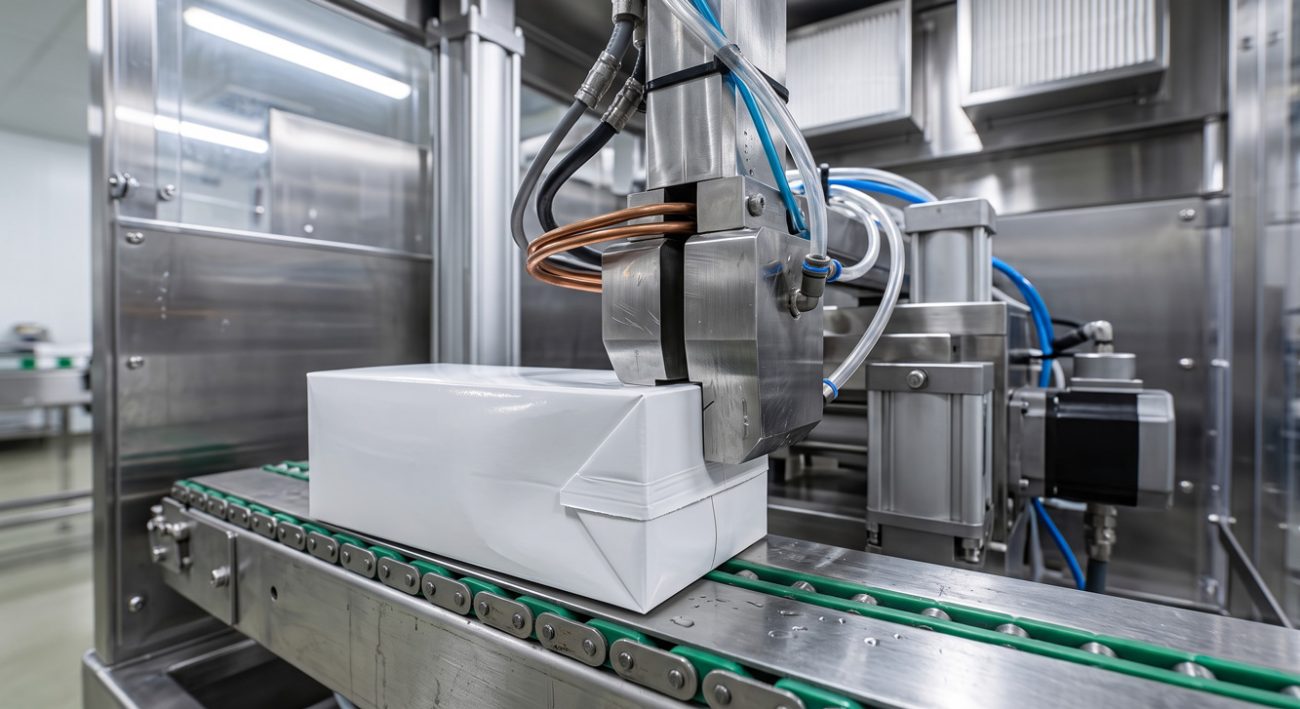
In-Line Leak Detection
Modern leak detection systems identify micro-leaks before packages reach consumers:
| Technology | Method | Detection Capability |
|---|---|---|
| Laser profile measurement | Lateral laser measurement of each package | Micro-leaks; detects dimensional changes from air ingress |
| X-ray fill level check | Registers product loss caused by packaging leaks | Product loss; confirms leak presence |
| Optical inspection | Top-down camera inspection | Closure position, color, seal seam overlaps |
| Dye testing | One-hour or 24-hour dye tests | Small leakages; gas leakage detection |
The current leak testing process involves sampling a percentage of production with a labor intensive and slow method using dye testing. However, automated solutions like the TapTone ECLIPSE inspection solution were designed to perform leak inspection of steam flushed and hot-filled liquid paperboard cartons.
Laboratory Testing Methods
| Test Method | Purpose | Standard Practice |
|---|---|---|
| Vacuum chamber test | Detects micro-leaks under negative pressure | ASTM F2338 – pressure rise test |
| Dye penetration test | Visual identification of leak paths | Dye applied to inside surface at suspected location |
| Burst pressure test | Measures seal strength under pressure | Destructive testing |
| Gas detection | Identifies gas leakage through seals | Pressure technique by accumulation |
| Bubble emission test | Visual leak detection under water | ASTM D3078 – vacuum chamber with immersion |
Visual Inspection Points
Quality control should focus on:
- Protruding carton flaps: Can cause faults in the packer
- Incorrect proportions in the overlap area of the seal seam: Can cause leaks further down the line
- Best-before date presence and legibility
- Closure positioning: Lids not positioned over the pre-perforated membrane
- Bottom panel integrity: Bottom closure panels or flaps sometimes puncture the inside polyethylene coating and become embedded in the adjacent board
Best Practices for Leak Prevention
Material Selection
| Practice | Benefit |
|---|---|
| Use FSC-certified paperboard | Consistent quality; sustainable sourcing |
| Select appropriate barrier layer | Match barrier to product sensitivity |
| Verify coating uniformity | Prevent pinholes and weak spots |
| Test incoming materials | Identify defects before production |
Process Optimization
| Practice | Benefit |
|---|---|
| Optimize skiving parameters | Consistent flap thickness and fold quality |
| Control sealing temperature | 150–180°C for PE layers |
| Maintain sealing pressure | 2–4 bar for complete bonding |
| Monitor dwell time | 0.5–1.5 seconds for proper heat penetration |
Equipment Maintenance
- Regular calibration of sealing jaws and temperature sensors
- Inspection of skiving knives (bell knife life up to 800–1,000 hours)
- Cleaning of sealing surfaces to prevent contamination
- Verification of alignment for forming and sealing stations
Supply Chain Considerations
The ASQ Packing Advantage
At ASQ Packing Group , we engineer our gable top cartons with leak prevention as a foundational design principle.
Our Technical Capabilities
- Precision skiving and hemming: State-of-the-art equipment with self-sharpening bell knife systems
- Custom barrier engineering: Aluminum foil, EVOH, or paper-based barriers tailored to your shelf-life requirements
- FSC-certified paperboard: Consistent quality from responsibly managed forests
- In-line quality control: Continuous monitoring of seal integrity and barrier performance
- Expert technical support: Material selection and process optimization for your specific filling line
Performance Guarantees
| Parameter | ASQ Packing Standard |
|---|---|
| Skiving precision | 75% ± 3% of board thickness removal |
| Hem seal strength | > 25 N/15 mm |
| Leak test | Zero leakage at -0.5 bar vacuum |
| Shelf life (aseptic) | Up to 18 months |
Why Choose ASQ Packing
- Proven technology: Skiving and hemming recognized with global patent protection
- Comprehensive solutions: From material selection to process optimization
- Sustainability commitment: FSC-certified materials and recyclable designs
- Industry expertise: Decades of experience in liquid packaging
For a deeper understanding of the skiving and hemming process, see our article on How Skiving and Hemming Technology Prevents Edge-Wicking in Liquid Cartons . To explore the relationship between sealing technology and leak prevention, refer to our Induction Sealing vs. Ultrasonic Sealing: Which is Better? .
Frequently Asked Questions
1. What is the most common cause of liquid carton leakage?
The most common causes are edge wicking (capillary migration of liquid into raw paperboard edges) and seal integrity failures (poorly sealed seams or fin seals). Edge wicking is prevented through skiving and hemming technology.
2. How does skiving and hemming prevent leakage?
Skiving removes a portion of the fifth panel thickness, creating a flexible flap. Hemming folds this flap over and heat-seals it, creating a fluid-impervious barrier that prevents liquid from contacting the raw paperboard edge.
3. What is the difference between a “weeper” and a leaking carton?
A “weeper” describes liquid dripping from a container through saturated paperboard, while a leaking carton involves flow through an area where two pieces of board were poorly sealed together. Weepers are often caused by punctures in the inside polyethylene coating during carton formation.
4. How can I detect micro-leaks in production?
In-line leak detection systems use lateral laser profile measurement to detect dimensional changes from air ingress, combined with X-ray fill level checks to register product loss. Dye testing can identify small leakages in laboratory settings.
5. What barrier materials are available for liquid cartons?
Three primary barrier materials are available: aluminum foil (complete oxygen and light barrier), transparent vapor-deposited film, and paper-based barriers. The choice depends on product sensitivity and sustainability goals.
6. Can ultrasonic sealing help prevent leaks?
Yes. Ultrasonic sealing uses high-frequency mechanical vibrations to create seals, sealing through contamination and eliminating the need for an aluminum layer, making it ideal for sustainable packaging designs.
7. How does the laminate structure prevent leakage?
The laminate structure consists of paperboard (70–80% of weight), PE layers for moisture resistance, and a barrier layer (aluminum or EVOH) that blocks oxygen and light. Additional PE layers bond the barrier to the paperboard, creating a complete barrier against liquid penetration.
Ready to Eliminate Leaks from Your Packaging Line?
Whether you are addressing edge wicking, seal integrity, or material defects, ASQ Packing Group has the technical expertise and manufacturing capability to deliver leak-proof packaging solutions.
👉 Contact us at ASQ Packing to discuss your leak prevention requirements, request samples, or schedule a technical consultation.