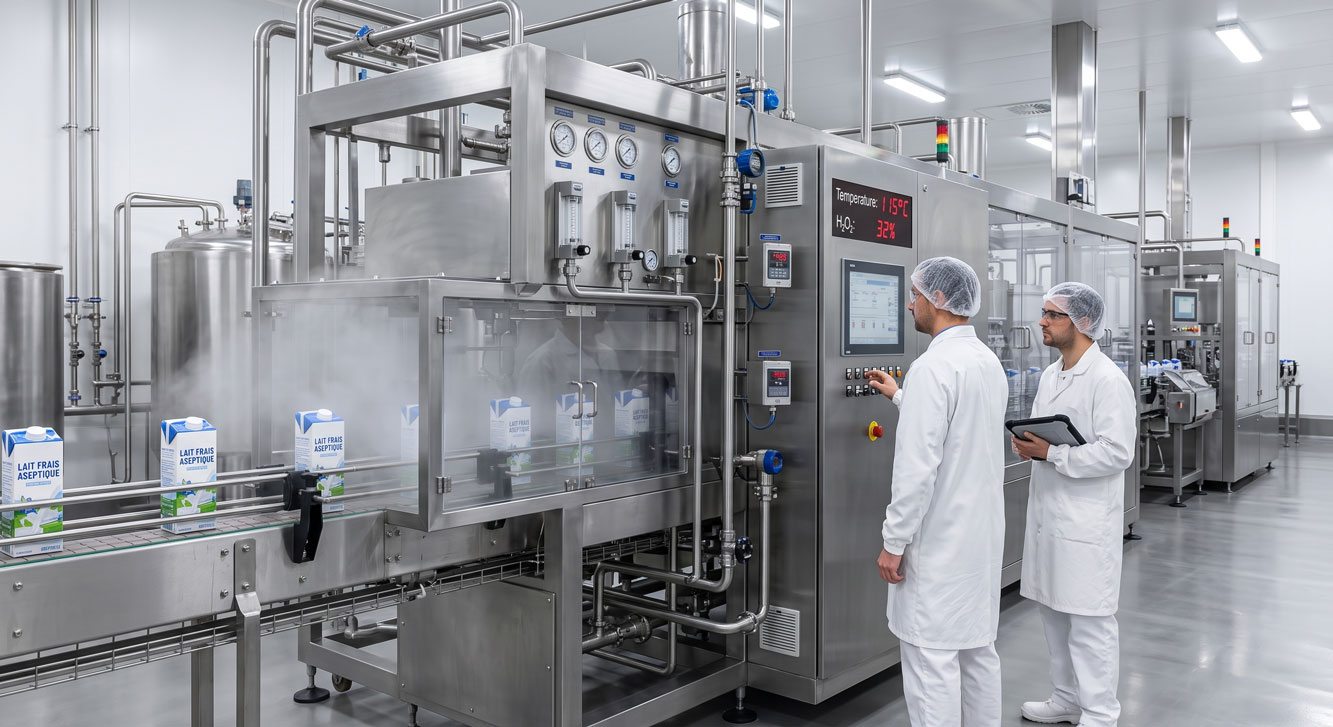

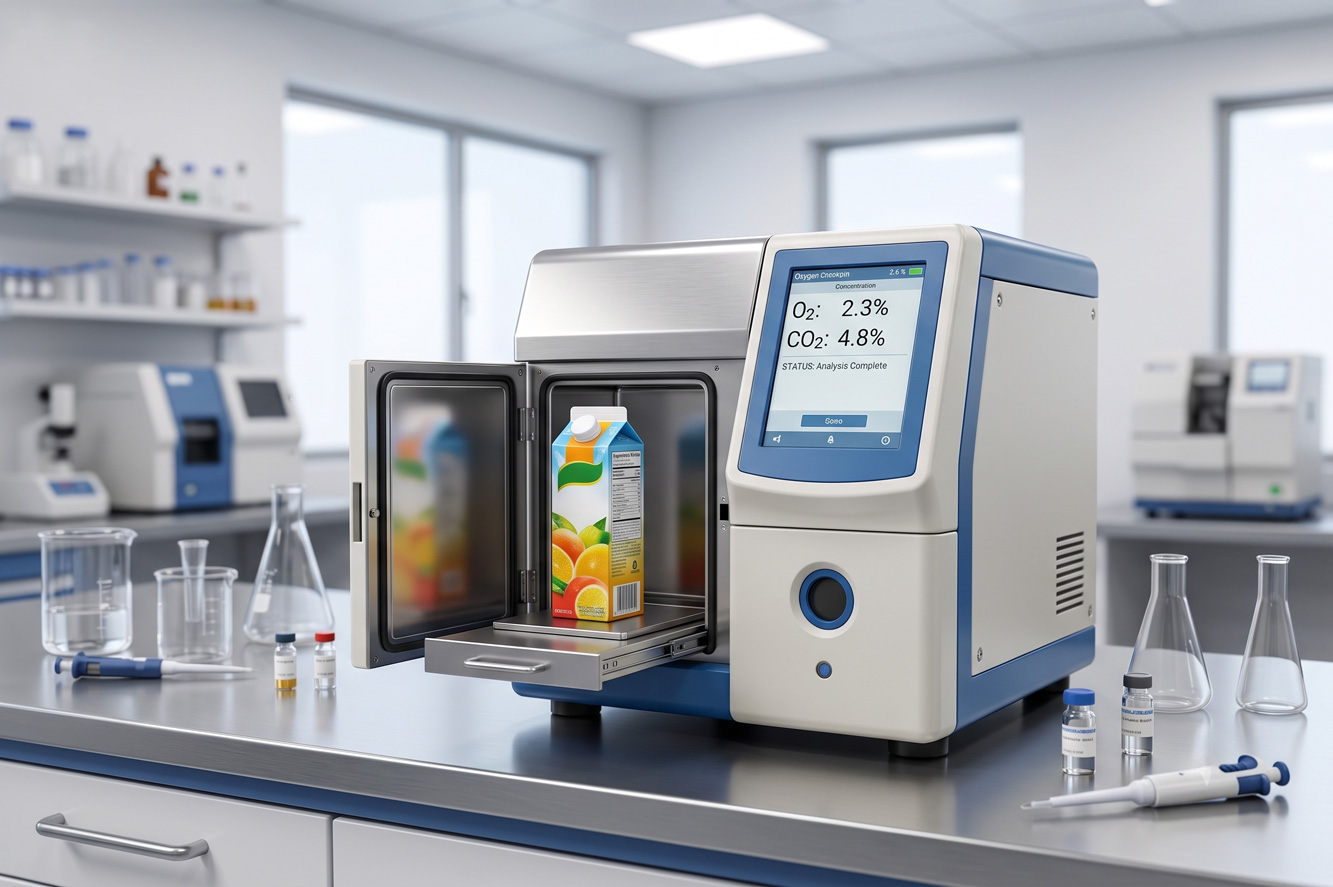
Executive Summary – Headspace Gas Analysis (HGA) is a non-destructive, laser-based inspection method for measuring the gas composition inside sealed aseptic containers. Based on Tunable Diode Laser Absorption Spectroscopy (TDLAS), HGA enables 100% in-line inspection of sealed packages without opening or damaging them. By measuring oxygen (O₂), carbon dioxide (CO₂), water vapor (H₂O), and absolute internal pressure, HGA provides direct evidence of package leaks, compromised seals, and the maintenance of protective atmospheres. Recognized by USP font-family: -apple-system, BlinkMacSystemFont, “Segoe UI”, Roboto, “Helvetica Neue”, Arial, “Noto Sans”, sans-serif;font-size:16px;background-color:rgb(255, 255, 255);”>, HGA is a deterministic Container Closure Integrity Testing (CCIT) method with the highest sensitivity for detecting micro-leaks. For B2B manufacturers, implementing HGA is essential for ensuring regulatory compliance, extending product shelf life, and protecting brand reputation from costly recalls.
What is Headspace Gas Analysis?
Headspace Gas Analysis (HGA), also known as Headspace Analysis (HSA), is a precise technique for measuring the gas composition in the sealed space of a container—the space between the product and the closure or seal. Many pharmaceutical and food products are packaged in controlled or modified atmospheres to protect their integrity and shelf life. Exposure to oxygen, moisture, or other environmental elements can compromise product stability, potency, and safety.
HGA enables manufacturers to assess whether these protective atmospheres are effectively maintained throughout the product’s shelf life. The method is compatible with various container types, including glass vials and ampoules, rigid and flexible plastic containers, and sterile containers used in aseptic manufacturing environments.
The Core Principle: Non-Destructive Integrity Testing
The fundamental value of HGA is its ability to assess package integrity without opening or destroying the package. This is a significant advancement over traditional destructive testing methods, which require sampling and destroying products—making 100% inspection economically unfeasible.
- Container Closure Integrity Testing (CCIT): It detects leaks by identifying changes in the expected gas composition. If a package is leaking, external air (with ~21% oxygen) will ingress, altering the headspace gas profile.
- Process Verification: It confirms that gas flushing or vacuum application steps of the aseptic filling process were performed correctly.
How Does Headspace Gas Analysis Work?
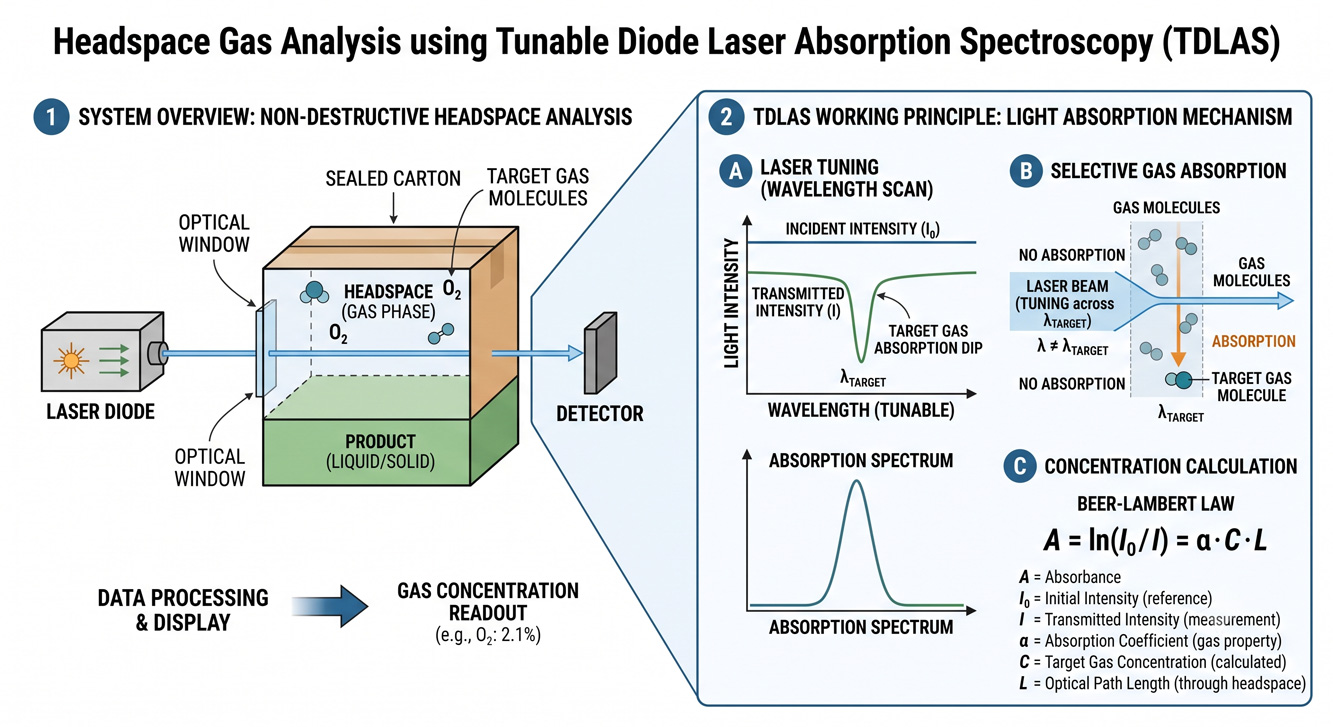
The most advanced and widely adopted technology for HGA is Tunable Diode Laser Absorption Spectroscopy (TDLAS) .
The TDLAS Mechanism
The process is based on the principle that different gas molecules absorb light at specific, unique wavelengths. The system works as follows:
- Laser Tuning: Laser diodes are finely tuned to the specific absorption wavelength of the target gas molecule (e.g., oxygen at 760 nm, water vapor at 1854 nm).
- Light Transmission: The laser beam is directed through the headspace of the sealed container.
- Absorption Measurement: A detector measures the intensity of the light that passes through. Molecules such as oxygen (O₂), carbon dioxide (CO₂), or water vapor (H₂O) absorb portions of the light.
- Concentration Calculation: The reduction in light intensity is measured and directly correlates with the gas concentration inside the container.
This non-invasive, non-destructive technique allows for fast, accurate analysis of the headspace environment without compromising the packaging or its contents.
Key Gases Analyzed and Their Significance
Applications in Aseptic Manufacturing
Container Closure Integrity Testing (CCIT)
CCIT is the process of evaluating whether a container and its closure system effectively maintain a sterile barrier. It ensures the package is sealed against the ingress or leakage of gases, moisture, pressure, or other contaminants that may compromise product stability, potency, or safety.
HGA is recognized as a deterministic leak test method with the highest sensitivity for detecting micro-leaks. By analyzing the headspace gas composition, not only can current leaks be detected, but it is also possible to identify historical leaks that have resealed, as these events often leave behind changes in the headspace gas profile. Non-destructive headspace analysis can detect even temporary defects, offering valuable data-driven insights into potential process risks.
In-Line and At-Line Quality Control
HGA systems can be integrated directly into the production line (in-line) or used in a laboratory setting (at-line):
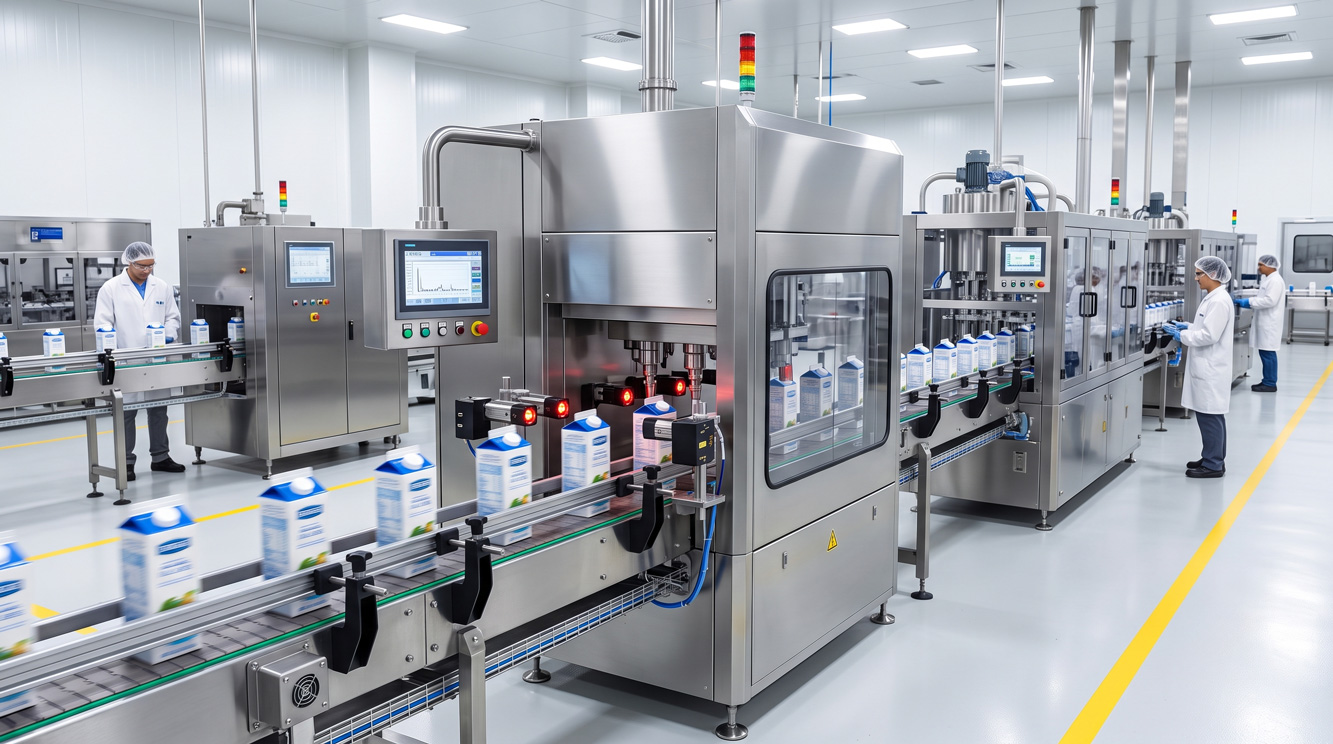
- In-Line Systems (e.g., LineArch™): Enable 100% inspection of every package at high speeds, ensuring that no faulty product reaches the market.
- At-Line/Benchtop Systems (e.g., GPX1500): Used for random sample testing, shelf-life studies, and troubleshooting.
The method enables tests on high-speed lines because very little time is required to perform the inspection. Data collected from HGA can be used to assess production effectiveness, since excessively high numbers of failing products or an increase in the percentage of rejects can indicate various problems on the production line.
Shelf-Life and Stability Studies
Because HGA is non-destructive, the same package can be tested multiple times over its shelf life. This allows manufacturers to monitor headspace gas changes over time, providing invaluable data for:
- Validating product shelf-life claims.
- Optimizing packaging design and barrier materials.
- Identifying the root cause of premature product failures.
- Tracking headspace behavior in intact packages over time.
Standards and Regulatory Compliance
The use of HGA is supported by several key regulatory standards and guidelines:
| Standard/Guideline | Relevance to Headspace Gas Analysis |
|---|---|
| USP Chapter 1207 | The U.S. Pharmacopoeia identifies laser-based headspace analysis as a standard deterministic method for Container Closure Integrity Testing (CCIT). Proposed revisions are expected to provide clearer guidance for headspace critical content verification. |
| FDA Guidance | The FDA’s 2008 guidance allows validated deterministic CCIT testing to replace sterility testing in stability protocols. Laser-based HGA is recognized as a non-destructive and non-invasive technique for measuring gases and pressure in sterile pharmaceutical containers. |
| EU GMP Annex 1 | The European Union’s Good Manufacturing Practice guidelines require testing for containers sealed under vacuum and emphasize the importance of CCI. |
| ASTM F2714 | Standard test method for the non-destructive determination of oxygen concentration in the headspace within a sealed package. |
| 21 CFR Part 11 | HGA systems must comply with FDA regulations for electronic records and signatures. |
The ASQ Packing Advantage
At ASQ Packing Group , we understand that the integrity of your packaging is paramount. While we are experts in manufacturing gable top cartons themselves, we also champion the use of advanced quality control measures like HGA to validate their performance.
Our Commitment to Quality:
- Superior Barrier Materials: We engineer our laminates with high-performance barrier layers (aluminum foil, EVOH, or paper-based) to minimize gas permeation, supporting your HGA efforts.
- Precision Sealing: Our advanced skiving, hemming, and ultrasonic sealing technologies create robust, hermetic seals that are less prone to failure.
- Expert Technical Support: We can advise on the best packaging material and seal configurations to ensure your products meet the most stringent integrity standards.
For a deeper understanding of the technologies that ensure package integrity, see our articles on How Skiving and Hemming Technology Prevents Edge-Wicking in Liquid Cartons and Induction Sealing vs. Ultrasonic Sealing: Which is Better? . To explore how HGA fits into the complete aseptic packaging ecosystem, refer to our Ultimate Engineering Guide to Aseptic Filling Machines .

Frequently Asked Questions
1. What is the primary purpose of Headspace Gas Analysis in aseptic packaging?
HGA is used to non-destructively verify the integrity of the package seal and confirm that the protective atmosphere (e.g., low oxygen) has been maintained. It detects leaks and validates the aseptic filling process.
2. How does HGA differ from traditional leak testing methods?
Traditional methods like dye testing are destructive and only performed on samples. HGA is non-destructive, fast, and can be performed on 100% of production in-line, providing far greater quality assurance.
3. What is TDLAS and why is it used in HGA?
Tunable Diode Laser Absorption Spectroscopy (TDLAS) is a highly sensitive and selective optical technique. It uses lasers tuned to specific wavelengths to precisely measure the concentration of target gases (like O₂ and H₂O) in the headspace.
4. Can HGA detect all types of leaks?
HGA is highly effective at detecting leaks that cause a change in the headspace gas composition. It can detect both current leaks and historical leaks that may have resealed.
5. Is HGA suitable for all types of aseptic packaging?
Yes. HGA systems are available for a wide variety of containers, including vials, ampoules, pre-filled syringes, pouches, trays, and cartons.
6. How does HGA contribute to shelf-life studies?
Because HGA is non-destructive, the same package can be tested repeatedly over time. This allows manufacturers to monitor gas composition changes and accurately determine shelf life.
Ready to Optimize Your Aseptic Quality Control?
Whether you are implementing HGA for the first time or looking to upgrade your existing quality control systems, ASQ Packing Group has the technical expertise and manufacturing capability to support your needs.
👉 Contact us at ASQ Packing to discuss your quality control requirements, request samples, or schedule a technical consultation.