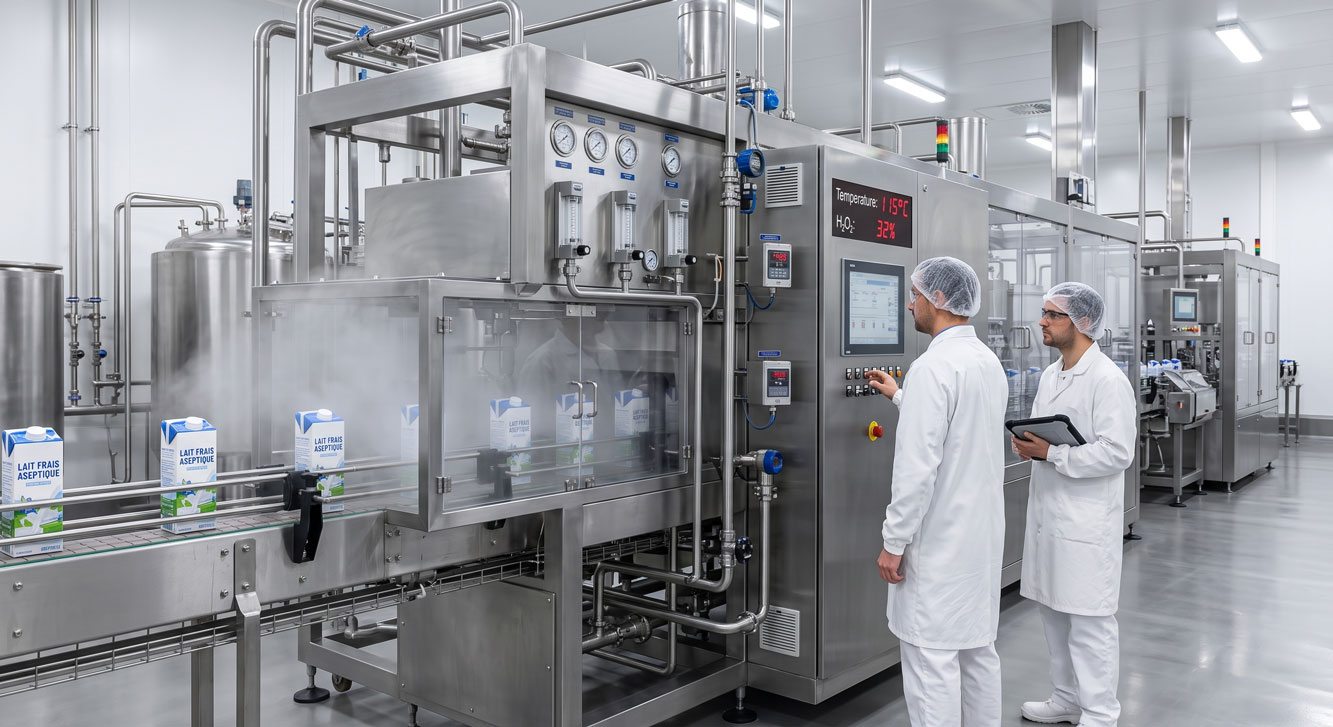

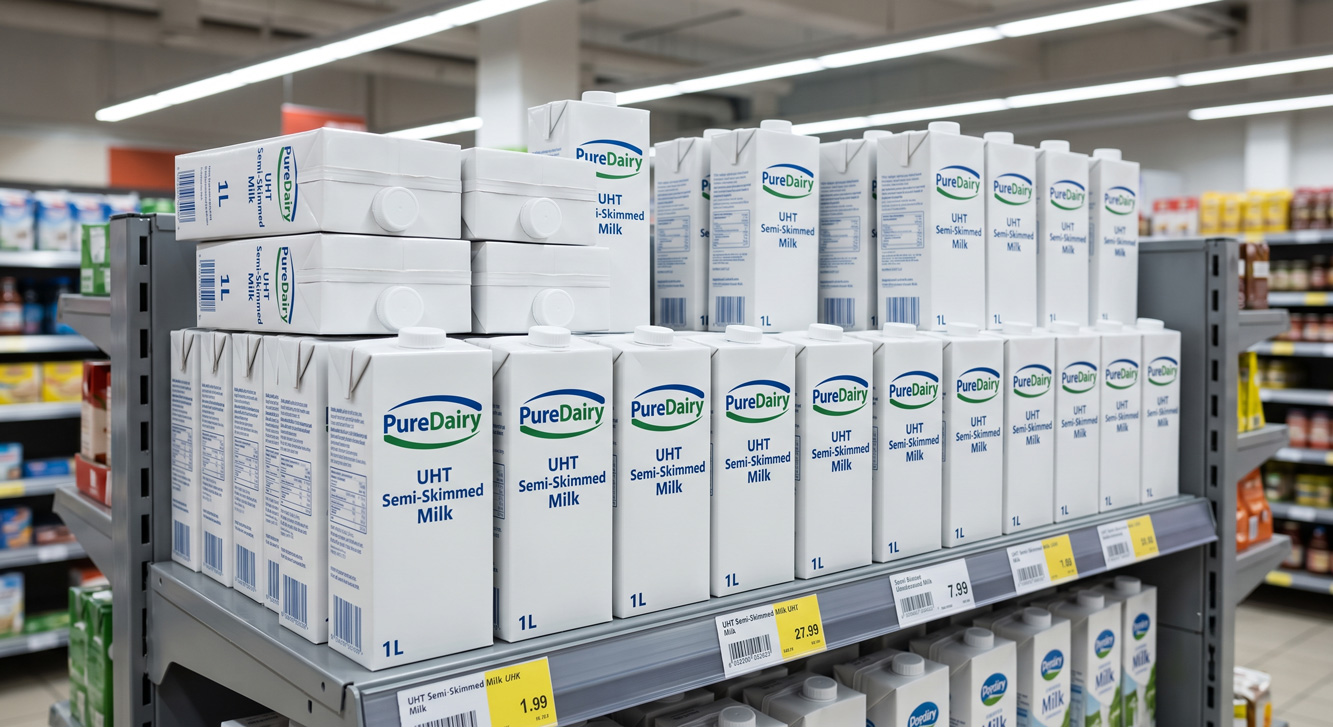
Executive Summary – UHT (Ultra-High Temperature) processing combined with aseptic packaging is the industry gold standard for producing shelf-stable liquid dairy products. UHT processing involves heating milk to 135–150°C for 2–6 seconds, achieving commercial sterility by eliminating all vegetative pathogens and spores. The aseptic packaging system then fills the sterile product into pre-sterilized containers within a microbiologically controlled environment, maintaining sterility for 6 to 9 months (and up to 12 months) at ambient temperature without preservatives or refrigeration. The multi-layer paperboard–aluminum–polyethylene laminate structure provides complete barrier protection against light, oxygen, and microbial ingress. This guide provides a comprehensive engineering and quality control framework for UHT milk and dairy product aseptic packaging, covering process parameters, material science, sterilization methods, quality assurance, and regulatory compliance.
Understanding UHT Processing: The Foundation of Aseptic Packaging
What Is UHT Processing?
Ultra-High Temperature (UHT) processing is a continuous-flow thermal sterilization method that transforms raw milk into a commercially sterile product stable at room temperature for several months. The process involves heating milk to 135–150°C for 2–6 seconds, effectively eliminating all vegetative microorganisms and spores while minimizing nutritional degradation. UHT milk is also referred to as “long-life milk” and does not require refrigeration until the package is opened.
The UHT Process Flow
The complete UHT process consists of several sequential stages:
| Stage | Parameter | Function |
|---|---|---|
| Pre-heating | ~5°C → 75–95°C | Recuperative heating using hot product from sterilization stage |
| Deaeration | Vacuum treatment | Removes dissolved oxygen to reduce oxidation during storage |
| Homogenization | High pressure (150–250 bar) | Prevents cream separation; ensures uniform fat distribution |
| Sterilization | 135–150°C for 2–6 seconds | Eliminates all microorganisms and spores |
| Cooling | To <30°C | Prepares product for aseptic filling |
| Aseptic Filling | Sterile environment | Packages product in pre-sterilized containers |
| Hermetic Sealing | Heat or ultrasonic sealing | Maintains sterility throughout shelf life |
Direct vs. Indirect Heating Systems
UHT sterilization can be achieved through two primary heating methods:
| Method | Description | Advantages | Limitations |
|---|---|---|---|
| Direct Heating | Steam is injected or infused directly into the product | Rapid heating; minimal fouling; better flavor retention | Higher energy consumption; requires steam of culinary quality |
| Indirect Heating | Heat transferred through plate or tubular heat exchangers | Lower operating costs; simpler system design | Higher fouling potential; requires frequent cleaning |
Critical Note: UHT processing alone does not guarantee long shelf life. The sterilized product must be aseptically packaged immediately after cooling to prevent recontamination. UHT technology and aseptic packaging are two inseparable components of the shelf-stable dairy production system.
Aseptic Packaging: The Sterile Barrier
What Is Aseptic Packaging?
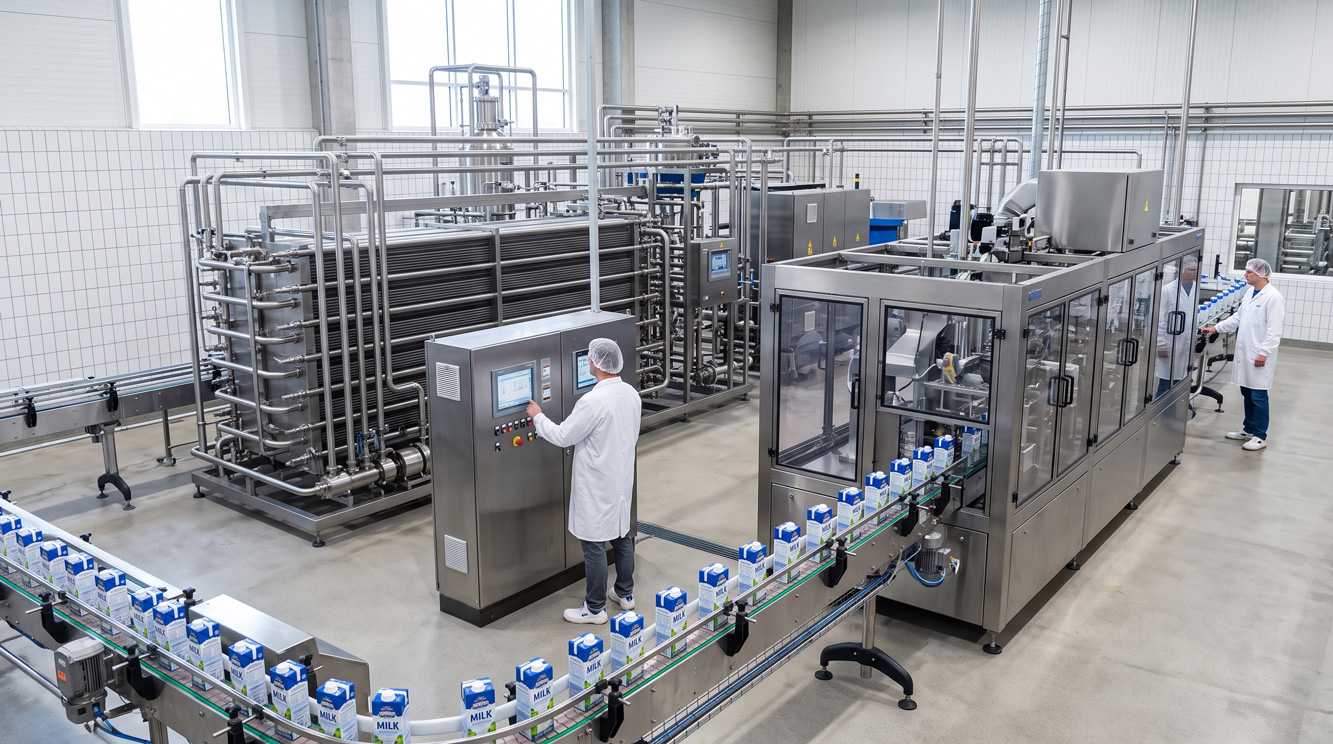
Aseptic packaging is a technology in which commercially sterile products are filled and sealed in pre-sterilized containers within a microbiologically controlled environment. The key principle is the separation of product sterilization from package sterilization, enabling ambient-temperature distribution without refrigeration or preservatives.
The aseptic packaging system must maintain four critical elements:
- Establishment and maintenance of the sterile environment
- Sterilization of the product (UHT processing)
- Sterilization of packaging materials
- Complete, hermetic sealing of the package
The Aseptic Packaging Line Architecture
A complete aseptic packaging line consists of:
| Component | Function |
|---|---|
| Product Sterilization System | UHT processing unit |
| Packaging Material Sterilization | H₂O₂ bath, vapor, or e-Beam system |
| Aseptic Filling Machine | Forms, fills, and seals in sterile environment |
| Automatic Cleaning System (CIP) | Cleans internal surfaces without disassembly |
| Equipment Pre-sterilization System (SIP) | Sterilizes machine surfaces before production |
| Sterile Environment Maintenance | Positive pressure, HEPA filtration, sterile air |
| Quality Control & Monitoring | In-line inspection systems |
The Multi-Layer Laminate: Material Science of UHT Cartons
Composition and Structure
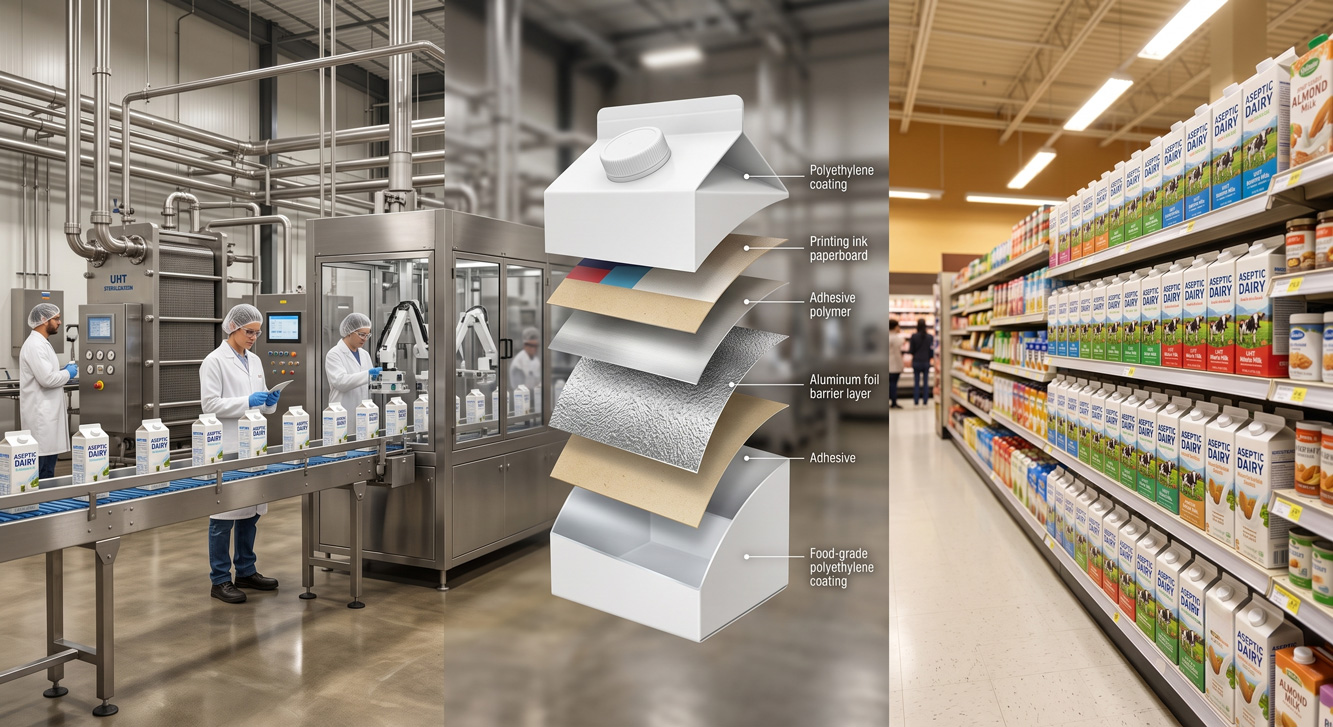
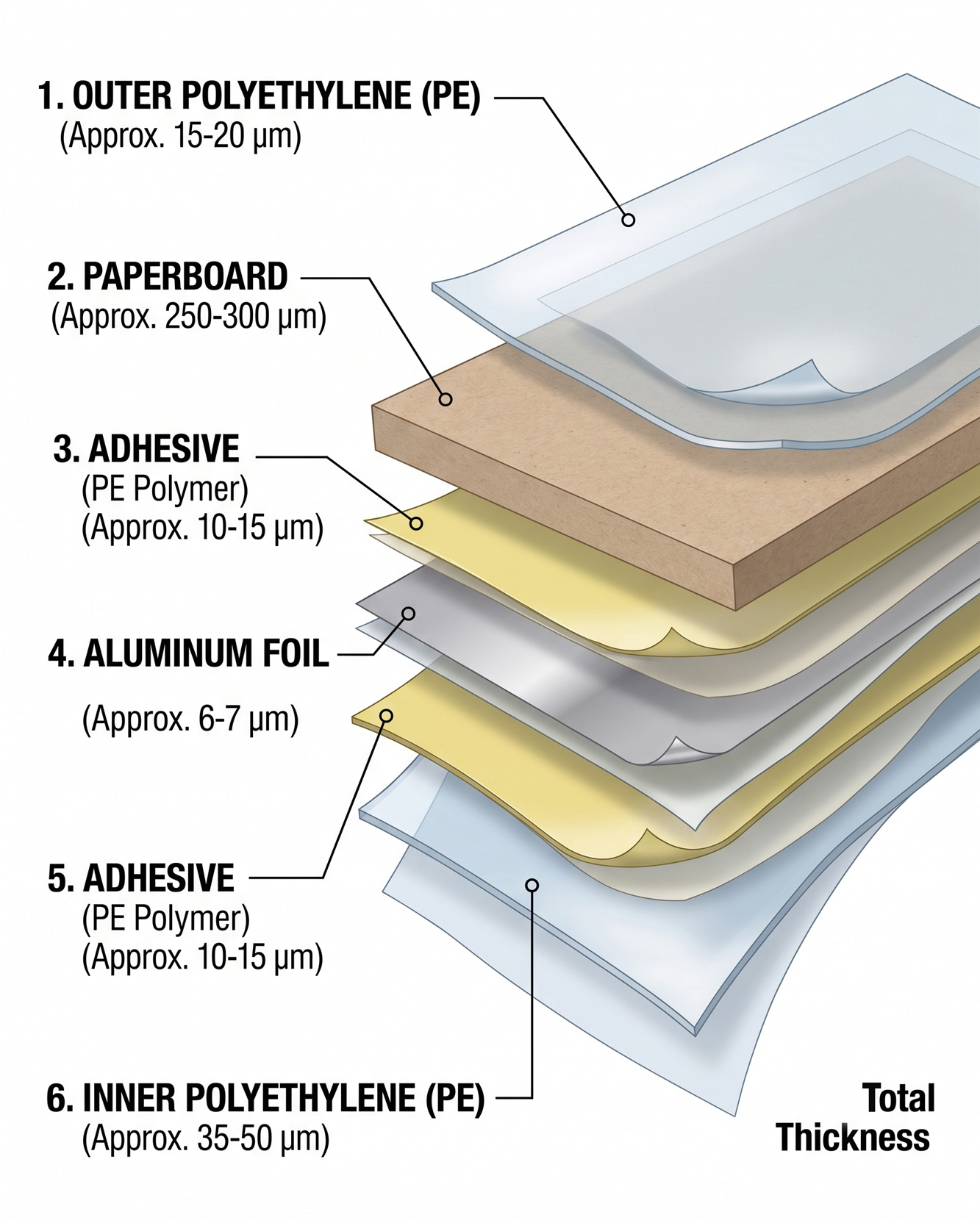
UHT milk cartons are manufactured from a multi-layer composite material designed to provide complete barrier protection:
| Layer | Material | Thickness | Primary Function |
|---|---|---|---|
| Outer Layer | Polyethylene (PE) | ~12–18 µm | Moisture barrier; print substrate |
| Paperboard | Virgin kraft fiber | ~350–450 µm | Mechanical strength; stiffness; ~73% of total weight |
| Adhesive/Tie Layer | PE or co-polymer | ~3–5 µm | Bonds paperboard to aluminum |
| Barrier Layer | Aluminum foil | 6–9 µm | Complete oxygen and light barrier |
| Adhesive/Tie Layer | PE or co-polymer | ~3–5 µm | Bonds aluminum to inner PE |
| Inner Sealing Layer | Polyethylene (PE) | ~15–25 µm | Food-contact surface; heat-sealable |
Typical Material Ratios:
- Paperboard: ~73% (provides structural integrity)
- Polyethylene: ~20% (provides moisture resistance and sealability)
- Aluminum foil: ~5% (provides complete oxygen and light barrier)
- Printing inks & coatings: ~2%
Barrier Performance Requirements
| Barrier Property | Requirement | Consequence of Failure |
|---|---|---|
| Oxygen Transmission | < 5 cm³/m²·day (with aluminum) | Oxidation; off-flavors; nutrient degradation |
| Light Transmission | 0% (aluminum blocks all light) | Vitamin degradation (riboflavin, A); photo-oxidation |
| Moisture Barrier | < 5 g/m²·day | Product concentration; texture changes |
| Microbial Barrier | Complete (hermetic seal) | Spoilage; food safety risk |
| Aroma Barrier | Complete | Flavor loss; taint absorption |
Why Aluminum Foil Is Essential
The 6–9 µm aluminum foil layer is the critical component that enables UHT milk’s extended shelf life. It provides:
- Complete oxygen barrier – OTR approaching zero when defect-free
- Total light block – 100% opacity protecting photosensitive nutrients (riboflavin, vitamin A)
- Microbial barrier – Physical prevention of bacterial ingress
- Aroma retention – Prevents loss of volatile flavor compounds
Industry Fact: UHT milk packaging without an aluminum barrier layer cannot achieve the same shelf life. The aluminum foil is what enables ambient-temperature storage for 6–9 months.
Packaging Material Sterilization Methods
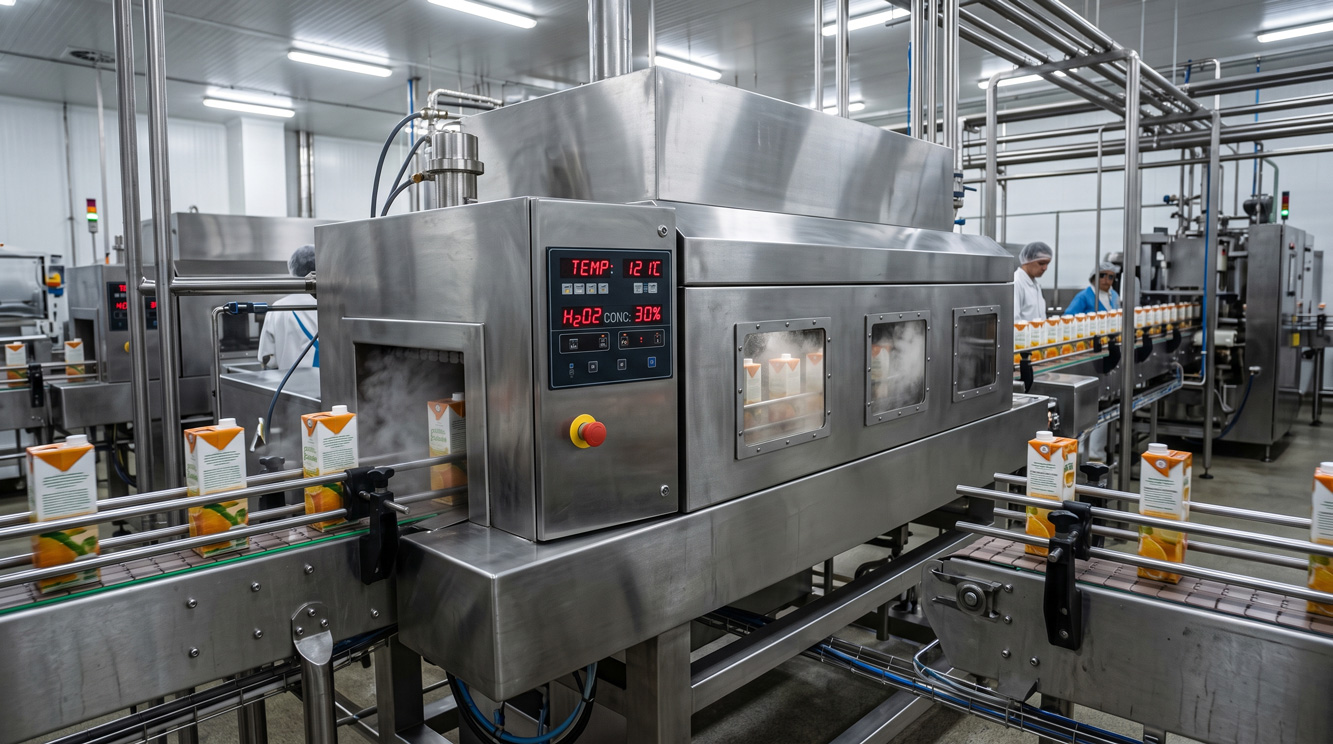
Hydrogen Peroxide (H₂O₂) Sterilization
The industry standard for UHT carton sterilization, approved by the FDA since 1981:
| Parameter | Specification |
|---|---|
| H₂O₂ Concentration | 30–35% (w/w) |
| Application Method | Immersion bath or vaporized spray |
| Contact Time | Up to 15 seconds |
| Hot Air Temperature | 60–125°C (for vaporization and residue removal) |
| Regulatory Limit | FDA 21 CFR 178.1005: < 0.5 ppm residual H₂O₂ |
Hydrogen Peroxide + UV Combination
For carton sterilization, H₂O₂ is often combined with ultraviolet (UV) light exposure:
- H₂O₂ oxidizes microbial cell components
- UV light activates and enhances the oxidative effect
- The combination achieves higher log reductions at lower chemical concentrations
Electron Beam (e-Beam) Sterilization
An emerging alternative for packaging material sterilization:
| Parameter | Specification |
|---|---|
| Mechanism | Ionizing radiation destroys microbial DNA |
| Residues | None (chemical-free) |
| Critical Parameters | Voltage, current intensity, exposure time (3 parameters vs. 7 for H₂O₂) |
| Environmental Impact | No water consumption; no chemical disposal |
Quality Control and Assurance
Critical Control Points in UHT Aseptic Packaging
| Control Point | Monitoring Parameter | Frequency | Action Limit |
|---|---|---|---|
| UHT Temperature | Temperature sensors | Continuous | ±1°C of setpoint |
| UHT Holding Time | Flow rate measurement | Continuous | ≥2 seconds at sterilization temperature |
| Package Sterilization | H₂O₂ concentration | Every batch | 30–35% |
| Package Sterilization | Hot air temperature | Continuous | 60–125°C |
| Seal Integrity | Seal strength (peel test) | Every 30 minutes | > 25 N/15 mm |
| Sterile Environment | Particle count (ISO Class 5) | Continuous | ≤3,520 particles/m³ (≥0.5 µm) |
| Sterile Environment | Positive pressure | Continuous | 10–20 Pa above ambient |
| Finished Product | Incubation test (30°C) | Every batch | 7 days; no microbial growth |
Commercial Sterility Testing
UHT milk and aseptic dairy products must meet commercial sterility standards:
| Test | Condition | Acceptance Criteria |
|---|---|---|
| Incubation at 30°C | 7–15 days | No microbial growth; no pH change >0.5 |
| Incubation at 55°C | 7 days | No microbial growth; no swelling or leakage |
| pH Measurement | Pre- and post-incubation | Difference <0.5 pH units |
| Microscopic Examination | Post-incubation | No viable microorganisms detected |
In-Line Quality Control Technologies
| Technology | Application | Detection Capability |
|---|---|---|
| Headspace Gas Analysis (HGA) | Measures O₂ and CO₂ in sealed package | Detects micro-leaks; validates atmosphere integrity |
| Laser Profile Measurement | Checks carton dimensions | Detects dimensional changes from air ingress |
| X-ray Fill Level Inspection | Verifies product volume | Detects leaks causing product loss |
| Seal Integrity Testing | Peel strength; vacuum test | Confirms hermetic seal |
Regulatory and Standards Compliance
Key Regulatory Standards
| Standard/Regulation | Requirement |
|---|---|
| FDA 21 CFR | U.S. food contact material regulations; residual H₂O₂ < 0.5 ppm; UHT products must be labeled “ultra-pasteurized” |
| EU Regulation 1935/2004 | European food contact material framework |
| ISO 11137 | Radiation sterilization validation (for e-Beam) |
| Codex Alimentarius | International food safety standards for milk and milk products |
| EU GMP Annex 1 | Aseptic processing requirements for sterile products |
Labeling Requirements
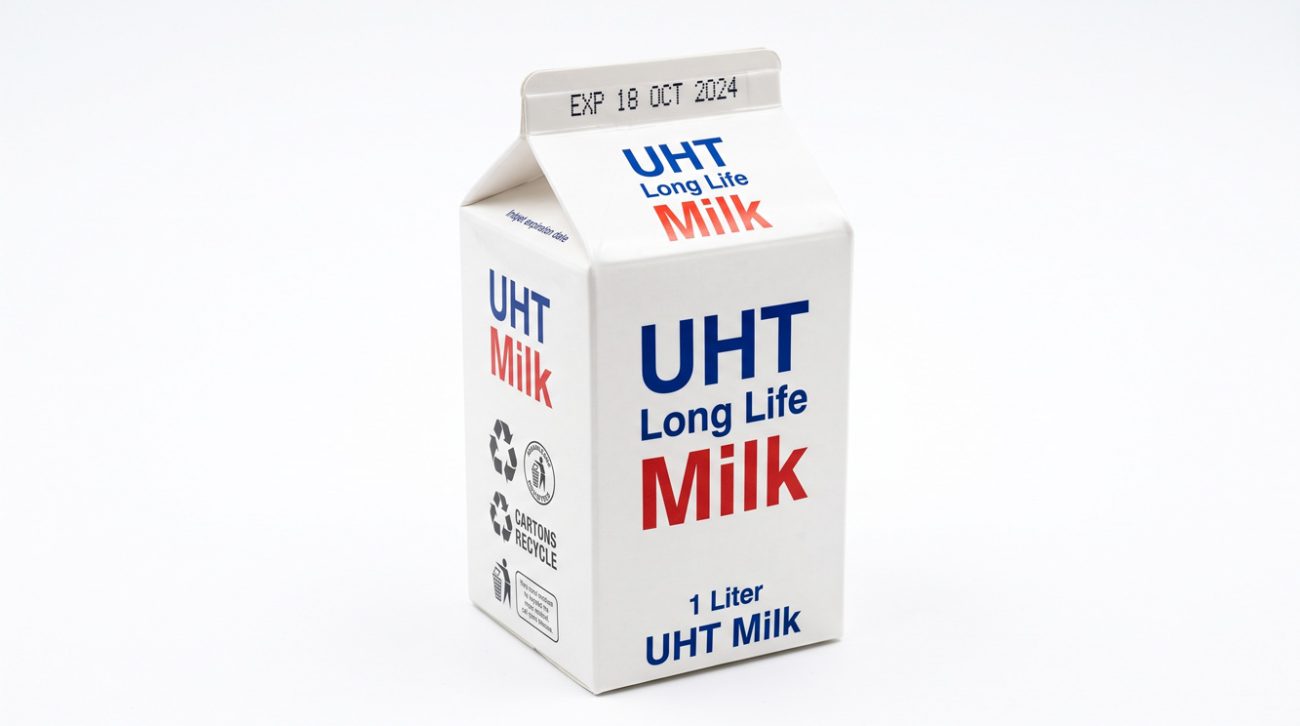
UHT milk products must be clearly labeled:
- “UHT” or “Ultra-High Temperature” prominently displayed
- Date marking (production date and/or best-before date)
- Storage instructions (“Store in a cool, dry place; refrigerate after opening”)
- Ingredient declaration (milk, vitamins, etc.)
Shelf Life and Storage
Expected Shelf Life
| Product Type | Shelf Life (Ambient) | Storage Conditions |
|---|---|---|
| UHT Whole Milk | 6–9 months | Cool, dry; <25°C |
| UHT Skim/Semi-Skimmed Milk | 6–9 months | Cool, dry; <25°C |
| UHT Flavored Milk | 6–9 months | Cool, dry; <25°C |
| UHT Cream | 6–9 months | Cool, dry; <25°C |
| UHT Plant-Based Beverages | 6–12 months | Cool, dry; <25°C |
Note: Shelf life is determined by both UHT processing parameters and packaging barrier performance. The weakest link in the system defines the maximum shelf life.
Storage After Opening
Once opened, UHT milk must be refrigerated at 4°C or below and consumed within two to seven days.
Factors Affecting UHT Milk Shelf Life
| Factor | Impact | Mitigation |
|---|---|---|
| Oxygen Ingress | Oxidation; off-flavors | Aluminum foil barrier; headspace gas flushing |
| Light Exposure | Vitamin degradation; photo-oxidation | Complete light block (aluminum) |
| Temperature Abuse | Accelerated chemical reactions | Maintain recommended storage conditions |
| Package Integrity | Recontamination; spoilage | Seal integrity testing; leak detection |
| Initial Microflora | Heat-resistant enzymes and spores | Raw milk quality; proper UHT parameters |
The ASQ Packing Advantage
At ASQ Packing Group , we engineer premium gable top and aseptic cartons specifically designed for UHT milk and dairy product applications.
Our Technical Capabilities
- Precision multi-layer laminates with FSC-certified paperboard and aluminum barrier layers
- Custom barrier engineering tailored to your specific shelf-life requirements
- Skiving and hemming technology for liquid-tight sealing and edge-wicking prevention
- Advanced printing capabilities for high-impact brand communication
- Comprehensive quality control ensuring consistent material performance
Why Choose ASQ Packing for UHT Dairy Packaging
| Advantage | Benefit |
|---|---|
| Superior Barrier Performance | Optimized aluminum and polymer layers for extended shelf life |
| Precision Sealing | Advanced skiving, hemming, and ultrasonic sealing technologies |
| Sustainable Materials | FSC-certified paperboard from responsibly managed forests |
| Regulatory Compliance | Full FDA and EU food contact material compliance |
| Technical Expertise | Expert support for material selection and process optimization |
For more technical insights on aseptic packaging, see our articles on Packaging Sterilization Methods: H₂O₂ vs. e‑Beam , Form-Fill-Seal (FFS) Technology , and How Skiving and Hemming Technology Prevents Edge-Wicking in Liquid Cartons .
Frequently Asked Questions
1. What is the difference between UHT milk and pasteurized milk?
UHT milk is heated to 135–150°C for 2–6 seconds, eliminating all microorganisms and spores, enabling ambient-temperature storage for 6–9 months. Pasteurized milk is heated to ~72°C for 15 seconds, killing pathogenic bacteria but not spores, requiring continuous refrigeration and having a shelf life of about two weeks.
2. Why does UHT milk not require refrigeration?
The combination of UHT sterilization (which kills all microorganisms) and aseptic packaging (which prevents recontamination) creates a commercially sterile product that remains safe and stable at ambient temperature.
3. Does UHT milk contain preservatives?
No. UHT milk contains no preservatives. The extended shelf life is achieved through thermal sterilization and aseptic packaging alone.
4. What is the typical shelf life of UHT milk?
UHT milk typically has a shelf life of 6 to 9 months, and in some cases up to 12 months, when stored in a cool, dry place.
5. What is the role of aluminum foil in UHT milk cartons?
The aluminum foil layer (6–9 µm) provides complete oxygen and light barrier protection, preventing oxidation and vitamin degradation that would otherwise occur during extended ambient storage.
6. Can UHT milk be stored after opening?
Yes, but refrigerated. Once opened, UHT milk must be refrigerated at 4°C or below and consumed within two to seven days.
7. Does UHT processing destroy nutrients?
UHT processing causes minimal nutritional loss. While some heat-sensitive vitamins (B1, B12, C, folic acid) may be reduced, the protein, fat, and calcium content remain largely unchanged.
8. What is the difference between UHT and ESL (Extended Shelf Life) milk?
UHT milk is sterilized at 135–150°C for 2–6 seconds and packaged aseptically, achieving shelf life of 6–9 months at ambient temperature. ESL milk is processed at lower temperatures (125–130°C) and packaged under clean conditions, achieving shelf life of 30–45 days under refrigeration.
Ready to Engineer Your UHT Dairy Packaging Solution?
Whether you are launching a new UHT dairy product or optimizing an existing line, ASQ Packing Group has the technical expertise and manufacturing capability to deliver premium packaging solutions.
👉 Contact us at ASQ Packing to discuss your UHT packaging requirements, request samples, or schedule a technical consultation.