
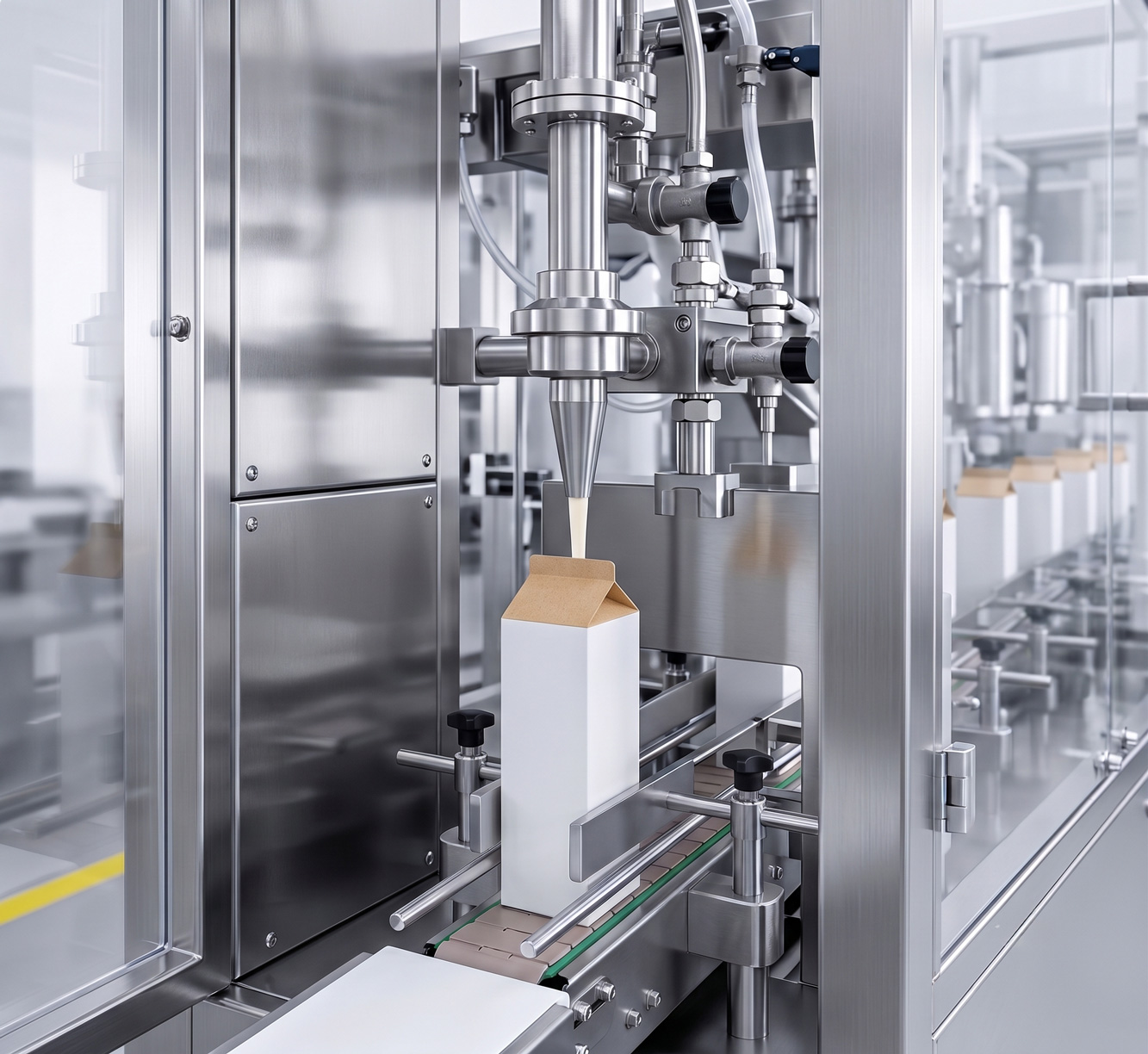
Executive Summary – Form-Fill-Seal (FFS) technology is an automated packaging process in which a package is formed, filled with product, and hermetically sealed in one continuous, integrated operation. In aseptic FFS systems, all three steps are conducted within a sterile, microbiologically controlled environment, enabling ambient-temperature distribution with shelf lives of 6 to 18 months without preservatives. FFS machines typically operate at speeds ranging from 6,000 to over 70,000 packages per hour, with cycle times as short as six seconds. The technology offers significant advantages over conventional multi‑step filling lines: it reduces operator intervention by integrating up to 23 separate steps into a single automated process, minimizes contamination risk, lowers production costs, and enables flexible package design. This guide provides a comprehensive engineering analysis of FFS technology, covering the core operating principles, the two dominant machine architectures (web‑fed and blank‑fed), critical process parameters, sterilization integration, and selection criteria for B2B decision‑makers.
What Is Form-Fill-Seal (FFS) Technology?
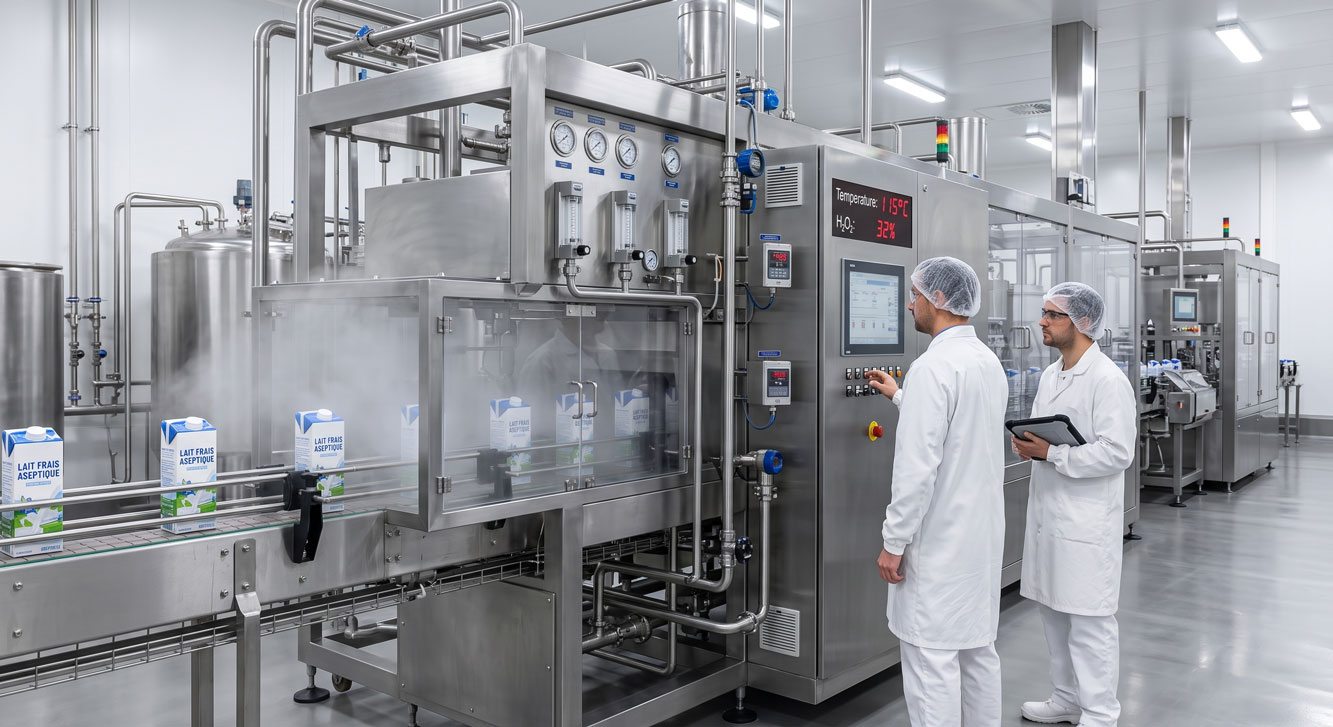
Form-Fill-Seal (FFS) is an automated packaging technology in which a package is formed from a flat web of material or pre‑cut blanks, filled with a liquid or solid product, and hermetically sealed—all within a single, continuous operation. In aseptic applications, the entire process is conducted within a sterile environment, ensuring that the packaged product remains free from microbial contamination throughout its shelf life.
The Core Principle: Integration and Automation
The fundamental value proposition of FFS technology is process integration. Traditional packaging lines require multiple discrete machines and numerous manual interventions. A typical conventional filling line for liquid products may involve 20 or more separate steps, each introducing potential points of contamination and inefficiency.
FFS technology collapses this complexity into a single, fully automated machine. The benefits are substantial:
The FFS Cycle: How It Works
The FFS process follows a sequential cycle that repeats continuously. While the specific steps vary depending on the machine architecture (web‑fed vs. blank‑fed) and the type of packaging material, the core sequence remains consistent:
Step 1: Form
The packaging material—whether a continuous roll of film, paperboard laminate, or pre‑cut blanks—is fed into the machine. The material is shaped into the desired container form.
Step 2: Sterilize (Aseptic Applications)
In aseptic FFS systems, the formed packaging is sterilized to eliminate any viable microorganisms. Sterilization methods include hydrogen peroxide (H₂O₂) immersion or vapor, electron beam (e‑Beam), or steam sterilization.
Step 3: Fill
The sterile product is metered and dispensed into the formed container. The filling environment is maintained under positive pressure with sterile air or nitrogen to prevent contamination.
Step 4: Seal
The filled container is hermetically sealed using heat, pressure, or ultrasonic energy. The seal must be complete and permanent to maintain product sterility.
Step 5: Discharge
The finished package is released from the machine, ready for secondary packaging and distribution.
The Two Dominant Architectures: Web‑Fed vs. Blank‑Fed
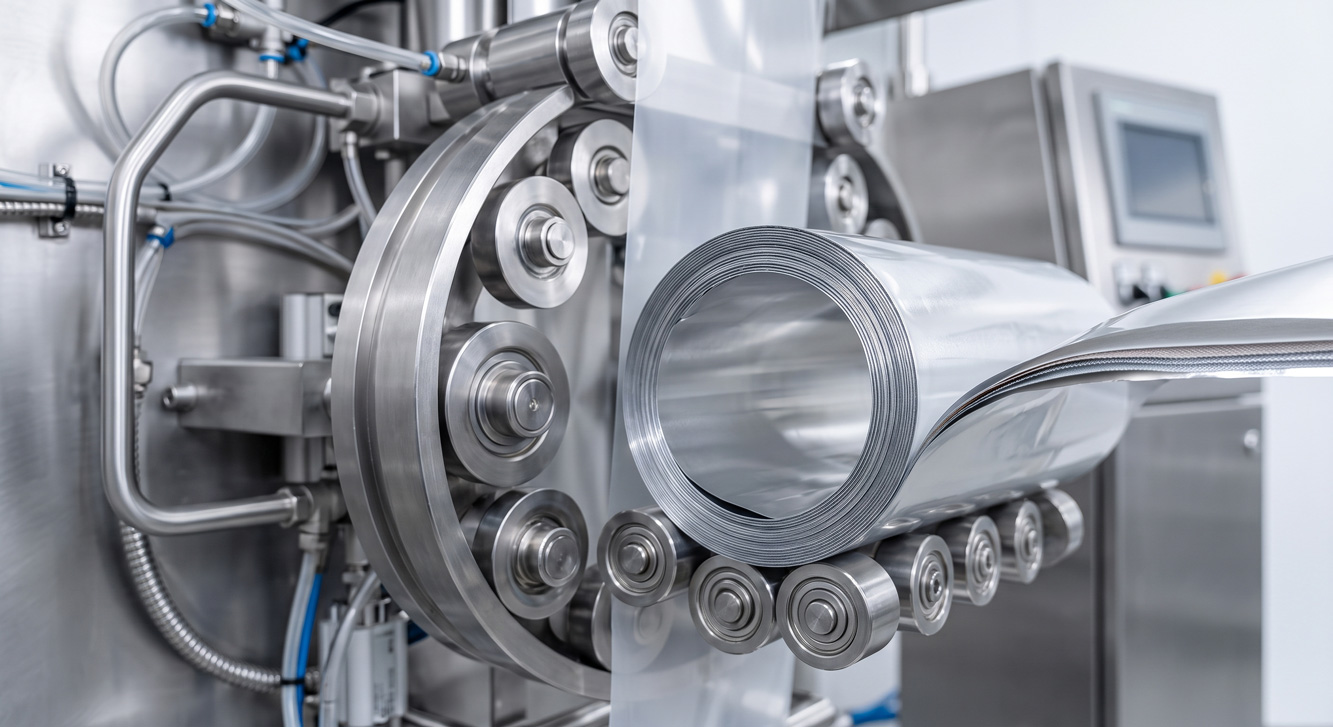
FFS machines are broadly categorized by how the packaging material is fed into the system. For a detailed technical comparison of these architectures, see our dedicated article: Web‑Fed vs. Blank‑Fed Machines in Aseptic Lines .
Web‑Fed (Roll‑Fed) FFS Machines
Operational Principle: A continuous roll of flat laminate material (the “web”) is fed into the machine, formed into a tube or container, sterilized, filled, and sealed—all in one continuous motion.
| Parameter | Specification |
|---|---|
| Throughput | Up to 24,000 packages/hour |
| Material Format | Continuous rollstock |
| Sterilization | Chemical bath or vapor |
| Best For | High‑volume, single‑SKU production |
Key Advantage: Maximum throughput and lowest cost‑per‑package for dedicated, long production runs.
Key Challenge: Changeovers require changing the entire roll and forming tooling, resulting in significant downtime.
Blank‑Fed (Sleeve) FFS Machines
Operational Principle: Pre‑cut, pre‑seamed flat blanks are loaded into a magazine, opened into their final shape, sterilized, filled from the top, and sealed.
| Parameter | Specification |
|---|---|
| Throughput | Up to 12,000 packages/hour |
| Material Format | Pre‑cut, pre‑seamed blanks |
| Sterilization | Spray/vapor (H₂O₂ + UV) |
| Best For | Multiple SKUs, frequent changeovers |
Key Advantage: Rapid changeovers enable production of multiple product sizes and formats on the same line.
Key Challenge: Lower throughput and higher per‑package material cost.
Side‑by‑Side Comparison
| Performance Metric | Web‑Fed (Roll‑Fed) | Blank‑Fed (Sleeve) |
|---|---|---|
| Maximum Throughput | Up to 24,000 packs/hour | Up to 12,000 packs/hour |
| Changeover Time | 45–90 minutes | 5–15 minutes |
| Capital Investment | Higher | Moderate |
| Material Cost | Lower (rollstock) | Higher (pre‑cut blanks) |
| Sterilization Method | Chemical bath (full immersion) | Spray/vapor (H₂O₂ + UV) |
| SKU Flexibility | Limited | High |
FFS in Aseptic Packaging: The Sterilization Connection
In aseptic FFS systems, the sterilization of the packaging material is critical to achieving extended shelf life. The choice of sterilization method directly impacts the material selection, machine design, and overall process efficiency. For a comprehensive comparison of sterilization technologies, see our article on Packaging Sterilization Methods: H₂O₂ vs. e‑Beam .
Hydrogen Peroxide (H₂O₂) Sterilization
H₂O₂ sterilization is the industry standard for aseptic FFS systems. The packaging material passes through a bath of 30–35% H₂O₂ or is exposed to H₂O₂ vapor, followed by hot air (60–125°C) to remove residues.
Regulatory Limit: FDA 21 CFR 178.1005 mandates residual H₂O₂ below 0.5 ppm in the final packaged product.
Electron Beam (e‑Beam) Sterilization
e‑Beam sterilization uses ionizing radiation to destroy microbial DNA, requiring no chemical agents and leaving zero residue. This method is increasingly adopted in FFS systems for its environmental and operational advantages.
Sealing in FFS: Induction vs. Ultrasonic
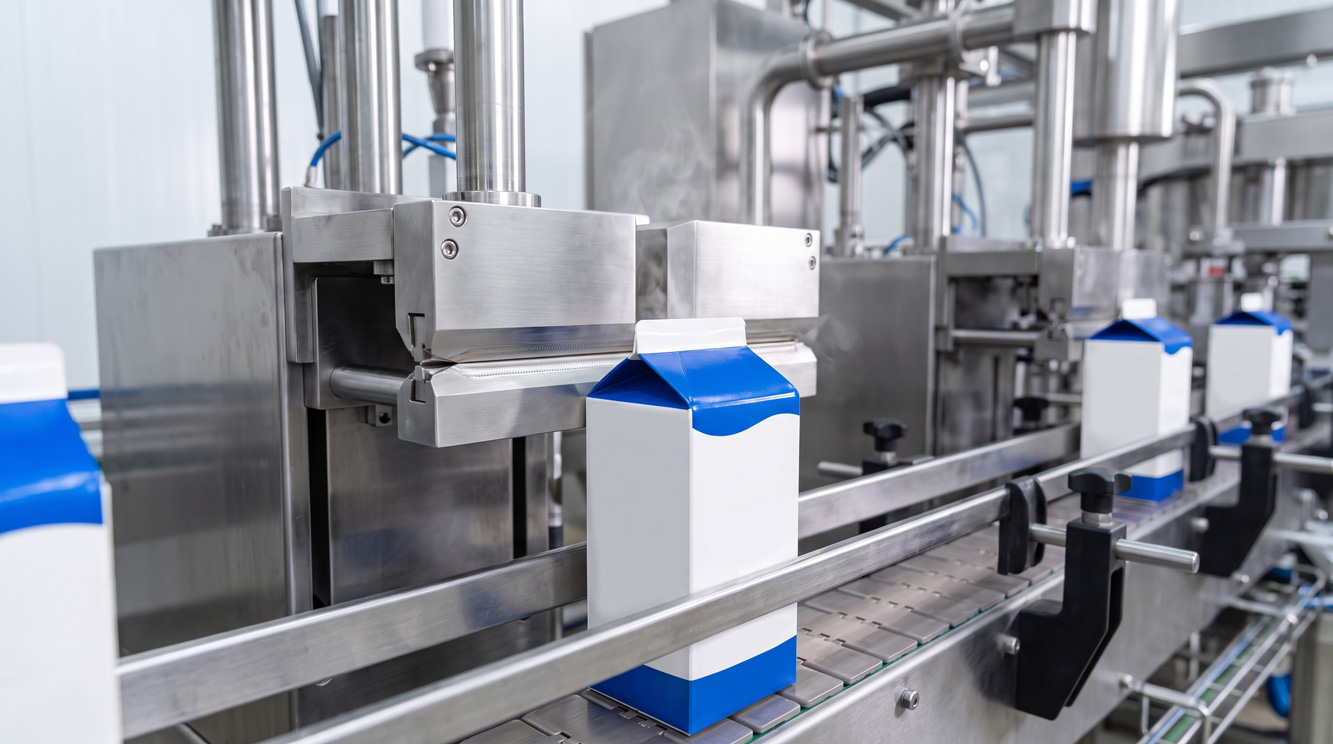
The sealing step is critical to package integrity. Two primary sealing technologies are used in aseptic FFS systems:
- Induction Sealing: Uses electromagnetic fields to generate heat in a conductive (aluminum) layer. This is the established standard for aluminum‑containing laminates.
- Ultrasonic Sealing: Uses high‑frequency mechanical vibrations (20–35 kHz) to generate frictional heat directly within the plastic layers. Does not require an aluminum layer, enabling more sustainable, mono‑material packaging.
For a detailed comparison, see our article on Induction Sealing vs. Ultrasonic Sealing: Which is Better? and our deep dive on the Ultrasonic Sealing Mechanism in Aseptic Cartons .
Key Selection Criteria for FFS Machines
| Criterion | Consideration |
|---|---|
| Production Volume | Web‑fed for > 100 million units/year; Blank‑fed for < 50 million |
| SKU Count | Web‑fed for 1–2 SKUs; Blank‑fed for 3+ SKUs |
| Product Characteristics | Particulates require blank‑fed (open‑top filling) |
| Sterilization Method | H₂O₂ for established lines; e‑Beam for new, sustainable lines |
| Capital Budget | Web‑fed: higher; Blank‑fed: moderate |
| Sustainability Goals | Ultrasonic sealing enables aluminum‑free, mono‑material packaging |
The ASQ Packing Advantage
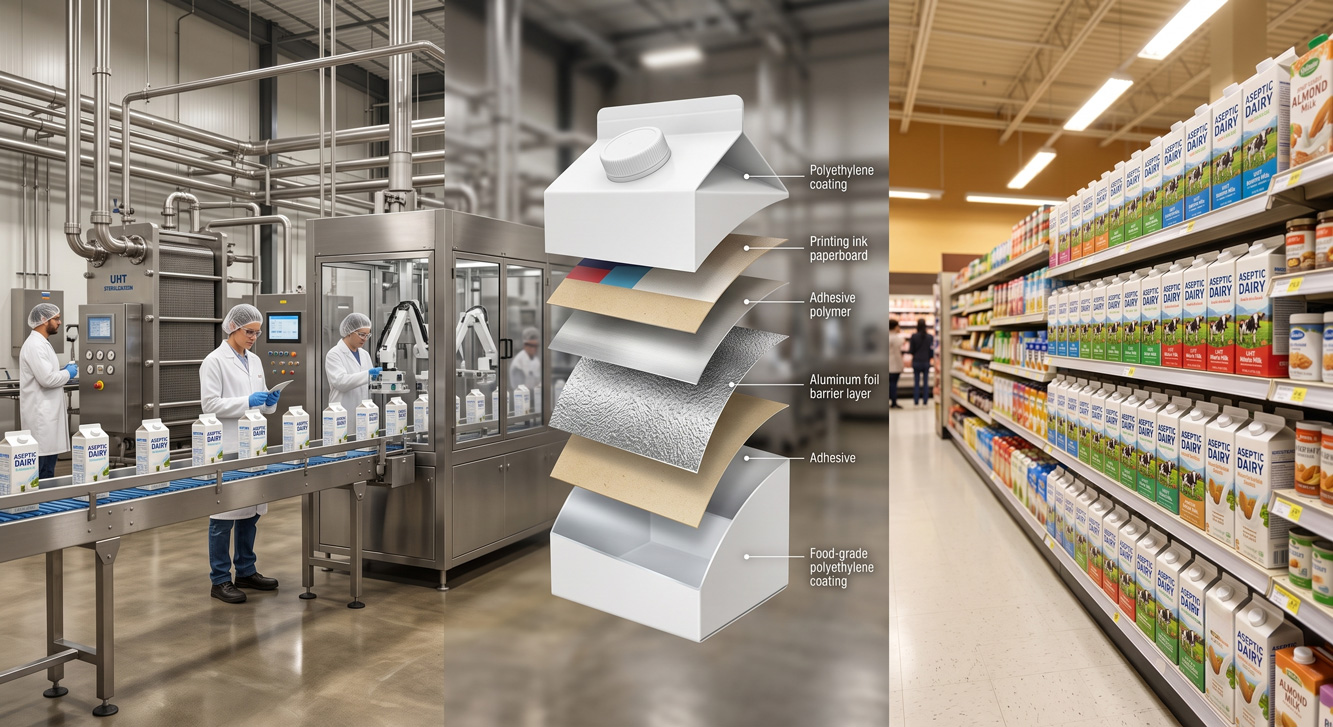
At ASQ Packing Group , we engineer our multi‑layer aseptic laminates to perform with flawless precision on both web‑fed and blank‑fed FFS equipment. Our material scientists calibrate polymer blends, barrier layers, and sealing properties to match the exact temperature, pressure, and speed parameters of your specific line.
Our Technical Capabilities:
- Precision laminates optimized for both H₂O₂ and e‑Beam sterilization
- Custom barrier engineering for your specific shelf‑life requirements
- FSC‑certified paperboard from sustainably managed forests
- In‑house quality control with FTIR, DSC, and tensile testing
- Expert technical support for machine integration and troubleshooting
For a comprehensive overview of aseptic filling technology, see our Ultimate Engineering Guide to Aseptic Filling Machines . To understand how FFS technology relates to laminate barrier performance, refer to our Masterclass on Designing Uncompromising Barrier Properties for Aseptic Liquid Packaging .
Frequently Asked Questions
1. What is the difference between FFS and BFS technology?
FFS (Form‑Fill‑Seal) forms flexible bags from pre‑fabricated film. BFS (Blow‑Fill‑Seal) extrudes rigid or semi‑rigid containers directly from plastic granules. In BFS, the container interior is formed from the hot melt and is inherently sterile; in FFS, the film requires targeted sterilization.
2. What is the difference between web‑fed and blank‑fed FFS machines?
Web‑fed machines use continuous rollstock and are ideal for high‑volume, single‑SKU production. Blank‑fed machines use pre‑cut blanks and enable rapid changeovers for multiple SKUs.
3. How fast are FFS machines?
FFS machines typically operate at speeds from 6,000 to over 70,000 packages per hour, with cycle times as short as six seconds per package.
4. What sterilization methods are used in aseptic FFS?
The primary methods are hydrogen peroxide (H₂O₂) immersion or vapor and electron beam (e‑Beam) sterilization.
5. What materials are compatible with FFS?
FFS machines work with a wide range of materials, including polyethylene (PE), polypropylene (PP), PET, paperboard laminates, and multi‑layer composites.
6. Does FFS require preservatives?
No. The aseptic environment eliminates the need for chemical preservatives, enabling clean‑label products.
Ready to Engineer Your Next FFS Packaging Solution?
Whether you are evaluating web‑fed or blank‑fed technology, H₂O₂ or e‑Beam sterilization, ASQ Packing Group has the technical expertise and manufacturing capability to support your decision.
👉 Contact us at ASQ Packing to discuss your FFS packaging requirements, request samples, or schedule a technical consultation.