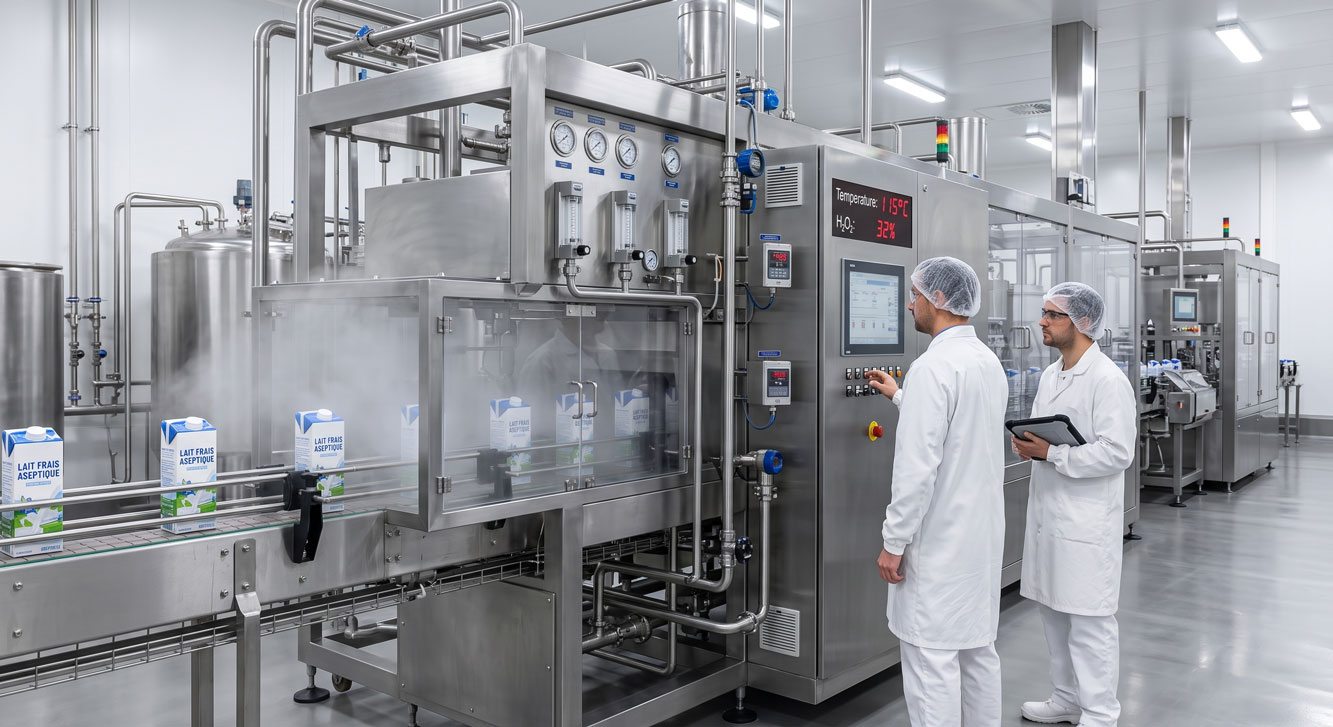

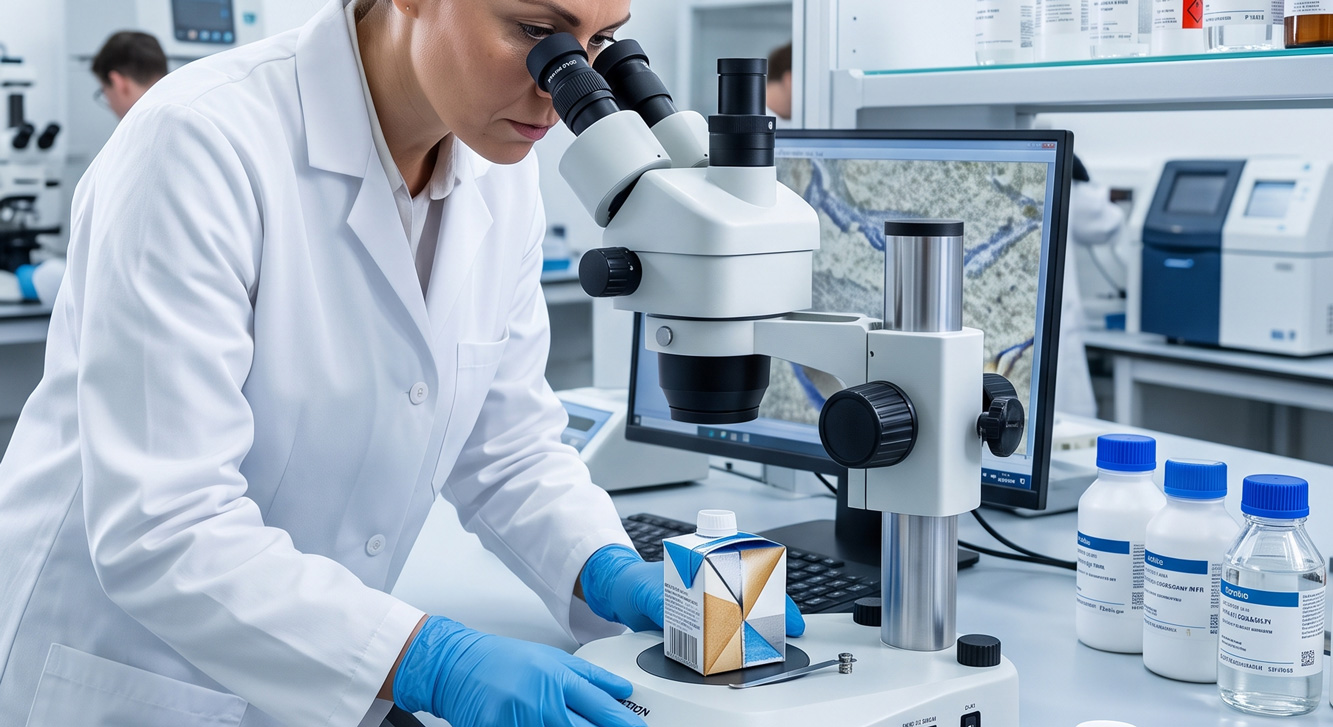
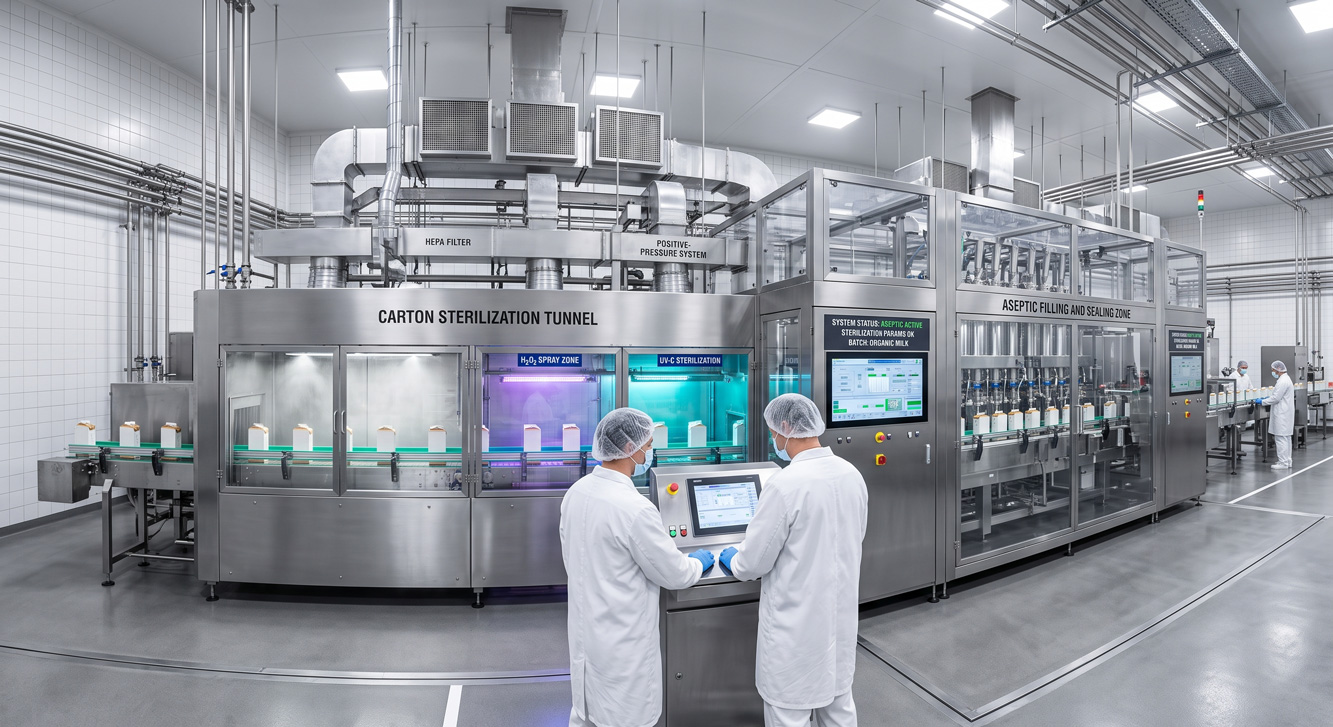
Executive Summary – Hydrogen peroxide (H₂O₂) and electron beam (e‑Beam) represent the two dominant technologies for packaging material sterilization in aseptic filling lines. H₂O₂, approved by the FDA since 1981, operates through oxidative disruption of cellular components and requires precise control of seven critical parameters, with residual peroxide strictly limited to <0.5 ppm in the final packaged product per 21 CFR 178.1005. e‑Beam sterilization employs high‑energy electrons to destroy microbial DNA through ionization, requires no chemical agents, and depends on only three critical parameters: voltage, current intensity, and exposure time. Both systems achieve production speeds up to 72,000 bottles per hour. However, e‑Beam offers superior process control, zero chemical residues, and significantly lower environmental impact, while H₂O₂ provides deeper penetration into complex geometries and lower capital investment for existing infrastructure. The choice between these technologies represents a strategic decision balancing sterilization efficacy, operational complexity, regulatory compliance, and sustainability commitments.
Introduction: The Critical Role of Sterilization in Aseptic Packaging
In the ever‑evolving world of food processing, the demand for products with longer shelf life has driven the development of advanced packaging and sterilization technologies. The need for packaging materials that preserve product quality while preventing microbial contamination has become a critical focus for the beverage and dairy industries, particularly for extended shelf life (ESL) and aseptic beverages. For a comprehensive overview of aseptic filling technology, see our Ultimate Engineering Guide to Aseptic Filling Machines .
Aseptic packaging is a method used to sterilize both the product and the packaging material separately. The product undergoes sterilization—typically through ultra‑high temperature (UHT) treatment—followed by filling into sterile containers in a microbiologically controlled, sterile environment. After sterilization and filling, the containers are sealed to ensure that no microorganisms can enter, allowing the product to stay uncontaminated for months or even years.
The sterilization of packaging materials is arguably the most technically demanding step in this process. Two technologies have emerged as the industry standards: hydrogen peroxide (H₂O₂) sterilization and electron beam (e‑Beam) sterilization.
Hydrogen Peroxide (H₂O₂) Sterilization: The Chemical Standard
Mechanism of Action
Hydrogen peroxide is a broad‑spectrum antimicrobial agent that can eliminate many microorganisms, including bacteria, yeasts, and spores that can affect product integrity. The FDA approved it for aseptic packaging in 1981, and it remains the industry standard.
The sterilization mechanism operates through oxidative disruption:
- Cell membrane disruption: H₂O₂ oxidizes lipid membranes, compromising cellular integrity
- Protein denaturation: Oxidative damage to essential enzymes and structural proteins
- Nucleic acid degradation: DNA and RNA are rendered nonfunctional through oxidation
These oxidative properties render microorganisms nonviable, including resilient spores that can survive conventional pasteurization.
Application Methods
Hydrogen peroxide is applied in aseptic packaging through two primary methods:
| Method | Description | Best For |
|---|---|---|
| Immersion Bath | Submerging packaging materials in H₂O₂ solution | Complex geometries; thorough penetration |
| Vaporized/Spray Systems | Atomizing or vaporizing H₂O₂ onto packaging surfaces | Cartons, PET bottles, plastic cups; rapid sterilization with minimal chemical usage |
Critical Process Parameters
H₂O₂ sterilization depends on seven critical parameters that must be precisely controlled:
| Parameter Category | Specific Parameters |
|---|---|
| Hot Air System | Output, temperature, time |
| Hydrogen Peroxide | Output, temperature, concentration, time |
Typical operating conditions include:
- H₂O₂ concentration: 30–35% (w/w)
- Hot air temperature: 60–125°C (for vaporization and residue removal)
- Contact time: Up to 15 seconds for inline systems
Regulatory Framework
The use of hydrogen peroxide in aseptic packaging is governed by strict regulations. FDA 21 CFR 178.1005 stipulates that residual hydrogen peroxide in the final packaged product must not exceed 0.5 parts per million. This regulation requires running distilled water through the production process to determine the hydrogen peroxide amount, performing the assay immediately after packaging.
Critical Note: The FDA’s hydrogen peroxide residual regulation applies generally to all packaged foods—it is not specifically an “aseptic” standard. Additionally, the FCS is not intended for use on food packaging material and/or aseptic food packaging equipment used with infant formula or breast milk.
Advantages
| Advantage | Benefit |
|---|---|
| Broad regulatory approval | FDA‑approved since 1981; globally recognized standard |
| Material compatibility | Effective for multilayer cartons, PET bottles, polypropylene cups |
| Deep penetration | Effective for complex geometries and porous surfaces |
| Proven track record | Decades of industrial validation |
| Lower capital investment | Existing infrastructure can often be adapted |
Challenges and Limitations
| Challenge | Impact |
|---|---|
| Chemical residues | FDA mandates <0.5 ppm residual H₂O₂ in final packaged product |
| Process complexity | Seven critical parameters require extensive monitoring and control |
| Chemical handling | Storage, treatment, and disposal of H₂O₂ add operational costs |
| Oxidation risk | Residual H₂O₂ can oxidize sensitive formulations, impacting product quality and nutritional value |
| Water consumption | Rinsing steps required in some applications consume significant water |

Electron Beam (e‑Beam) Sterilization: The Physical Alternative
Mechanism of Action
Electron beam sterilization has been described as “the biggest innovation in food packaging technology since the Tetra Brik® Aseptic carton”. The technology works by focusing a controlled beam of high‑energy electrons on the surface of a packaging material to kill microorganisms as it runs through the filling machine.
The sterilization mechanism operates through ionizing radiation:
- DNA destruction: High‑energy electrons cause ionization and break chemical bonds in microbial DNA
- Cell death: Inability to replicate leads to cell death
- Surface effect: Penetration is limited to the surface and shallow layers
Unlike chemical methods, e‑Beam sterilization requires no chemical agents and leaves zero residue on the packaging material.
Critical Process Parameters
e‑Beam treatment depends on only three, easy‑to‑control critical parameters:
| Parameter | Description |
|---|---|
| Voltage | Determines electron energy and penetration depth |
| Current intensity | Controls electron beam density and dose rate |
| Exposure time | Determines total radiation dose delivered |
Once the process has been validated, this technology is far easier to control than decontamination processes using hydrogen peroxide. Bacteriological reduction is ensured as soon as the product has been exposed to the recommended dose of electrons.
Regulatory Framework
e‑Beam sterilization is supported by the internationally recognized consensus standard ISO 11137, which describes the approach to validating a process to achieve a defined sterility assurance level (SAL). The standard specifies requirements for validation, process control, and routine monitoring in radiation sterilization.
Low‑energy electron irradiation (80–300 keV) is used increasingly for sterilization or decontamination in connection with isolators for aseptic filling lines.
Advantages
| Advantage | Benefit |
|---|---|
| Zero chemical residues | No sterilization‑related residues; no chemical handling or disposal |
| Superior process control | Only 3 critical parameters vs. 7 for H₂O₂ |
| High speed | Enables faster production speeds; Tetra Pak E3/Speed achieves 40,000 packages per hour |
| Environmental performance | Eliminates water consumption for rinsing and chemical use |
| Reduced operational costs | Lower energy and chemical costs |
| Material compatibility | Works well with a variety of radiation‑compatible polymers, metals, and other materials |
Challenges and Limitations
| Challenge | Impact |
|---|---|
| Limited penetration | Effective primarily for surface sterilization; less suitable for dense or thick materials |
| Capital investment | Higher upfront equipment costs |
| Shielding requirements | Radiation safety infrastructure required |
| Material compatibility | Some materials may experience degradation; careful selection required |
Comparative Analysis: H₂O₂ vs. e‑Beam
Head‑to‑Head Comparison
| Criterion | H₂O₂ Sterilization | e‑Beam Sterilization |
|---|---|---|
| Mechanism | Oxidative chemical disruption | Ionizing radiation (DNA destruction) |
| Residues | Chemical; requires removal (<0.5 ppm FDA limit) | None; chemical‑free |
| Critical Parameters | 7 (complex) | 3 (simple) |
| Process Control | Complex; multiple interdependent variables | Simple; dose‑based validation |
| Production Speed | Up to 72,000 bottles/hour | Up to 72,000 bottles/hour |
| Penetration | Deep; effective for complex geometries | Surface‑limited; shallow layers |
| Water Consumption | Significant (rinsing required) | None |
| Chemical Handling | Storage, treatment, disposal required | None |
| Regulatory Status | FDA‑approved since 1981 (21 CFR 178.1005) | ISO 11137 |
| Capital Investment | Lower | Higher |
| Material Compatibility | Broad; well‑established | Good; requires careful selection |
Operational Complexity Comparison
The operational complexity difference is substantial:
H₂O₂ System (7 Parameters):
- Hot Air: Output, Temperature, Time
- H₂O₂: Output, Temperature, Concentration, Time
e‑Beam System (3 Parameters):
- Voltage
- Current Intensity
- Exposure Time
Environmental Impact Comparison
| Environmental Factor | H₂O₂ | e‑Beam |
|---|---|---|
| Water consumption | High (rinsing required) | Zero |
| Chemical use | High (H₂O₂ storage, treatment, disposal) | Zero |
| Energy consumption | Moderate | Lower |
| Chemical waste | Requires treatment | None |
| Carbon footprint | Higher (chemical production + transport) | Lower |
The Impact of Sterilization on Laminate Barrier Properties
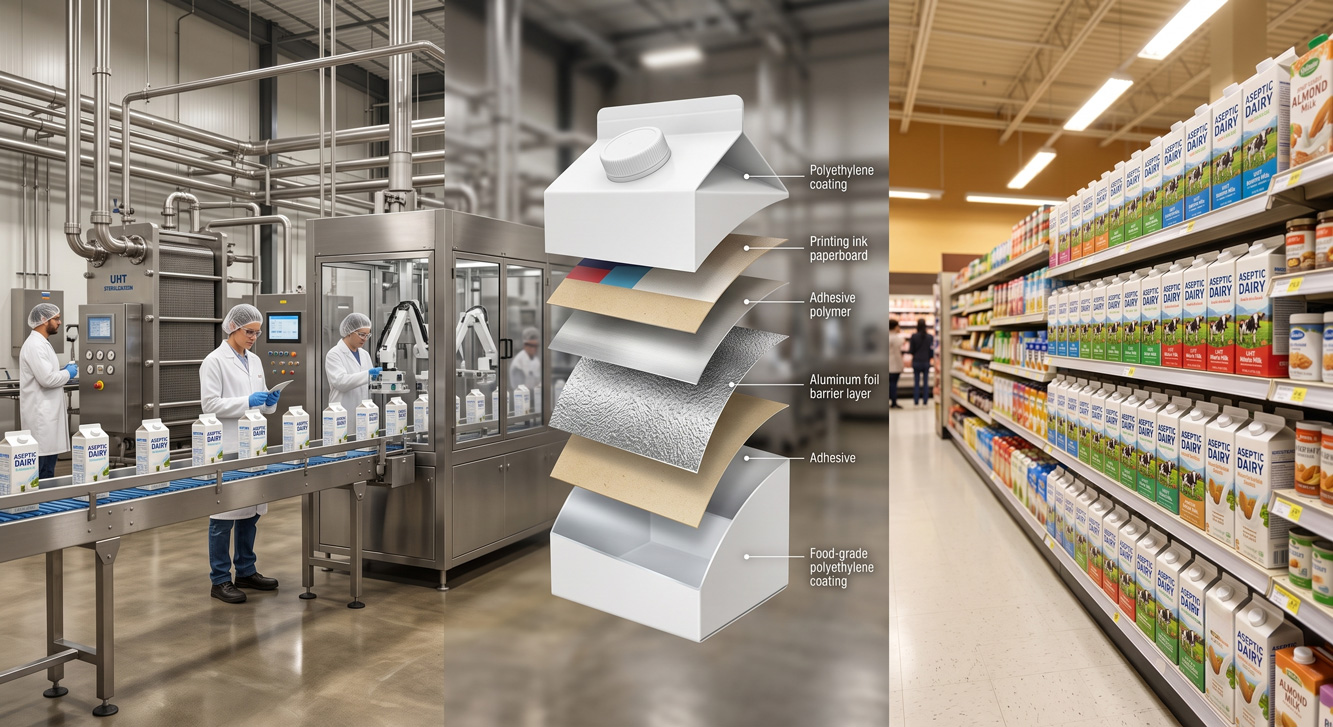
The choice of sterilization method directly affects the performance of the packaging laminate. Hydrogen peroxide, as a strong oxidizer, can potentially degrade polymer layers if residual levels are not carefully controlled. e‑Beam, while residue‑free, can cause cross‑linking or chain scission in certain polymers if dose levels exceed material tolerances.
For a deeper dive into laminate science, see our Masterclass: Designing Uncompromising Barrier Properties for Aseptic Liquid Packaging . Additionally, during high‑speed folding—whether in web‑fed or blank‑fed machines—the mechanical stress on the laminate can create microscopic defects. Understanding the relationship between the web‑fed vs. blank‑fed architecture and laminate integrity is essential for optimizing both sterilization and barrier performance.
Selection Criteria: Which Technology Is Right for Your Operation?
| Factor | Choose H₂O₂ | Choose e‑Beam |
|---|---|---|
| Existing infrastructure | If you have H₂O₂ equipment in place | If you are building new or upgrading |
| Product geometry | Complex shapes with deep crevices | Simple geometries with accessible surfaces |
| Packaging material | Mixed materials; porous surfaces | Smooth, uniform surfaces |
| Sustainability goals | Moderate environmental priorities | Aggressive sustainability targets |
| Operational expertise | Experienced with chemical systems | Prefer simplified process control |
| Capital availability | Limited capital budget | Capital available for long‑term ROI |
The ASQ Packing Advantage
At ASQ Packing Group , we engineer our multi‑layer aseptic laminates to perform with flawless precision under both H₂O₂ and e‑Beam sterilization conditions. Our material scientists calibrate polymer blends and barrier layers to withstand the specific demands of your chosen sterilization method.
Our Technical Capabilities:
- Precision laminates optimized for both H₂O₂ and e‑Beam sterilization
- Custom barrier engineering for your specific shelf‑life requirements
- FSC‑certified paperboard from sustainably managed forests
- In‑house quality control with FTIR, DSC, and tensile testing
- Expert technical support for machine integration and troubleshooting
For common issues that can arise in aseptic packaging—such as pin‑hole defects in foil lamination or edge‑wicking in carton seals —our team provides comprehensive solutions to maintain barrier integrity throughout the production process.
Frequently Asked Questions
1. What is the primary difference between H₂O₂ and e‑Beam sterilization?
H₂O₂ uses oxidative chemical reactions to kill microorganisms and requires removal of chemical residues (<0.5 ppm per FDA 21 CFR 178.1005). e‑Beam uses ionizing radiation to destroy microbial DNA and leaves zero chemical residues.
2. Which method is faster?
Both methods can achieve high production speeds up to 72,000 bottles per hour. However, e‑Beam can enable faster throughput due to the elimination of chemical application and drying steps.
3. Which method is more environmentally sustainable?
e‑Beam is significantly more sustainable, requiring no water for rinsing and no chemical sterilants. H₂O₂ requires chemical production, transport, storage, treatment, and disposal, as well as water for rinsing in some applications.
4. Is H₂O₂ sterilization safe for food packaging?
Yes, when properly controlled. FDA 21 CFR 178.1005 limits residual H₂O₂ to less than 0.5 ppm in the final packaged product. However, residual H₂O₂ can detrimentally impact a product’s quality and nutritional value, requiring careful monitoring.
5. What products are best suited for e‑Beam sterilization?
e‑Beam is particularly effective for PET bottles and applications where rapid, chemical‑free sterilization is desired. It is less suitable for densely packaged loads or materials requiring deep penetration.
6. Which method has simpler process control?
e‑Beam depends on only 3 critical parameters (voltage, current intensity, exposure time), while H₂O₂ depends on 7 critical parameters. e‑Beam is therefore significantly easier to control and validate.
7. How do I choose between H₂O₂ and e‑Beam?
Consider your existing infrastructure, product geometry, packaging materials, sustainability goals, and capital availability. H₂O₂ offers lower capital investment and proven compatibility with complex geometries. e‑Beam offers superior process control, zero residues, and significantly lower environmental impact.
Ready to Optimize Your Aseptic Packaging Line?
Whether you are evaluating H₂O₂ or e‑Beam sterilization for your gable top cartons, ASQ Packing Group has the technical expertise and manufacturing capability to support your decision.
👉 Contact us at ASQ Packing to discuss your sterilization requirements, request samples, or schedule a technical consultation.